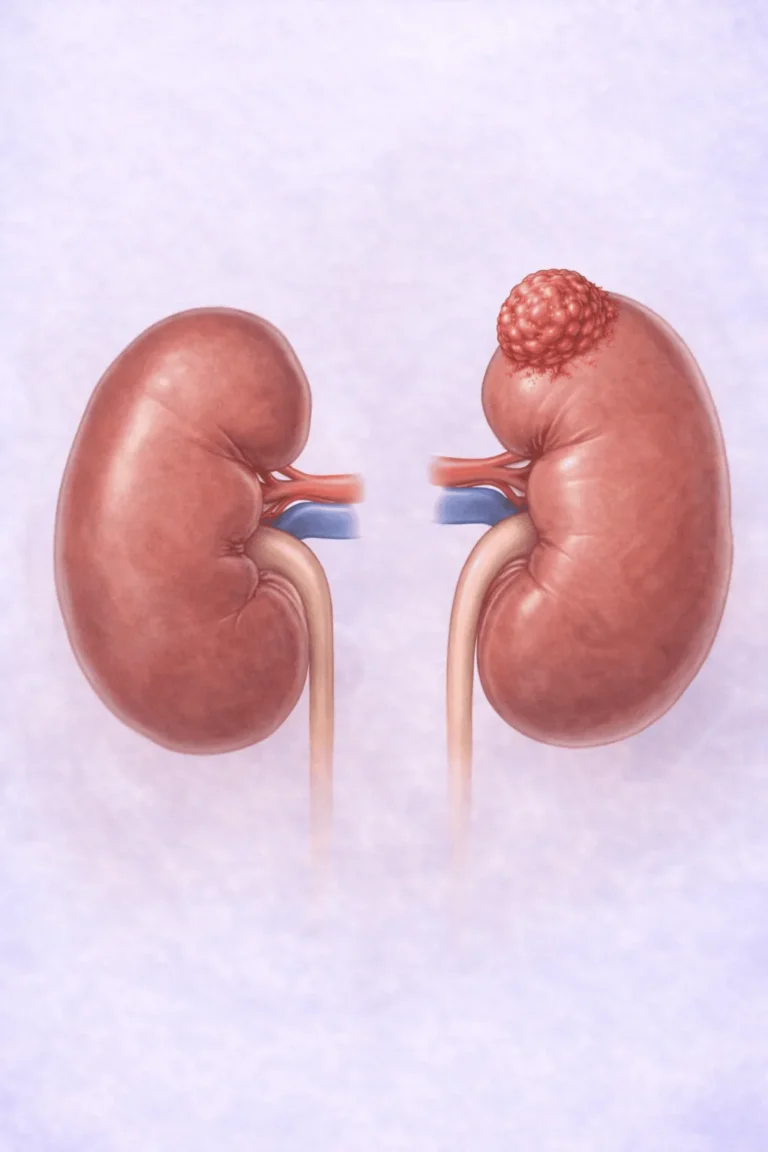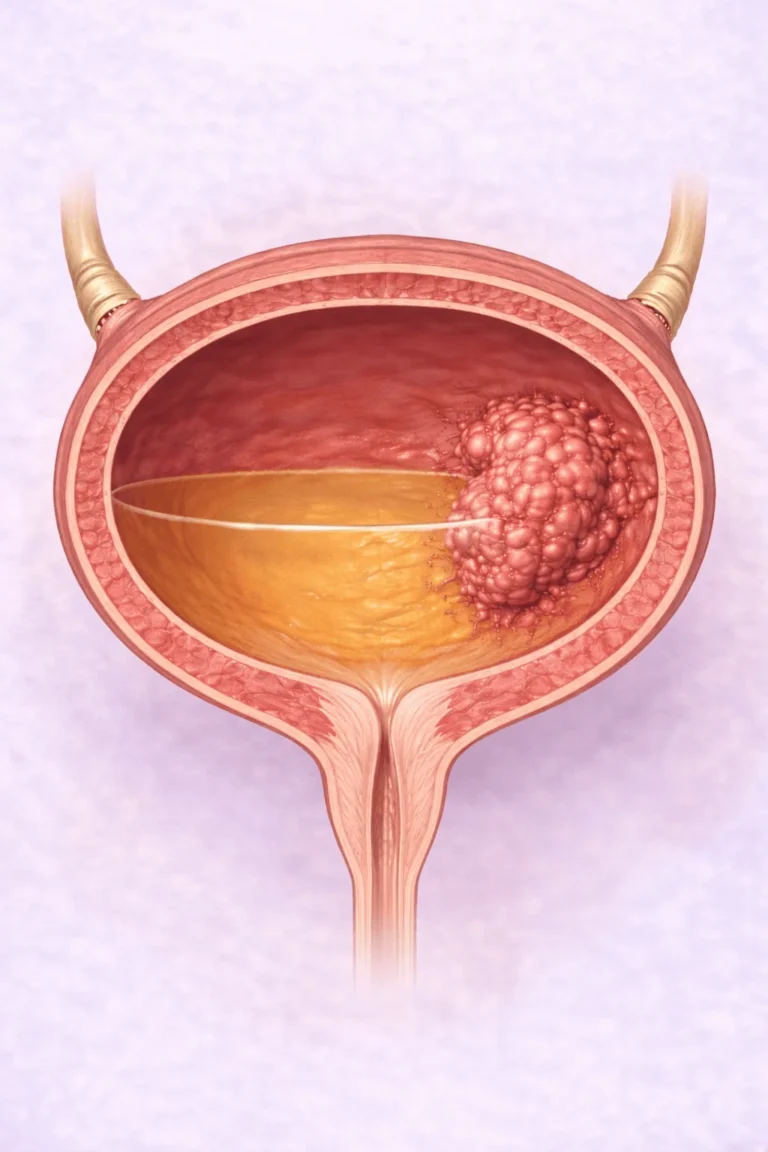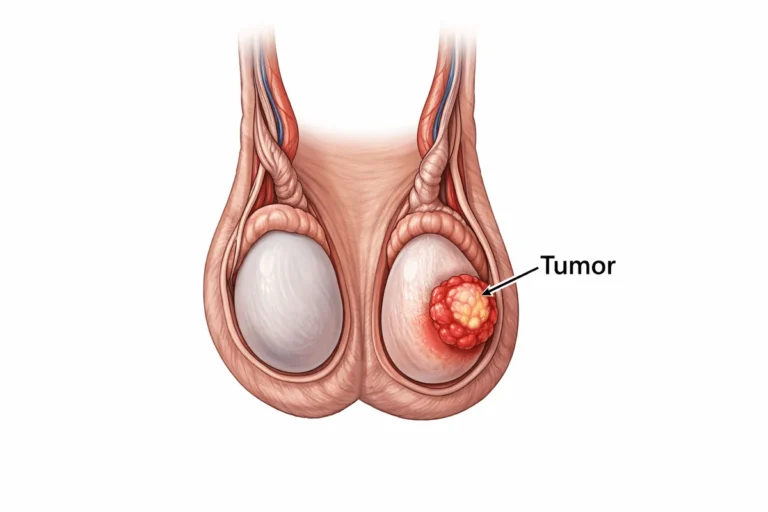

Penile cancer is a rare but serious cancer that develops in the skin or tissues of the penis. Because it affects a sensitive area, many men feel embarrassed to seek medical help. Unfortunately, delaying evaluation can allow the disease to progress.
The good news is that when detected early, penile cancer is highly treatable.
Why Awareness Is Important
- Early symptoms may look like minor skin changes
- Many men ignore or self-treat symptoms
- Delayed diagnosis can lead to more extensive surgery
- Early treatment can preserve function and appearance
Any persistent change in the penis deserves medical attention.
How Common Is Penile Cancer?
- It is uncommon in most parts of the world
- More common in:
- Men over 50 years
- Regions with poor genital hygiene
- Early diagnosis significantly improves survival
Though rare, awareness is essential because the disease is often diagnosed late due to hesitation or embarrassment.
What Causes Penile Cancer?
Several risk factors are associated with penile cancer:
- Poor genital hygiene
- Long-standing foreskin tightness (phimosis)
- Human papillomavirus (HPV) infection
- Smoking
- Chronic inflammation
- Multiple sexual partners
Not all men with these risk factors develop cancer, but risk increases when several factors are present.
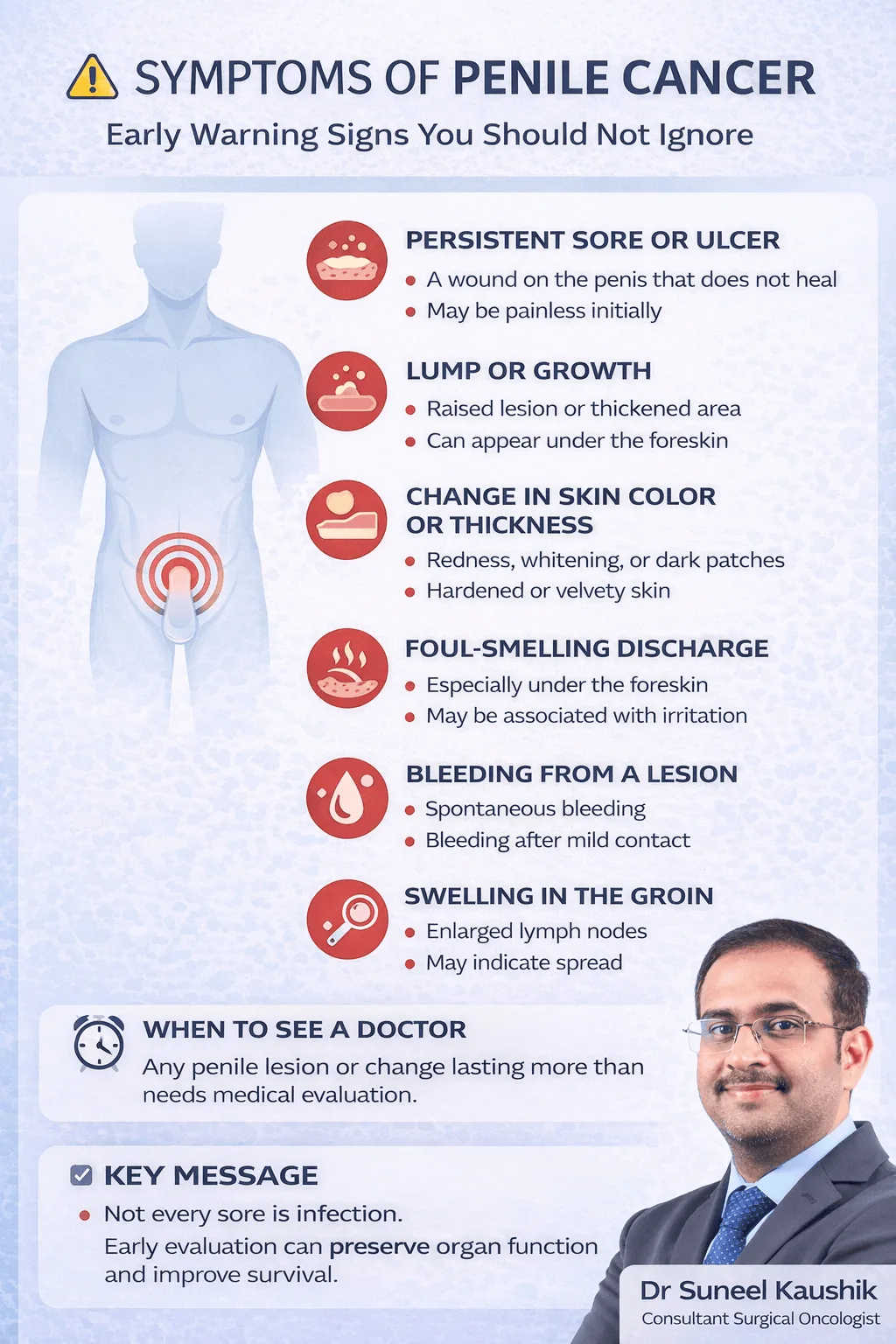
Warning Signs You Should Not Ignore
Seek medical evaluation if you notice:
- A lump, sore, or growth on the penis
- A wound that does not heal
- Thickened skin or change in color
- Foul-smelling discharge under the foreskin
- Bleeding from a lesion
- Swelling in the groin (enlarged lymph nodes)
A painless sore does not mean it is harmless.
How Is Penile Cancer Diagnosed?
- Physical examination
- Small tissue biopsy of the suspicious area
- Imaging scans if needed
- Examination of groin lymph nodes
Early-stage disease is often limited to the surface and easier to treat.
Treatment of Penile Cancer
Treatment depends on:
- The size of the tumor
- Whether it has spread deeper
- Whether lymph nodes in the groin are involved
- The patient’s overall health
The main goal is to remove the cancer completely while preserving function and appearance whenever possible.
1. Early-Stage Penile Cancer
(Cancer limited to the surface or shallow layers)
In early stages, treatment can often preserve the penis.
Options may include:
- Local surgical removal of the lesion
- Laser treatment in selected cases
- Topical medications for very superficial disease
- Circumcision if the tumor is limited to foreskin
When detected early, outcomes are excellent and organ preservation is often possible.
2. Invasive but Localized Cancer
(Cancer has grown deeper but not spread widely)
If the tumor invades deeper tissues:
- Partial penectomy (removal of part of the penis) may be required
- The remaining portion usually allows normal urination
- Efforts are made to preserve as much length as safely possible
Modern surgical techniques focus on:
- Clear cancer removal
- Functional preservation
- Cosmetic considerations
3. Lymph Node Involvement (Groin Nodes)
Penile cancer can spread to lymph nodes in the groin.
If lymph nodes are enlarged or suspicious:
- Imaging tests are done
- Sometimes lymph node surgery is required
- In selected cases, chemotherapy may be added
Early treatment of lymph node disease significantly improves survival.
4. Advanced Disease
If the cancer has spread beyond the groin:
- Chemotherapy
- Sometimes radiotherapy
- Multidisciplinary treatment approach
Even in advanced stages, treatment aims to:
- Control disease
- Relieve symptoms
- Improve quality of life
Can Penile Cancer Be Cured?
Yes — especially when diagnosed early.
- Early-stage disease has very high cure rates
- Delay in treatment increases the need for more extensive surgery
Emotional and Functional Support
Treatment can feel overwhelming, but:
- Many men retain normal urinary function
- Sexual function may be preserved in early stages
- Counseling and support are available
- Reconstruction options exist in selected cases
Modern treatment aims to remove cancer while preserving as much function and appearance as possible.
Can Penile Cancer Be Prevented?
Risk can be reduced by:
- Maintaining good genital hygiene
- Treating foreskin problems early
- Avoiding smoking
- Safe sexual practices
- HPV vaccination in appropriate age groups
When Should You See a Doctor?
- Any persistent sore or growth
- Bleeding or discharge
- Unexplained swelling in groin
- Changes that do not improve within 2–3 weeks
Early consultation leads to simpler treatment and better outcomes.