
What Is Kidney Cancer?
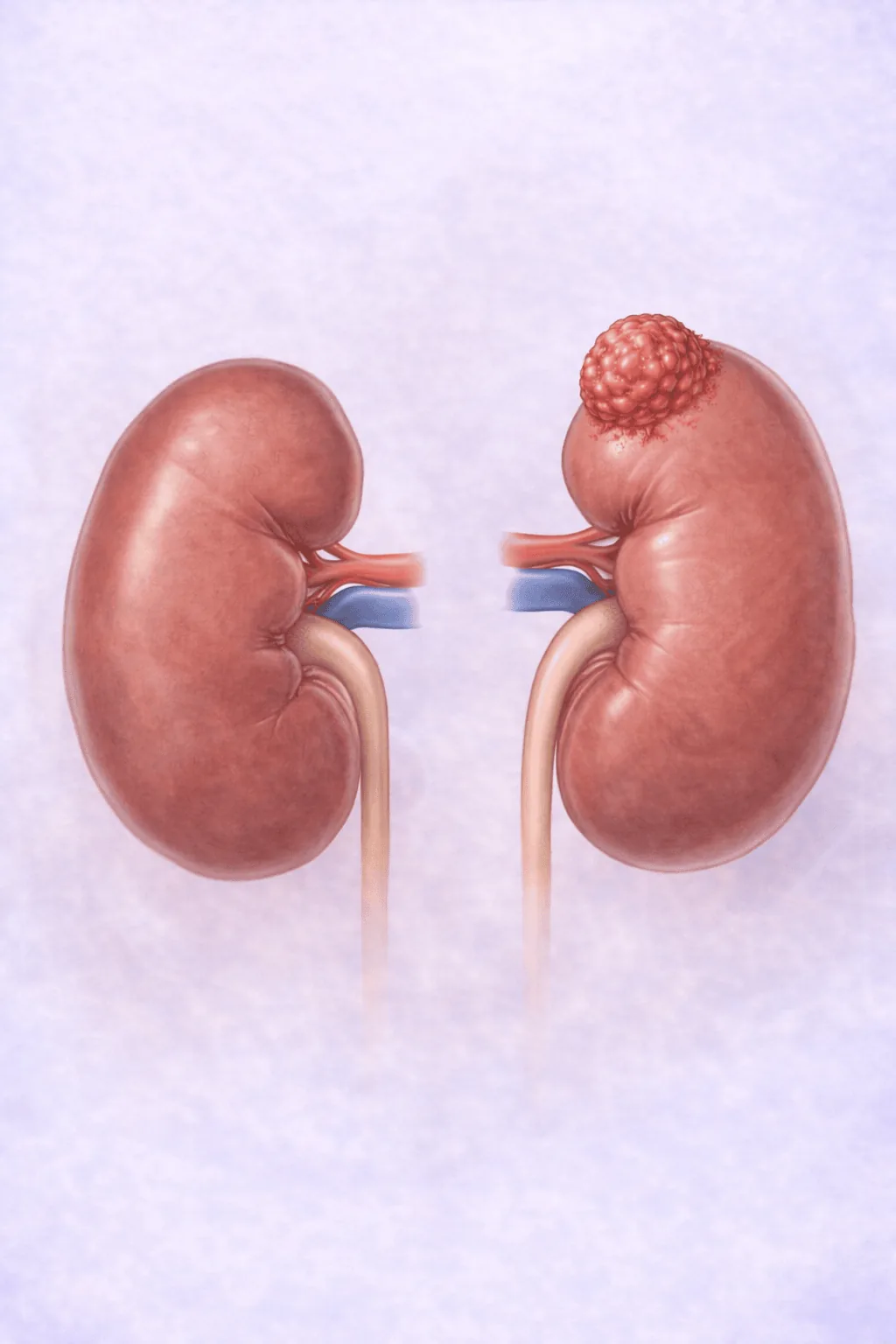
Kidney cancer is a malignancy that arises from the kidneys, two bean-shaped organs located on either side of the spine that filter blood and produce urine. The most common type is renal cell carcinoma (RCC), which originates from the lining of the kidney tubules.
Kidney cancer is often detected incidentally during imaging done for other reasons, and when diagnosed early, it is highly curable.
Why Kidney Cancer Awareness Is Important
- Early kidney cancer may cause no symptoms
- Many cases are detected by chance
- Advanced disease may present late
- Early-stage kidney cancer has excellent outcomes with surgery
Awareness encourages timely evaluation of warning signs and imaging findings.
Kidney Cancer – Key Statistics
Global
- Kidney cancer accounts for about 2–3% of all adult cancers
- Over 430,000 new cases are diagnosed worldwide each year
- Incidence is rising due to increased imaging and early detection
India
- Kidney cancer is less common than GI cancers but steadily increasing
- More common in men
- Many patients are diagnosed in early stages due to incidental detection
- Survival rates are good when treated at specialized oncology centers
Types of Kidney Cancer
- Renal Cell Carcinoma (RCC) – most common
- Clear cell RCC
- Papillary RCC
- Chromophobe RCC
- Urothelial carcinoma of renal pelvis (different disease)
- Rare tumors (oncocytoma, sarcoma)
Who Is at Risk?
You may be at higher risk if you have:
- Smoking history
- Obesity
- High blood pressure
- Chronic kidney disease
- Long-term dialysis
- Family history of kidney cancer
- Certain genetic syndromes (rare)
Common Warning Signs (Often Late)
Seek medical evaluation if you experience:
- Blood in urine (visible or microscopic)
- Flank or back pain on one side
- Abdominal or flank mass
- Unexplained weight loss
- Fatigue or anemia
- Fever of unknown origin
Blood in urine should never be ignored.
How Is Kidney Cancer Diagnosed?
- Ultrasound abdomen
- CT scan of chest and abdomen with contrast (key investigation)
- MRI in selected cases
- Blood and urine tests
- Biopsy in selected situations
Treatment of Kidney Cancer
Management depends on tumor size, stage, location, and kidney function.
1. Early-Stage Kidney Cancer
Goal: Cure
- Surgery is the mainstay
- Partial nephrectomy (kidney-sparing surgery)
- Radical nephrectomy when required
- Minimally invasive (laparoscopic/robotic) options in suitable patients
- Excellent long-term survival
2. Locally Advanced Kidney Cancer
Goal: Cure with complex surgery
- Radical nephrectomy with removal of involved structures
- Surgery may include removal of:
- Adjacent organs (selected cases)
- Tumor thrombus from renal vein or inferior vena cava
3. Advanced / Metastatic Kidney Cancer
Goal: Disease control and prolonged survival
- Targeted therapy
- Immunotherapy (has transformed outcomes)
- Surgery in selected cases for symptom control or survival benefit
- Multidisciplinary care is essential
Role of Surgery in Kidney Cancer
- Cornerstone of cure
- Kidney-sparing surgery preserves long-term renal function
- Even in advanced disease, surgery may play a role in selected patients
Can Kidney Cancer Be Prevented?
Risk can be reduced by:
- Avoiding smoking
- Maintaining healthy body weight
- Controlling blood pressure
- Regular health check-ups
- Prompt evaluation of blood in urine
When Should You See a Doctor?
- Blood in urine
- Persistent flank pain
- Incidentally detected kidney mass on scan
- Unexplained weight loss or anemia
Early evaluation leads to simpler treatment and better outcomes.
Key Take-Home Message
Kidney cancer is often silent but highly treatable when detected early. Modern surgery and systemic therapies offer excellent survival and quality of life.
Surgery for Kidney Cancer
Surgery is the main and most effective treatment for kidney cancer and offers the best chance of cure, especially when the disease is detected early. The goal of surgery is to completely remove the tumor while preserving kidney function whenever possible.
When Is Surgery Recommended?
Surgery is advised when:
- The cancer is confined to the kidney or nearby tissues
- There is no widespread distant spread
- The patient is medically fit for surgery
- Even in selected advanced cases, surgery may still play a role as part of combined treatment
Most kidney cancers can be managed surgically with excellent long-term outcomes.
Types of Kidney Cancer Surgery
1. Partial Nephrectomy (Kidney-Sparing Surgery)
This operation removes only the tumor and a small rim of normal kidney, preserving the rest of the kidney.
When it is preferred
- Small tumors (usually ≤4 cm)
- Tumors in favorable locations
- Patients with one functioning kidney or reduced kidney function
Advantages
- Preserves kidney function
- Reduces long-term risk of kidney failure
- Offers cancer control equivalent to removing the whole kidney in early disease
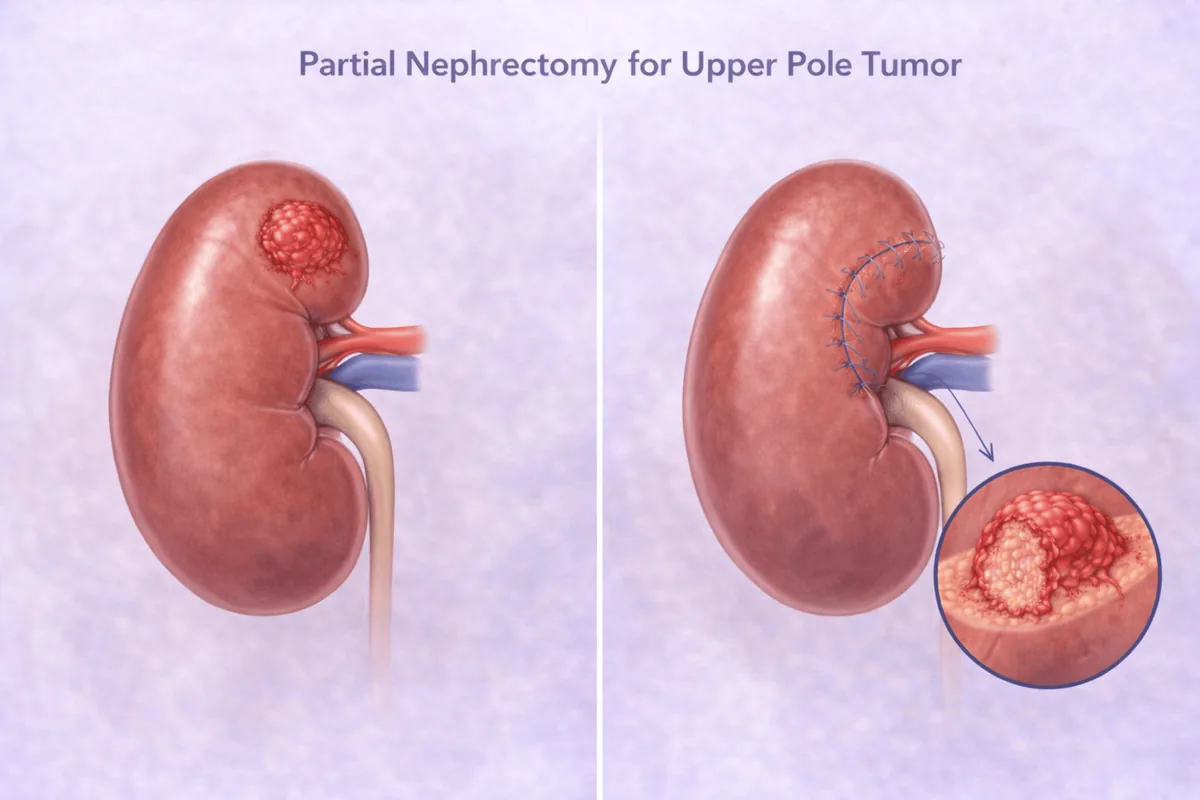
Whenever feasible, partial nephrectomy is the preferred option.
2. Radical Nephrectomy
This involves removal of the entire kidney, along with surrounding fatty tissue and, in some cases, nearby lymph nodes.
When it is required
- Large tumors
- Tumors involving central parts of the kidney
- Tumors extending into nearby structures
Most patients do well with one normal kidney and can live a normal, healthy life after surgery.
3. Surgery for Advanced Kidney Cancer
In selected patients with advanced disease:
- Surgery may be performed to remove the kidney even when cancer has spread
- This can:
- Reduce symptoms
- Improve response to systemic therapy
- Prolong survival in carefully chosen patients
Such decisions are made by a multidisciplinary cancer team.
Surgical Approach
Kidney cancer surgery may be performed using:
- Open surgery
- Laparoscopic surgery
- Robotic-assisted surgery
The choice depends on:
- Tumor size and location
- Extent of disease
- Surgeon expertise
Minimally invasive approaches often result in less pain, faster recovery, and shorter hospital stay when appropriate.
Recovery After Surgery
- Hospital stay typically ranges from 3–7 days
- Gradual return to normal activities over a few weeks
- Temporary fatigue is common
- Regular follow-up scans and blood tests are essential
Most patients return to normal daily life with good quality of life.
Life After Kidney Cancer Surgery
- Kidney function is monitored regularly
- Long-term outcomes are excellent in early-stage disease
- Healthy lifestyle and follow-up reduce future risks
Surgery: Key Take-Home Message
Surgery is the cornerstone of kidney cancer treatment. Whenever possible, kidney-sparing surgery is preferred to preserve long-term health, and even advanced cases can benefit from expert surgical care.