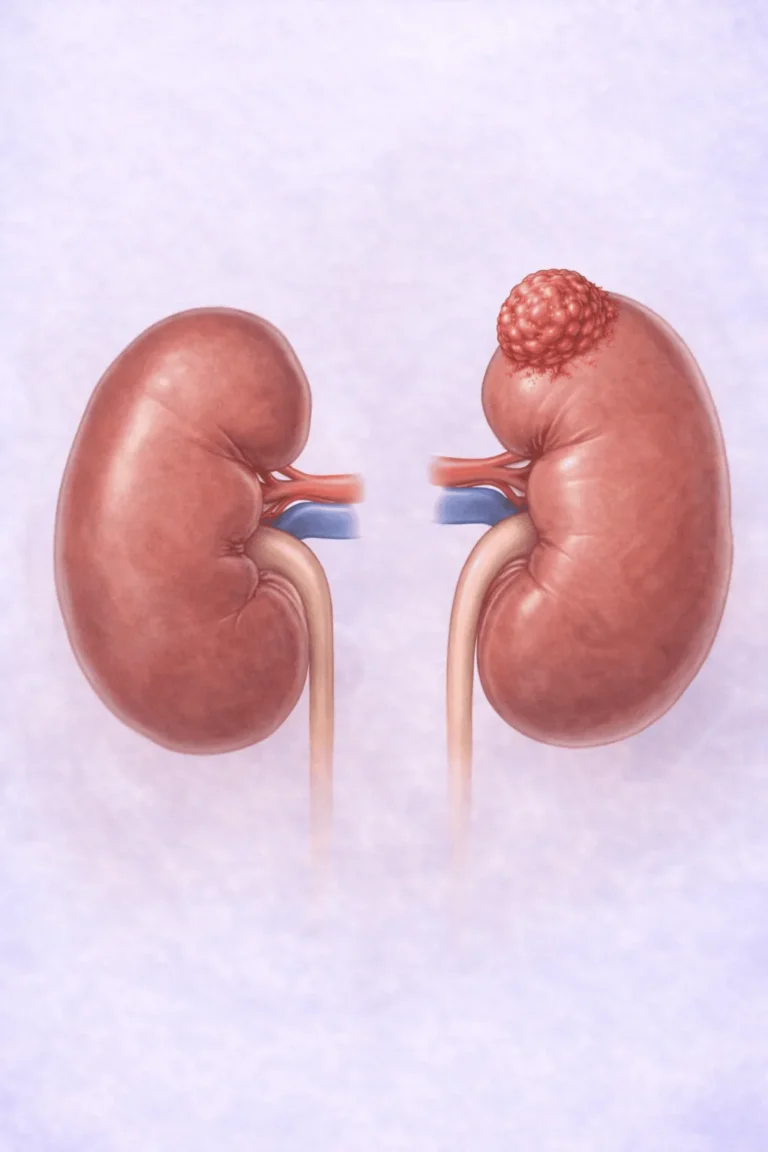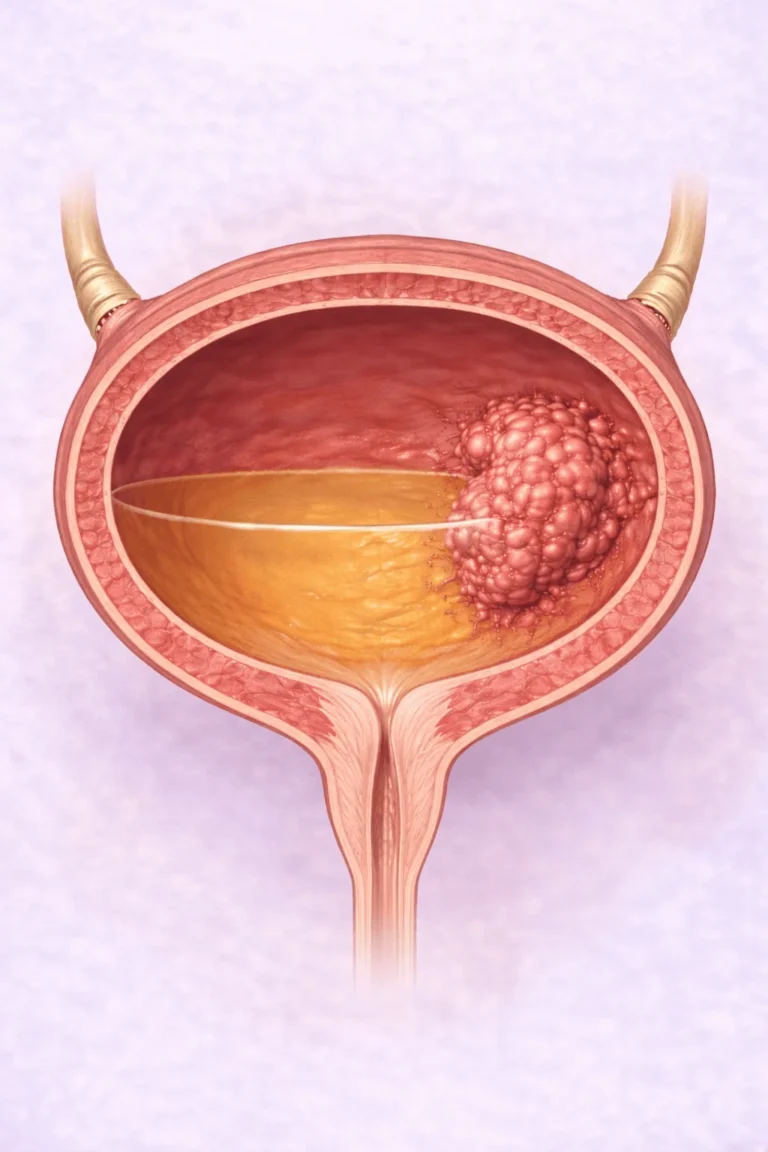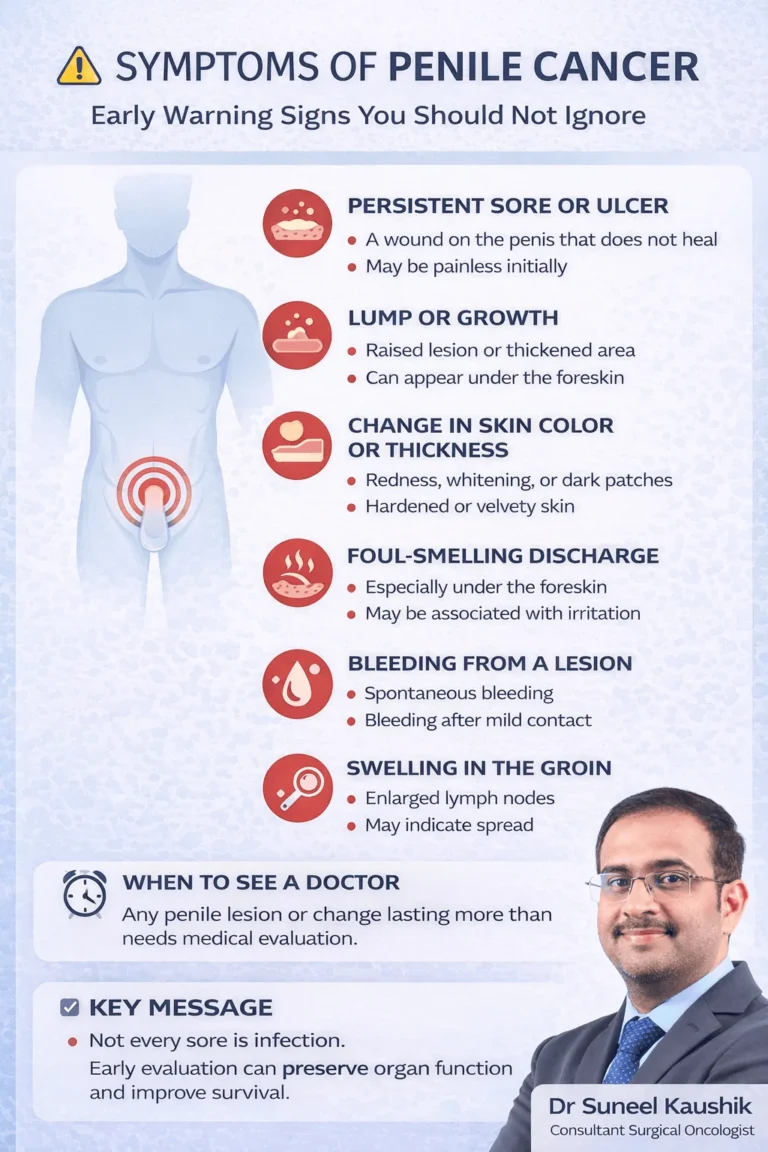

What Is Testicular Cancer?
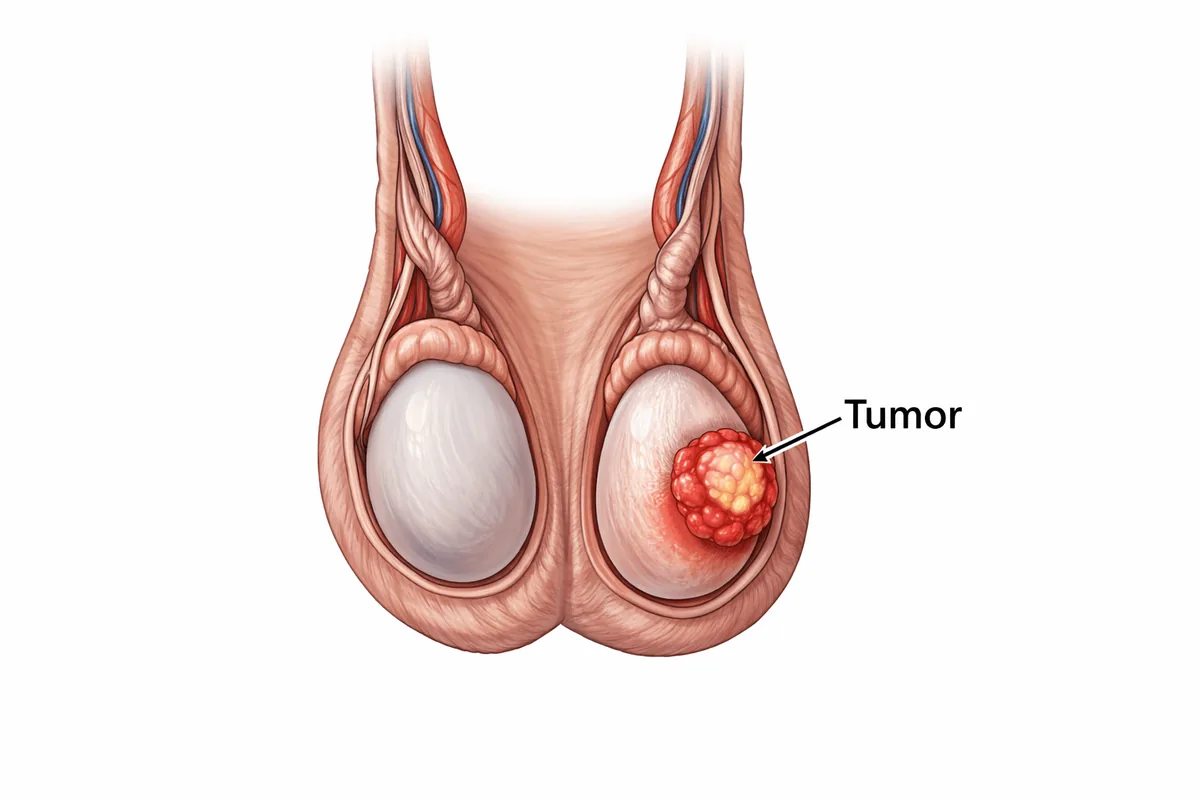
Testicular cancer is a cancer that develops in the testicles (testes), the male reproductive organs located inside the scrotum. These organs produce sperm and male hormones such as testosterone.
Testicular cancer is one of the most curable cancers, especially when detected early.
Why Awareness Is Important
- It commonly affects young men (15–40 years)
- Early symptoms are often painless
- Many men ignore testicular changes due to embarrassment
- Early treatment leads to excellent survival rates
Early detection makes treatment simpler and highly successful.
Testicular Cancer – Key Statistics
Global
- One of the most common cancers in young men
- High cure rate: >95% overall survival in early-stage disease
- Even advanced disease is often treatable
India
- Less common compared to Western countries
- Increasing awareness has improved early detection
- Excellent outcomes when treated at specialized centers
Types of Testicular Cancer
Most arise from germ cells:
- Seminoma
- Slower growing
- Very responsive to treatment
- Non-seminomatous germ cell tumors (NSGCT)
- More aggressive
- Includes embryonal carcinoma, yolk sac tumor, choriocarcinoma, teratoma
Treatment depends on the type and stage.
Who Is at Risk?
You may be at higher risk if you have:
- Undescended testis (cryptorchidism)
- Family history of testicular cancer
- Previous testicular cancer
- Testicular atrophy
- Caucasian ethnicity (higher global incidence)
Most patients, however, have no clear risk factors.
Common Warning Signs (Do Not Ignore)
Seek medical attention if you notice:
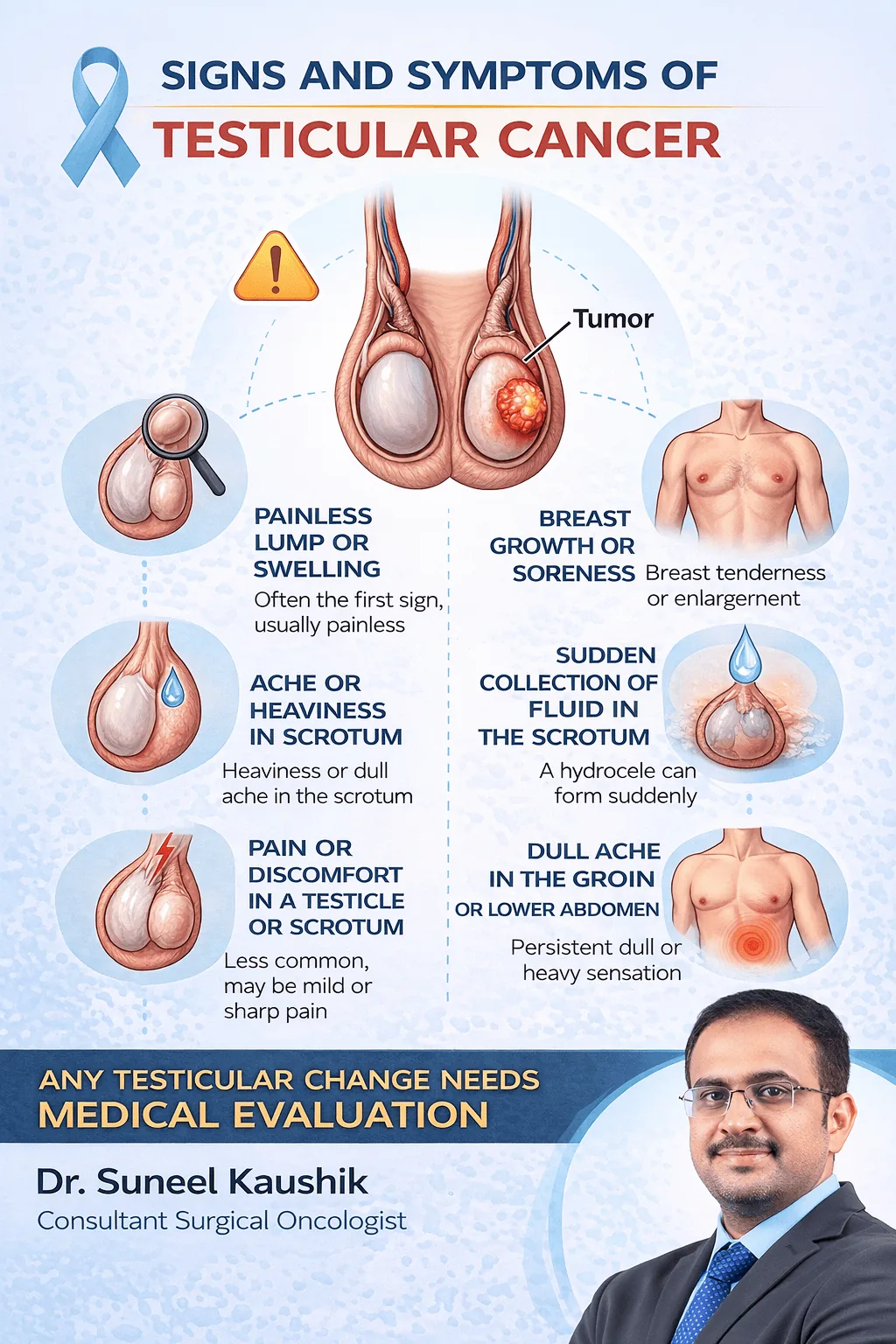
- A painless lump or swelling in one testicle
- Feeling of heaviness in the scrotum
- Dull ache in lower abdomen or groin
- Sudden fluid collection in the scrotum
- Testicular pain (less common)
- Back pain (late symptom in advanced disease)
Most testicular lumps are painless. Pain is not a typical symptom of cancer.
How Is Testicular Cancer Diagnosed?
- Physical examination
- Scrotal ultrasound
- Blood tests (tumor markers):
- AFP
- Beta-hCG
- LDH
- CT scan for staging
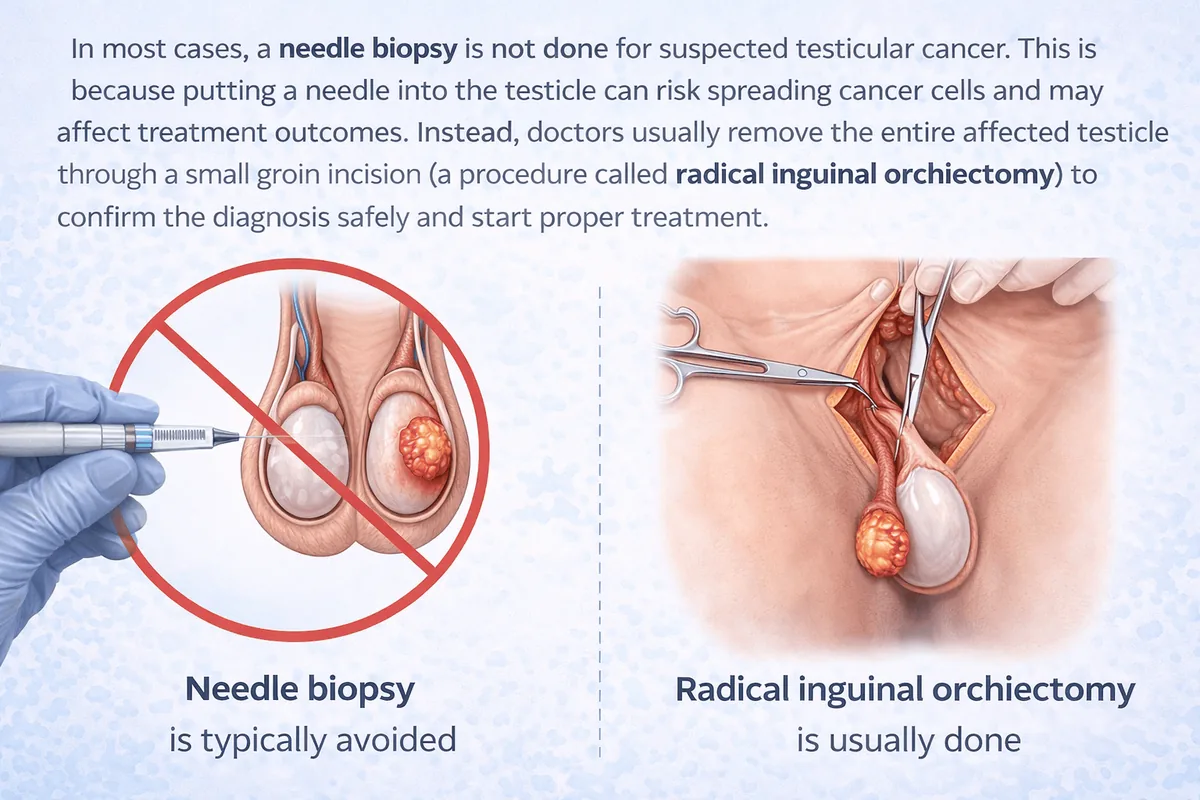
Biopsy is usually not performed directly; the testicle is removed for diagnosis.
In most cases, a needle biopsy is not done for suspected testicular cancer. This is because putting a needle into the testicle can risk spreading cancer cells and may affect treatment outcomes.
Instead, doctors usually remove the entire affected testicle through a small groin incision (a procedure called radical inguinal orchiectomy) to confirm the diagnosis safely and start proper treatment.
Treatment of Testicular Cancer
1. Surgery (First Step)
- Radical inguinal orchiectomy
- Removal of the affected testicle
- Done through a groin incision (not through scrotum)
This confirms diagnosis and often cures early-stage disease.
2. Additional Treatment (If Needed)
Depending on stage and type:
- Surveillance (careful monitoring)
- Chemotherapy
- Radiotherapy (mainly for seminoma)
- Retroperitoneal lymph node dissection (selected cases)
Fertility and Hormonal Concerns
- Most men retain normal sexual function
- One healthy testicle is usually sufficient
- Sperm banking may be advised before chemotherapy
- Testosterone levels are monitored
Can Testicular Cancer Be Detected Early?
Yes. Monthly testicular self-examination helps detect early changes.
Simple Self-Check Steps:
- Best done after a warm shower
- Gently roll each testicle between fingers
- Look for lumps, swelling, or size change
- Consult a doctor if anything unusual is found
When Should You See a Doctor?
- Any testicular lump
- Persistent swelling
- Heaviness or dull ache
- Sudden scrotal fluid
Early evaluation leads to highly curable outcomes.
Key Take-Home Message
Testicular cancer is highly curable, especially when detected early. Do not ignore a painless testicular lump.