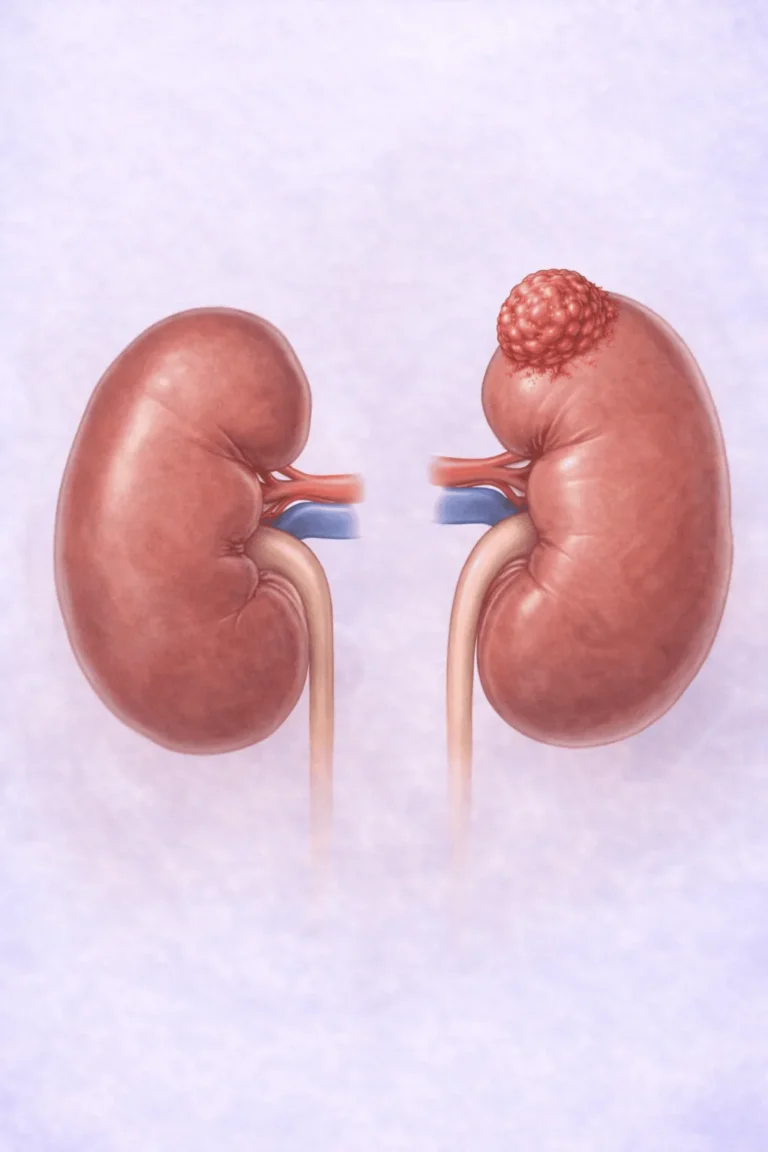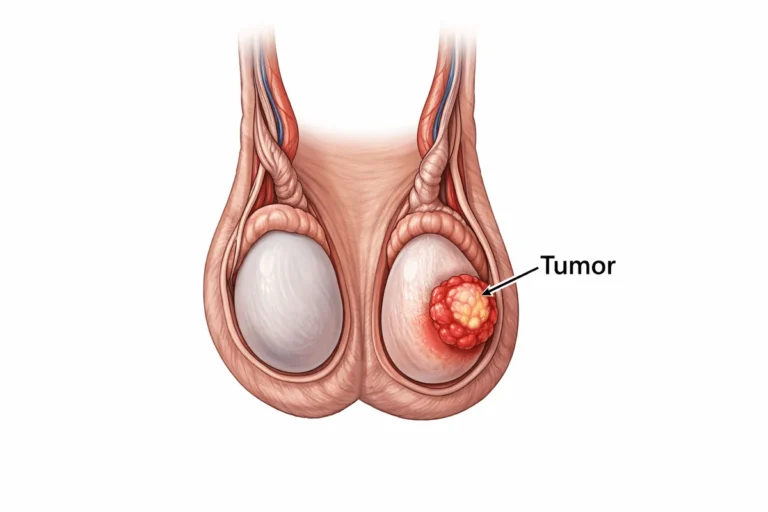

What Is Bladder Cancer?
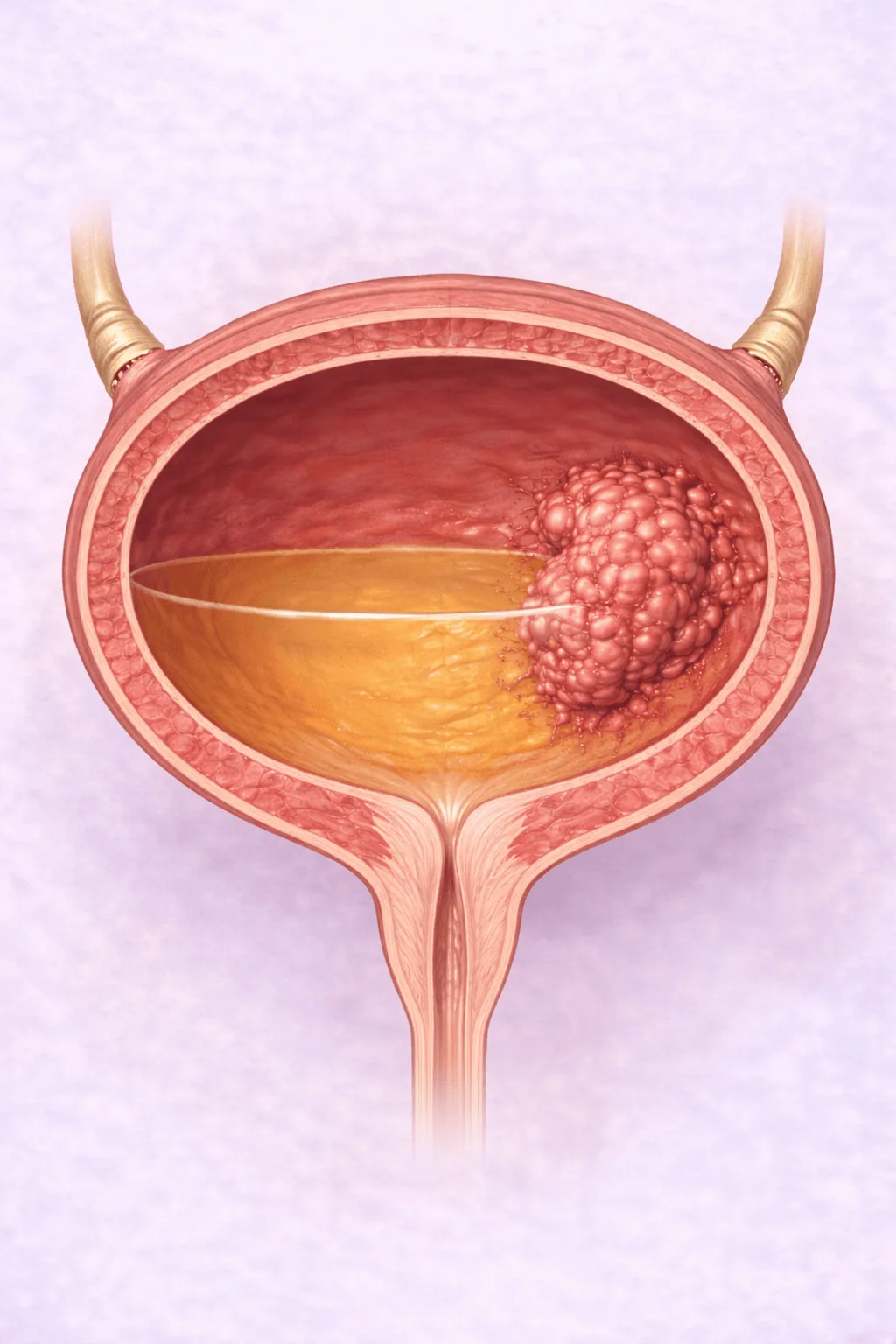
Bladder cancer is a cancer that develops in the urinary bladder, the hollow organ in the lower abdomen that stores urine. Most bladder cancers arise from the inner lining of the bladder, which is why they often cause early urinary symptoms, especially blood in urine.
When detected early, bladder cancer is highly treatable. However, it requires regular follow-up, as there is a risk of the cancer coming back.
Why Bladder Cancer Awareness Is Important
- Blood in urine is often painless and ignored
- Many people delay seeing a doctor
- Early-stage bladder cancer has very high cure rates
- Delay in diagnosis can allow the cancer to grow deeper into the bladder wall
Any blood in urine should be considered abnormal until proven otherwise.
Bladder Cancer – Key Statistics
Worldwide
- Bladder cancer is among the top 10 most common cancers globally
- Over 5.7 lakh new cases are diagnosed every year
- It is more common in men than women
India
- Bladder cancer is one of the common urinary tract cancers
- Seen more often in men above 50 years
- Tobacco use is a major contributing factor
- Outcomes are excellent when detected early
Types of Bladder Cancer (Simple Explanation)
Based on Depth of Involvement
Non-muscle invasive bladder cancer
- Limited to the inner layers of the bladder
- Most common type at diagnosis
- High cure rates with proper treatment and follow-up
Muscle-invasive bladder cancer
- Cancer has grown into the bladder muscle
- Requires more aggressive treatment
- Still potentially curable with timely care
Based on Microscopic Appearance (Histology)
On microscopic examination, bladder cancer can have different types:
- Urothelial (Transitional cell) carcinoma – most common
- Squamous cell carcinoma
- Adenocarcinoma
- Neuroendocrine carcinoma
- Carcinosarcoma (rare)
These types help doctors decide the best treatment plan.
Who Is at Risk?
You may have a higher risk if you have:
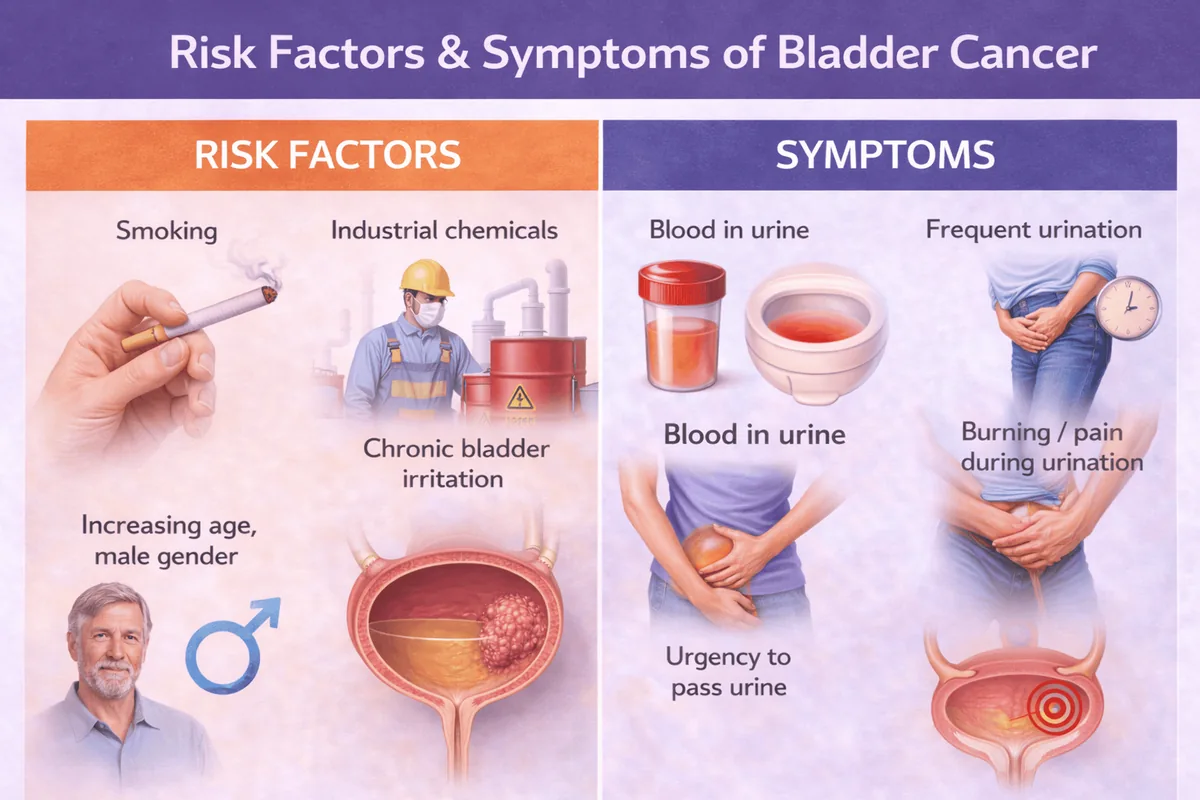
- Smoking history (strongest risk factor)
- Exposure to industrial chemicals (dyes, rubber, leather industries)
- Long-term urinary catheter use
- Recurrent urinary tract infections
- Increasing age (usually over 50 years)
- Male gender
- Previous history of bladder cancer
Smoking increases bladder cancer risk several-fold.
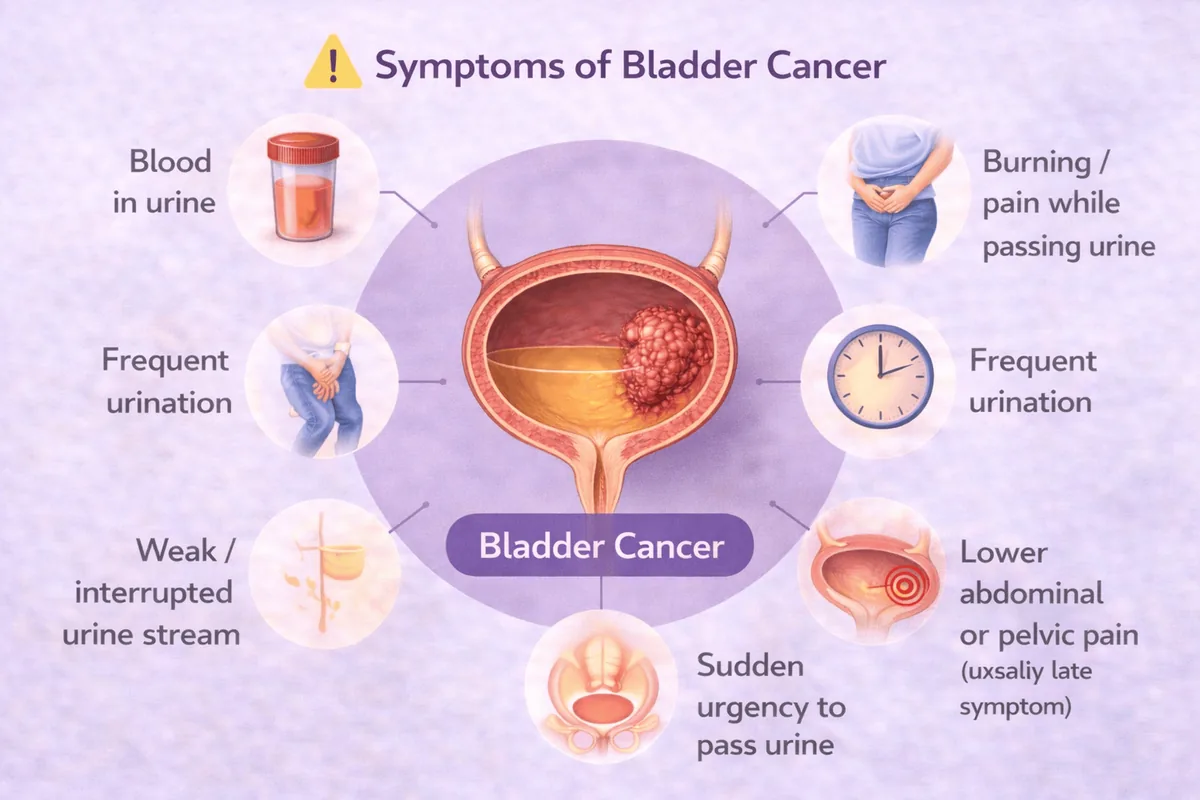
Common Warning Signs (Do Not Ignore)
Seek medical attention if you notice:
- Blood in urine (pink, red, or cola-colored)
- Burning or pain while passing urine
- Frequent urination
- Sudden urgency to pass urine
- Weak or interrupted urine stream
- Lower abdominal or pelvic pain (usually late symptom)
Blood in urine may be painless — this does NOT make it harmless.
How Is Bladder Cancer Diagnosed?
- Urine tests and urine cytology
- Ultrasound or CT scan
- Cystoscopy – direct examination of bladder using a small camera
- Biopsy or removal of tumor for confirmation
Cystoscopy is the most important diagnostic test.
Treatment of Bladder Cancer
Individualized and Stage-Based
Treatment depends on:
- How deep the tumor has grown into the bladder wall
- Grade (aggressiveness) of the tumor
- Risk of recurrence
1. Early-Stage (Non-Muscle Invasive) Bladder Cancer
Goal: Cure and prevent recurrence
- Removal of tumor through the urinary passage (endoscopic surgery)
- Medicines may be placed inside the bladder (chemotherapy drugs or BCG)
- Regular cystoscopic follow-up is essential
Very high chance of cure
If untreated, it can progress deeper into the bladder wall
2. Muscle-Invasive Bladder Cancer
Goal: Cure
- Radical surgery to remove the bladder in suitable patients
- Chemotherapy with or without immunotherapy before or after surgery
- In selected patients, bladder-preserving treatment (chemoradiation) may be considered instead of surgery
3. Advanced / Metastatic Bladder Cancer
Goal: Disease control and quality of life
- Chemotherapy
- Immunotherapy (has significantly improved outcomes)
- Palliative treatments to relieve symptoms and improve comfort
Can Bladder Cancer Be Prevented?
Risk can be reduced by:
- Avoiding smoking
- Drinking adequate fluids
- Using protective measures in chemical industries
- Seeking early medical advice for urinary symptoms
When Should You See a Doctor?
- Any episode of blood in urine
- Persistent burning or urgency while passing urine
- Recurrent urinary infections
- Urinary symptoms in smokers
Early consultation allows simpler treatment and better outcomes.
Key Take-Home Message
Blood in urine is not normal. Early diagnosis of bladder cancer allows effective treatment, long-term control, and good quality of life.