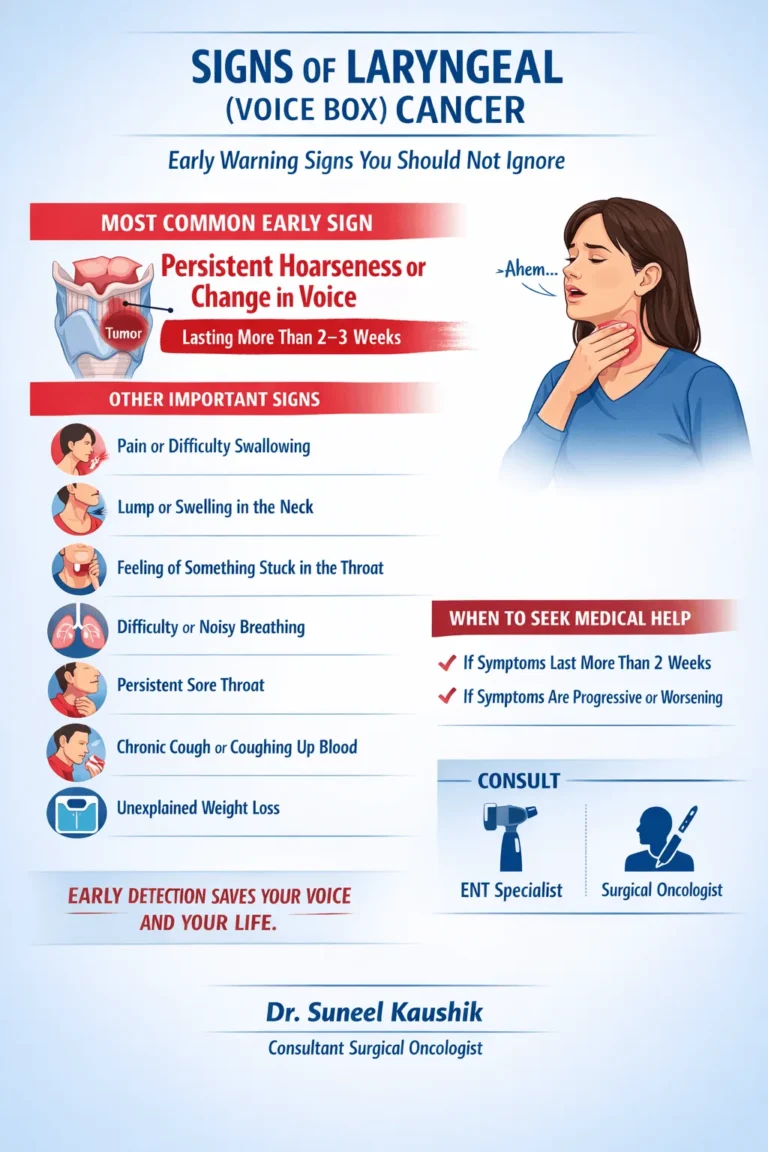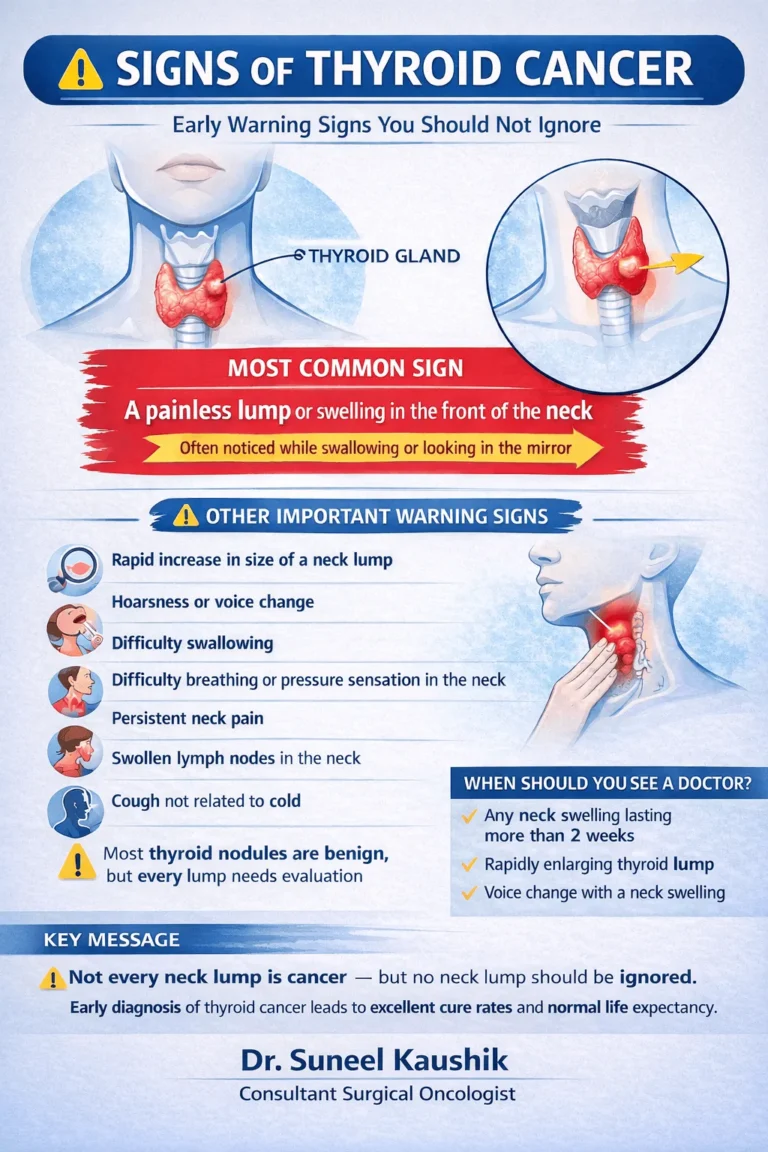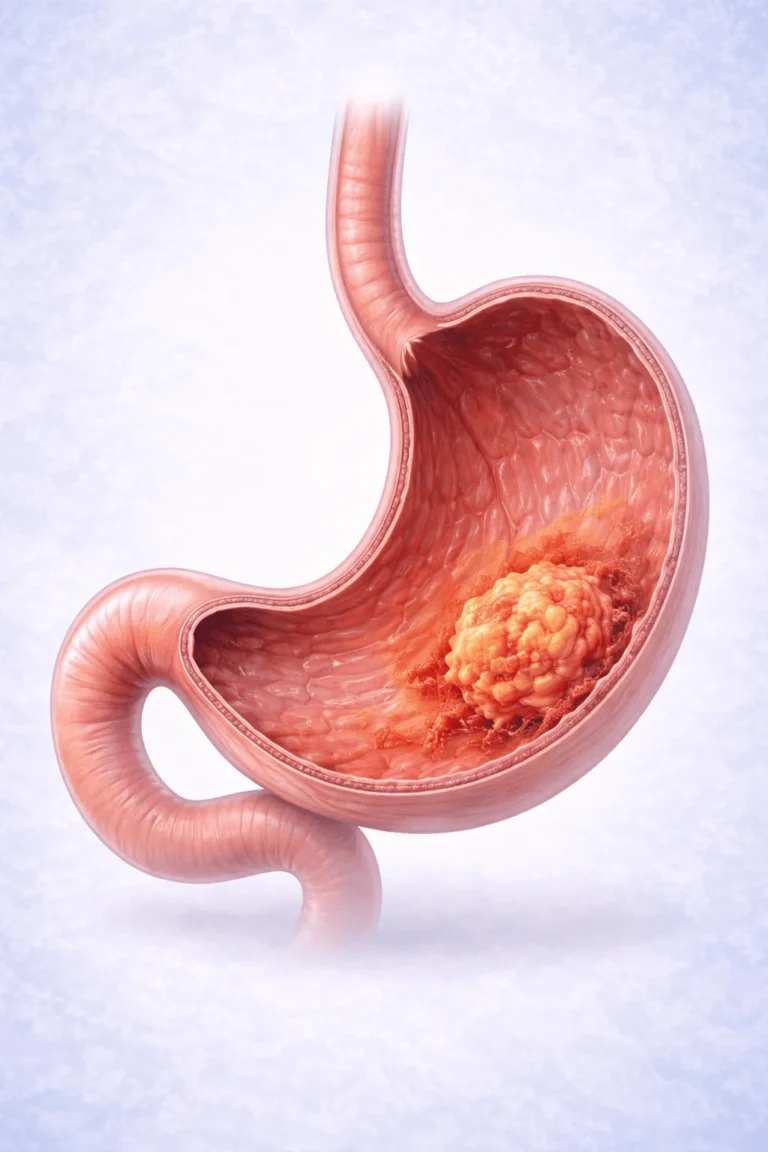

Oral cancer is one of the most common cancers in India—but it is also one of the most preventable and most curable cancers when detected early. This guide explains symptoms, early warning signs, risk factors, and treatment options in simple, everyday language.
What Is Oral Cancer?
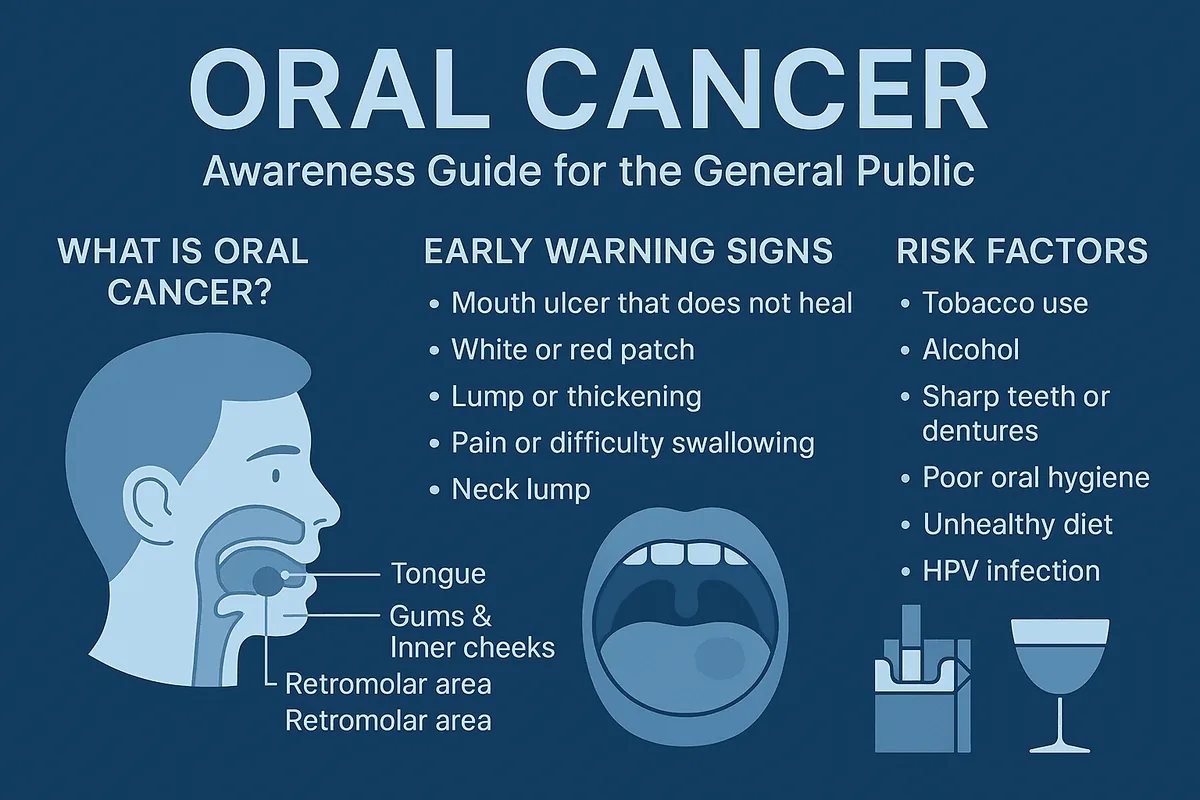
Oral cancer is a cancer that starts anywhere inside the mouth. This includes:
- Lips
- Tongue
- Inner cheeks
- Gums
- Floor of the mouth (the area under the tongue)
- Roof of the mouth (hard palate)
- The back corner of the mouth (retromolar area)
In most people, oral cancer begins as a small ulcer, patch, or growth that does not heal.
Early Warning Signs (What You Should Watch For)
You must see a doctor if you notice:
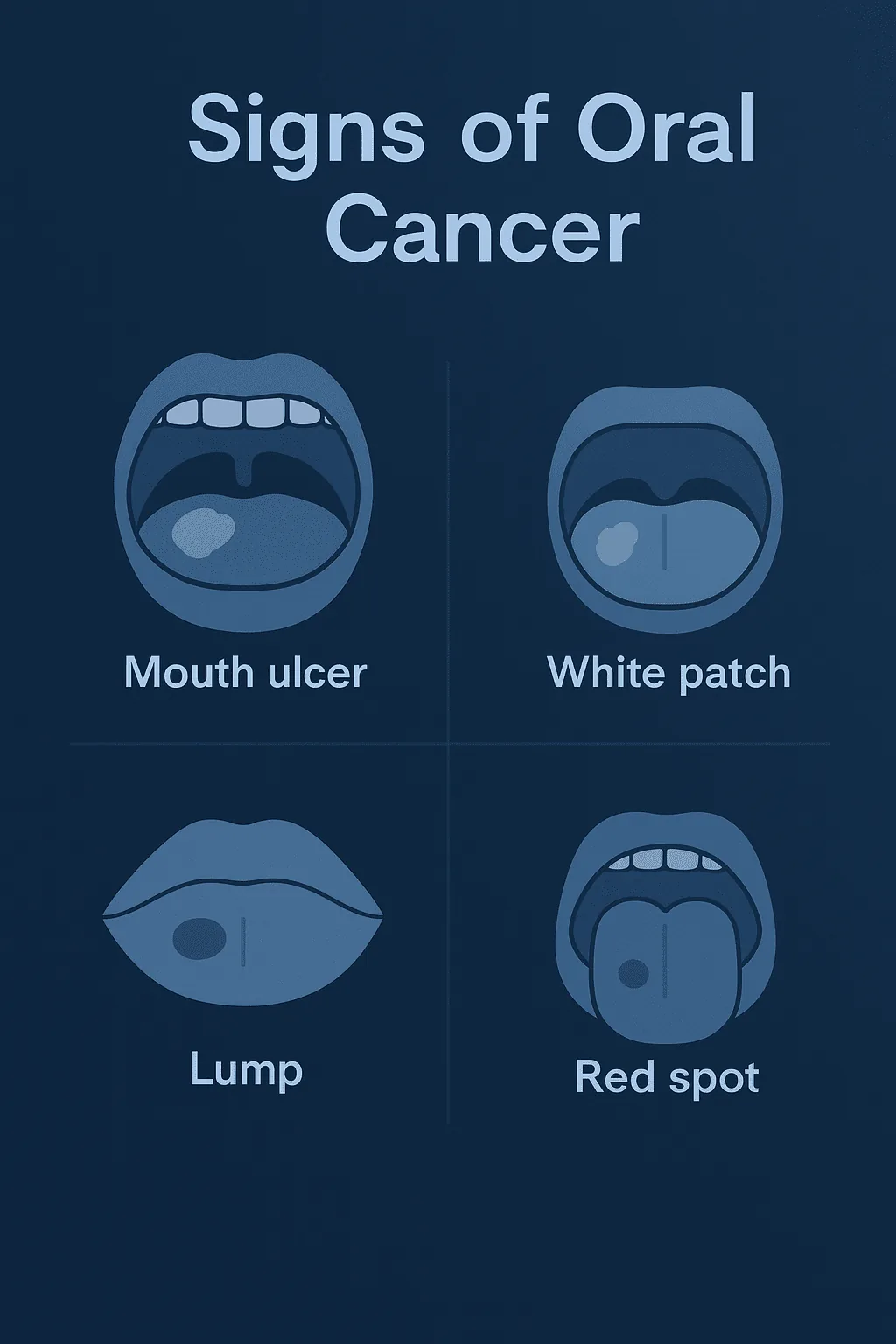
1. A mouth ulcer that does NOT heal within 2–3 weeks
This is the most common sign.
2. White or red patches inside the mouth
- White patches (called leukoplakia)
- Red patches (called erythroplakia)
These are often early changes before cancer develops.
3. A lump, thick area, or swelling inside the mouth
4. Difficulty in opening the mouth, chewing, or swallowing
5. Pain that does not go away, sometimes spreading to the ear
6. Loose teeth without any dental problem
7. A lump in the neck
This may be a swollen lymph node.
8. Unusual bleeding inside the mouth
Any symptom lasting more than 2–3 weeks should be checked immediately. Early cancer cures easily.
Who Is at Risk?
1. Tobacco (any form)
This is the number one cause. Includes:
- Chewing tobacco
- Gutka
- Khaini
- Zarda
- Betel nut (supari)
- Cigarettes / beedis
2. Alcohol
Drinking regularly increases risk.
3. Tobacco + alcohol together
This combination multiplies the risk many times.
4. Sharp teeth or ill-fitting dentures
Long-term irritation can contribute to cancer formation.
5. Poor oral hygiene
6. Very spicy, hot, or unhealthy diet
7. HPV virus
Less common in India but still possible.
How Doctors Diagnose Oral Cancer
1. Mouth examination
A cancer specialist checks the entire mouth and neck.
2. Biopsy (simple test, painless with local anesthesia)
A small sample from the ulcer/patch is taken and examined under a microscope. This is the only test that confirms cancer.
3. Scans
To see the size and spread of cancer:
- CT scan
- MRI
- PET-CT (in some cases)
These help plan the best treatment.
Treatment of Oral Cancer – Explained Simply
Most oral cancers are treated using a combination of the following:
- Surgery
- Radiation therapy
- Chemotherapy (sometimes)
The exact treatment depends on the stage and location of the cancer.
1. Surgery (Main & Most Important Treatment)
Surgery is the first and most effective treatment for most oral cancers.
The goals of surgery are:
- Remove the cancer completely
- Remove any cancerous lymph nodes in the neck
- Rebuild the mouth to restore function (reconstruction)
Let’s break this down so the general public can understand.
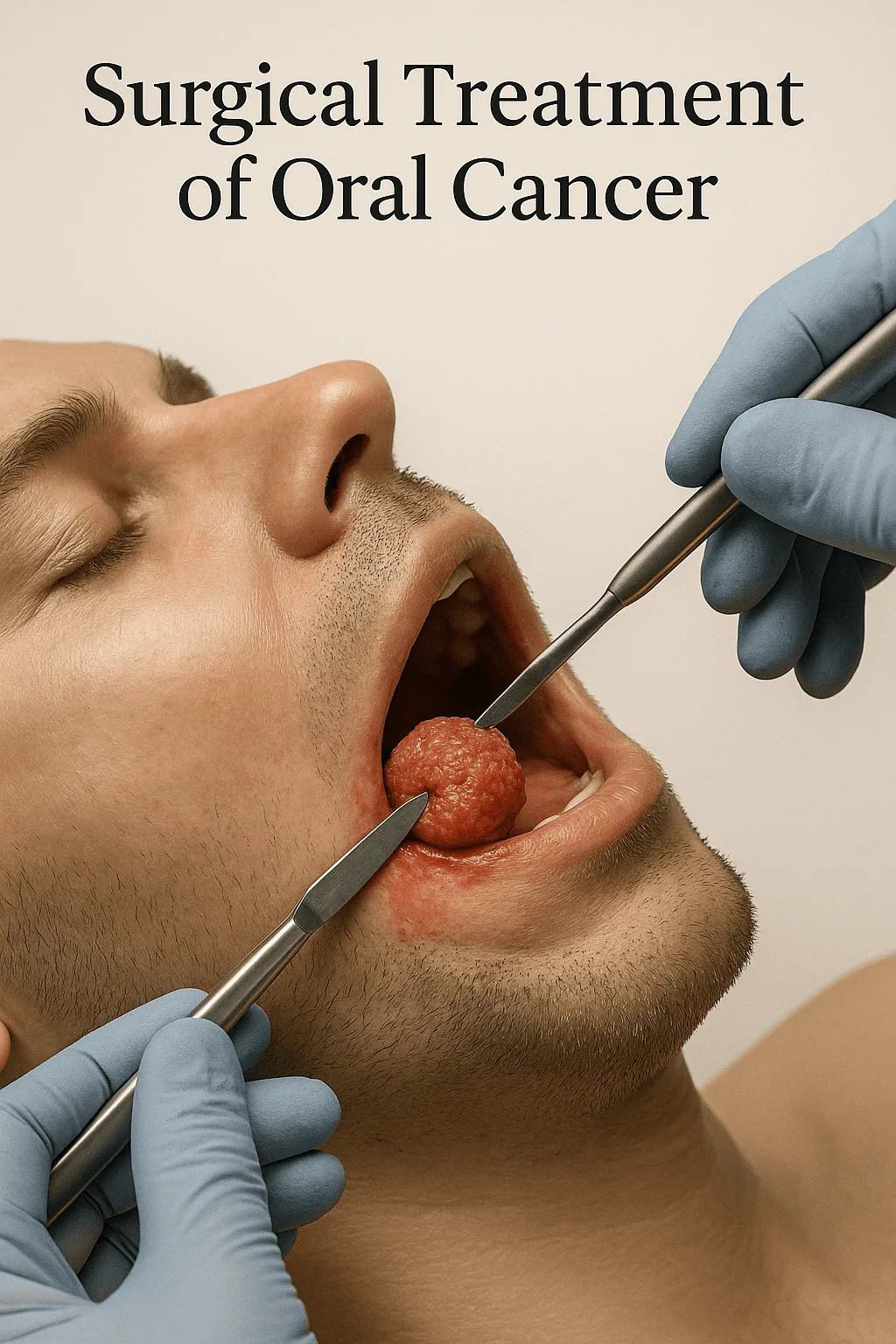
A. Removal of the Cancer (Primary Tumor Resection)
The surgeon removes the cancer along with a small amount of healthy tissue around it. This is done to make sure no cancer cells are left behind.
Depending on where the cancer is:
- Tongue cancer→ part of the tongue is removed
- Cheek/lip cancer→ the affected tissue is removed
- Gum or floor of mouth cancer→ the involved parts are removed
- If the cancer has invaded the jawbone, a portion of the jawbone may also be removed
This is done under general anesthesia, so the patient will be asleep and pain-free.
B. Neck Lymph Node Removal (Neck Dissection)
Cancer from the mouth often spreads first to the neck lymph nodes.
Neck dissection means removing these lymph nodes to:
- Prevent cancer from coming back
- Improve survival
Depending on the stage, the doctor may remove only a few lymph node groups or all the major ones on that side of the neck.
C. Reconstruction (Restoring Appearance & Function)
After removing cancer, reconstruction is done to help the patient:
- Speak normally
- Eat and swallow properly
- Look as natural as possible
Reconstruction may involve:
- Tissue from the same area
- Tissue/muscle/skin from the hand, leg, or thigh (free flap surgery)
These procedures are commonly done and safe.
2. Radiation Therapy (Using High- Energy Rays to Kill Cancer)
Radiation therapy uses targeted, high-energy X-rays to kill cancer cells.
When is radiation given?
- After surgery (most commonly)
- Sometimes before surgery
- When surgery is not possible
- For advanced cancers
How is it given?
- It is not a painful treatment
- It does NOT involve cutting, needles, or anesthesia
- Delivered by a machine from outside the body
- Patient lies on a couch, and the machine moves around the head/neck
Duration
- Usually 5 days a week
- For 5–7 weeks
Common temporary side effects
- Mouth ulcers
- Dry mouth
- Difficulty swallowing
- Skin redness
All these are treatable and improve with time.
3. Chemotherapy (Cancer-Killing Medicines)
Chemotherapy uses medicines to help fight cancer.
When is it needed?
- When cancer has spread
- Along with radiation (chemoradiation)
- For advanced stages
- When cancer returns
How is it given?
- Usually through a vein (IV)
- Given in cycles (e.g., once every 1–3 weeks)
Medicines used include:
- Cisplatin (most common)
- Carboplatin
- 5-FU
- Targeted therapy (Cetuximab) in select cases
Common side effects (temporary)
- Nausea
- Tiredness
- Lowered immunity
- Mouth ulcers
Doctors monitor patients closely to manage side effects.
Can Oral Cancer Be Prevented?
Yes. Most cases can be prevented by:
- Stopping tobacco and betel nut completely
- Reducing or avoiding alcohol
- Maintaining good oral hygiene
- Treating sharp teeth/dentures that cause irritation
- Eating fruits and vegetables
- Getting regular check-ups, especially if you chew tobacco
When Should You See a Doctor?
See a cancer specialist immediately if you notice:
- Any ulcer, patch, or swelling that lasts longer than 2 weeks
- Difficulty opening the mouth
- Persistent pain or bleeding
- A lump in the neck
Early detection can cure oral cancer in more than 90% of early cases.