
What Is Laryngeal Cancer?
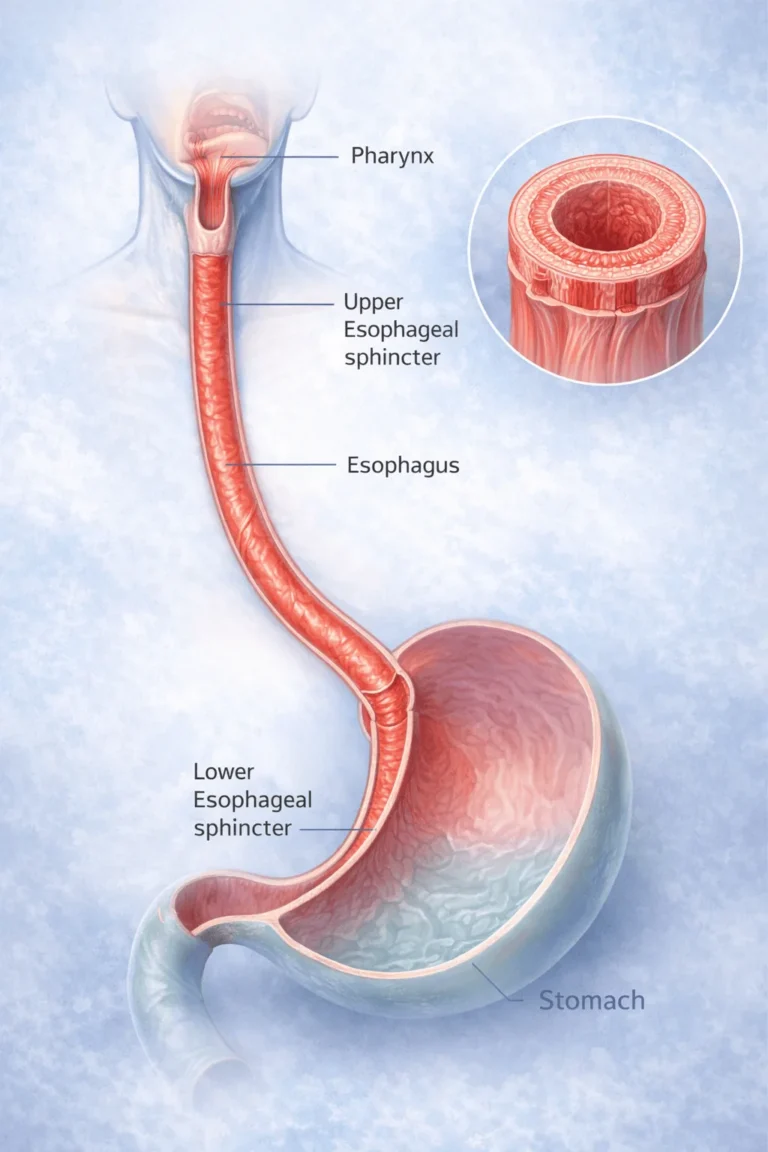
Laryngeal cancer is a cancer that develops in the larynx (voice box)—an organ essential for speaking, breathing, and swallowing. When detected early, this cancer is highly treatable, often with preservation of voice and normal swallowing.
Key Statistics
Laryngeal cancer accounts for approximately 1–2% of all cancers worldwide, with an estimated 1.8–2 lakh new cases and around 95,000 deaths each year globally. It is far more common in men, particularly after the age of 50, largely due to higher tobacco and alcohol exposure. In India, laryngeal cancer forms a significant proportion of head and neck cancers, which together rank among the top three cancers in men. Importantly, when detected at an early stage, cure rates exceed 80–90%, highlighting the critical role of early recognition and timely medical evaluation.
Who Is at Risk?
You may be at higher risk if you:
- Smoke cigarettes, bidis, or use chewing tobacco
- Consume alcohol regularly
- Are exposed to dust, fumes, or industrial chemicals
- Have long-standing throat irritation or poor oral hygiene
- HPV infection (less common, but relevant)
Tobacco + alcohol together greatly increase risk
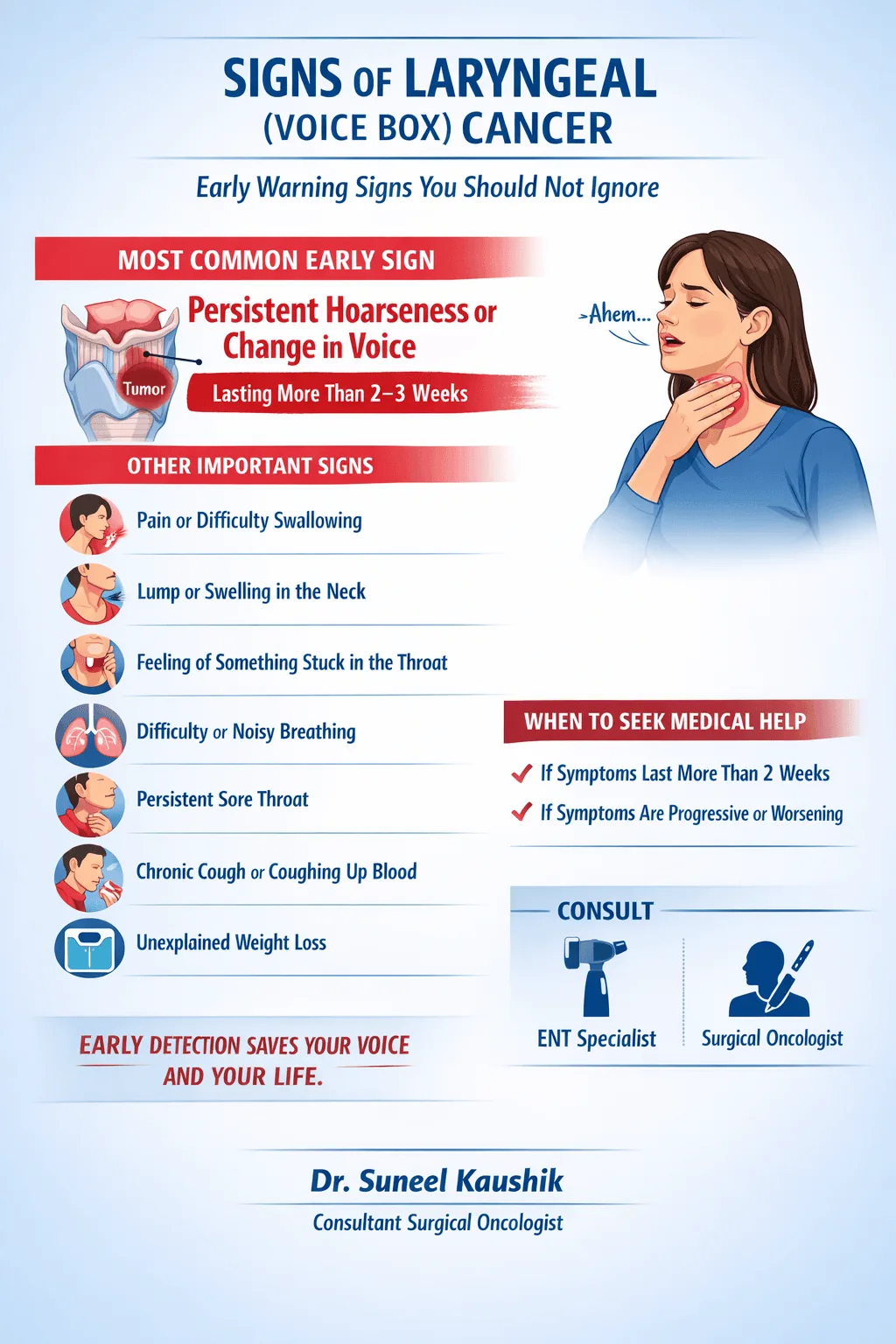
Early Warning Symptoms
Consult a doctor if any of the following last more than 2–3 weeks:
- Persistent hoarseness or change in voice
- Throat pain or pain while swallowing
- A lump or swelling in the neck
- Difficulty in breathing or noisy breathing
- Chronic cough or blood in sputum
- Unexplained weight loss
Do not ignore voice change—it is the most common early symptom.
How Is It Diagnosed?
- Examination by an ENT specialist/Oncosurgeon
- Laryngoscopy to visualize the voice box
- Biopsy to confirm cancer
- CT or MRI scans to determine the local stage
- Whole body PETCECT for staging the disease and rule out second primary cancers in lung.
Early Detection Saves Your Voice
Early diagnosis often allows:
- High cure rates
- Voice-preserving treatment
- Better swallowing and breathing
- Improved quality of life
Treatment Options – An Overview
Management of laryngeal cancer is stage-dependent and aims to achieve complete cancer control while preserving voice, swallowing, and breathing whenever possible. Treatment decisions are made by a multidisciplinary team including ENT surgeons, surgical oncologists, radiation oncologists, medical oncologists, and speech therapists.
Early-stage disease (Stage I–II) is often treated with radiotherapy or limited surgery, both of which offer high cure rates (80–90%) with good voice preservation. Minimally invasive techniques, where appropriate, allow faster recovery and better functional outcomes.
Locally advanced disease (Stage III–IVA) usually requires combined treatment. This may include partial or total laryngectomy with neck lymph node dissection, followed by radiotherapy or chemoradiotherapy to reduce recurrence risk. In selected patients, organ-preservation protocols using chemoradiation may avoid removal of the voice box while still achieving good cancer control.
Advanced or recurrent disease may need more extensive surgery, systemic therapy, or palliative treatment focused on symptom relief and quality of life.
Rehabilitation is a critical part of management. Speech and swallowing therapy help patients regain communication and safe oral intake, especially after major surgery. With timely treatment and structured rehabilitation, many patients return to an active and productive life.
Key message: Early diagnosis allows simpler treatment, better cure rates, and preservation of the patient’s natural voice.
In Summary
Treatment is individualized based on stage and extent:
- Early-stage cancer: Radiation or limited surgery with voice preservation
- Advanced cancer: Surgery (partial or total laryngectomy), with radiotherapy and/or chemotherapy
- Rehabilitation: Voice and swallowing therapy for optimal recovery
Can It Be Prevented?
- Stop tobacco use in any form
- Limit alcohol intake
- Maintain good oral hygiene
- Seek medical advice early for persistent throat or voice symptoms
Our Commitment
At our hospital, laryngeal cancer care is delivered by a multidisciplinary team including ENT surgeons, surgical oncologists, radiation oncologists, speech therapists, and rehabilitation specialists—ensuring comprehensive care from diagnosis to recovery.
Key Take-Home Message
A hoarse voice is not always harmless and should not be ignored. Early detection can save your voice — and your life.
Voice Rehabilitation After Laryngectomy
Loss of natural voice after laryngectomy can be emotionally challenging, but effective voice rehabilitation is possible and is an essential part of laryngeal cancer management.
Voice restoration is planned before or soon after surgery and guided by a trained speech and language therapist. The most effective and commonly used method is tracheoesophageal speech using a voice prosthesis placed between the windpipe and food pipe. This allows lung air to produce speech, resulting in a more natural-sounding voice with good fluency and intelligibility. Many patients regain functional communication within weeks of surgery.
Other rehabilitation options include electrolarynx-assisted speech, a handheld device that produces vibrations to create speech, and esophageal speech, where swallowed air is used to generate sound. While these methods may require more training and practice, they provide reliable communication alternatives when a voice prosthesis is not suitable.
In addition to voice restoration, rehabilitation focuses on safe swallowing, breathing through a permanent stoma, stoma care, and psychological support. With structured rehabilitation and family support, most patients can return to social interaction, work, and a good quality of life after laryngectomy.
Key message: Loss of voice is not loss of communication—modern rehabilitation techniques allow patients to speak again with confidence and dignity.