
What Is Stomach Cancer?
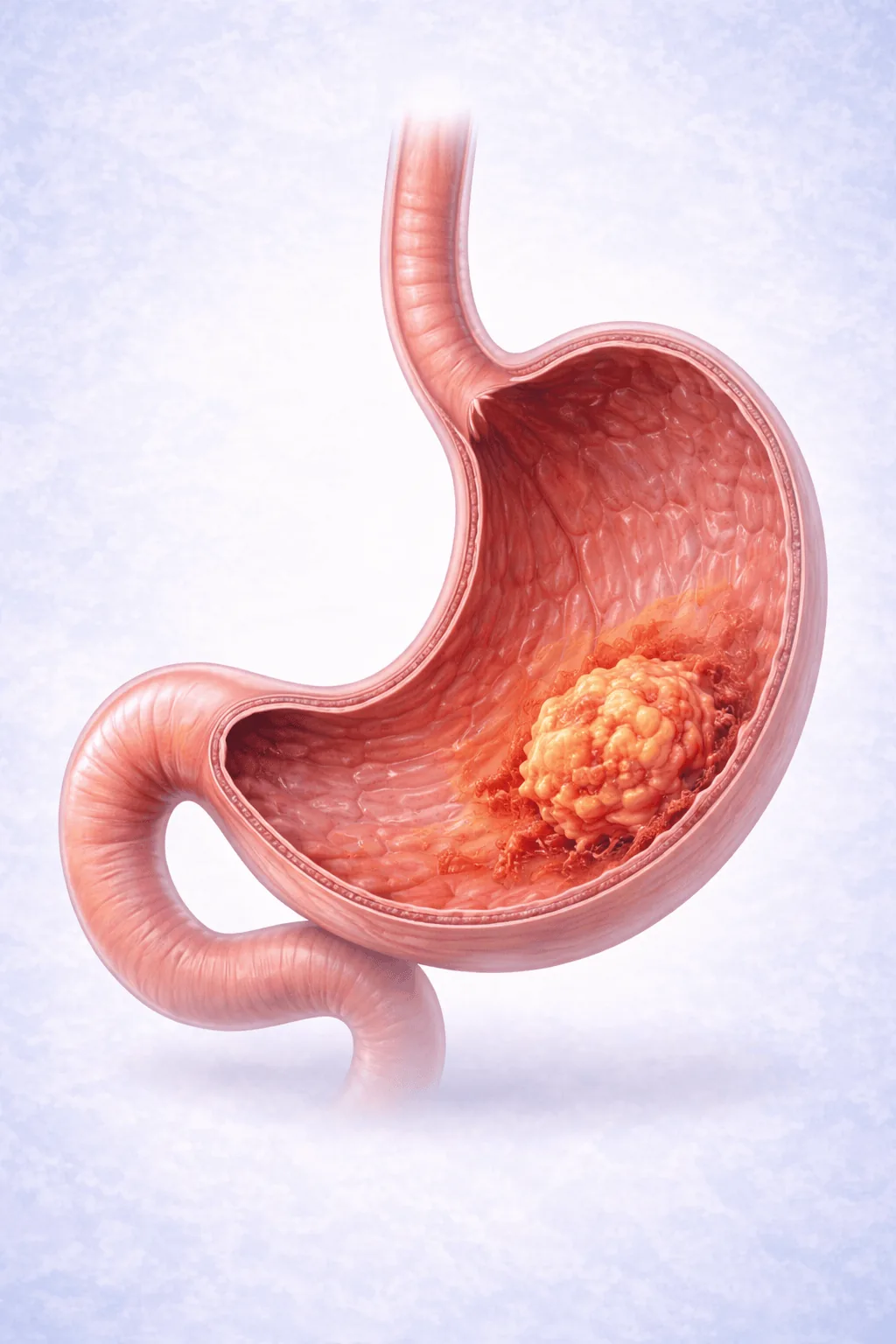
Stomach cancer, also known as gastric cancer, develops from the lining of the stomach. It usually progresses silently in the early stages, which is why many patients are diagnosed late. When detected early, however, stomach cancer is potentially curable with modern multimodality treatment.
Why Stomach Cancer Awareness Is Important
- Early symptoms often mimic gastritis or acidity
- Many patients delay medical evaluation
- Advanced disease requires complex treatment
- Early detection significantly improves survival and quality of life
Persistent digestive symptoms should never be ignored.
Stomach Cancer – Key Statistics
Global
- Stomach cancer is the 5th most common cancer worldwide
- It is the 4th leading cause of cancer-related deaths
- Over 1 million new cases are diagnosed annually
India
- Stomach cancer is among the top gastrointestinal cancers in India.
- It accounts for approximately 5–7% of all cancer cases in certain regions.
- Higher incidence is seen in southern and northeastern India.
- More common in men than women (male:female ratio ~2:1).
- Majority of Indian patients are diagnosed in Stage II or III.
- Overall 5-year survival in India ranges from 20–30%, but is much higher when detected early.
Limited early screening and symptom overlap with acidity contribute to delayed diagnosis.
Types of Stomach Cancer
- Adenocarcinoma (most common)
- Signet ring cell carcinoma
- Gastrointestinal stromal tumors (GIST)
- Neuroendocrine tumors (rare)
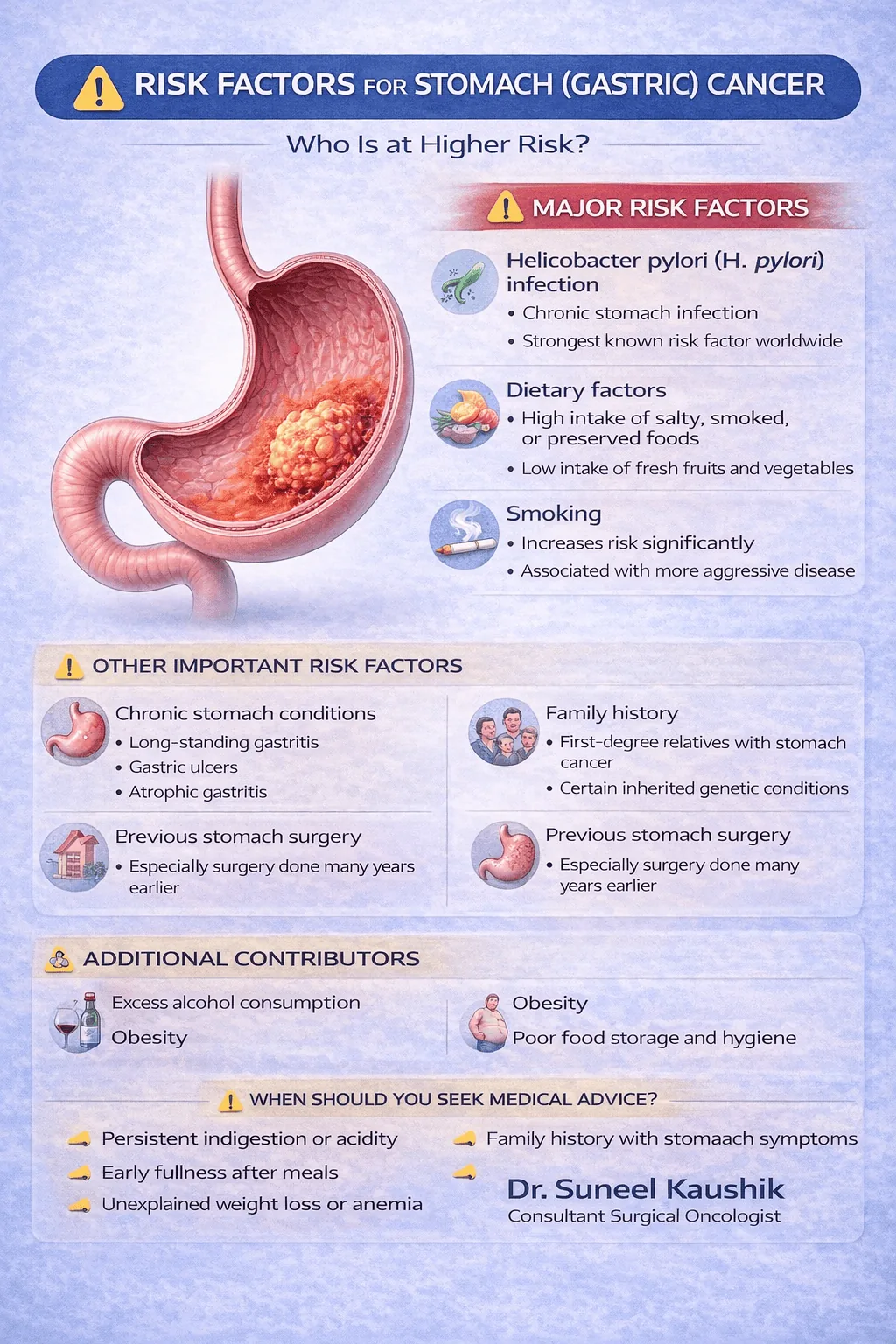
Who Is at Risk?
You may be at higher risk if you have:
- Helicobacter pylori infection – H. pylori infection is linked to nearly 60% of gastric cancers worldwide.
- Chronic gastritis or gastric ulcers
- Smoking or alcohol consumption
- Diet rich in salty, smoked, or preserved foods
- Family history of stomach cancer
- Previous stomach surgery
- Age > 50 years
Common Warning Signs (Do Not Ignore)
Seek medical attention if you experience:
- Persistent indigestion or acidity
- Early fullness after meals
- Loss of appetite
- Unexplained weight loss
- Upper abdominal pain
- Nausea or vomiting
- Vomiting blood or black stools
- Fatigue or anemia
Symptoms persisting beyond 2–3 weeks require evaluation.
How Is Stomach Cancer Diagnosed?
- Upper GI endoscopy with biopsy (gold standard)
- CT scan of abdomen and chest
- Endoscopic ultrasound (selected cases)
- PET-CT for staging
- Blood tests and nutritional assessment
Treatment of Stomach Cancer
A Multimodality, Stage-Wise Approach
Management depends on the stage, location of tumor, and patient fitness. Best outcomes are achieved through a multidisciplinary team approach.
1. Early-Stage Stomach Cancer (Stage I)
Goal: Cure
- Surgery (partial or total gastrectomy)
- Minimally invasive approaches in selected patients
- Excellent long-term outcomes when detected early
2. Locally Advanced Stomach Cancer (Stage II–III)
Goal: Cure with Multimodality Treatment
This is the most common stage at diagnosis.
Chemotherapy (Before & After Surgery)
- Shrinks tumor
- Treats microscopic disease
- Improves survival
Surgery
- Radical gastrectomy with lymph node dissection
- Performed after neoadjuvant chemotherapy
Combined chemotherapy + surgery is the global standard of care.
3. Advanced / Metastatic Stomach Cancer (Stage IV)
Goal: Disease control and quality of life
- Chemotherapy
- Targeted therapy (HER2-positive cancers)
- Immunotherapy in selected patients
- Palliative surgery or stenting for symptom relief
Modern systemic therapies have significantly improved survival and symptom control.
Role of Surgery
- Cornerstone of cure in early and locally advanced disease
Supportive & Nutritional Care
- Nutritional assessment before and after treatment
- Diet modification and supplements
- Management of treatment-related side effects
- Psychological and rehabilitation support
Survival by Stage (Approximate)
- Early-stage (Stage I): 70–90% 5-year survival
- Locally advanced (Stage II–III): 30–50% with multimodality treatment
- Advanced / metastatic (Stage IV): <10–15%, but improving with modern therapies
Stage at diagnosis is the single most important predictor of survival.
Can Stomach Cancer Be Prevented?
Risk can be reduced by:
- Treating H. pylori infection
- Avoiding smoking and excessive alcohol
- Healthy diet with fresh fruits and vegetables
- Early evaluation of persistent gastric symptoms
When Should You See a Doctor?
- Persistent acidity or indigestion
- Early satiety or weight loss
- Vomiting blood or black stools
- Unexplained anemia
Early consultation can be life-saving.
Key Take-Home Message
Not all stomach symptoms are simple acidity. Early detection and modern multimodality treatment offer real chances of cure and long-term survival.