
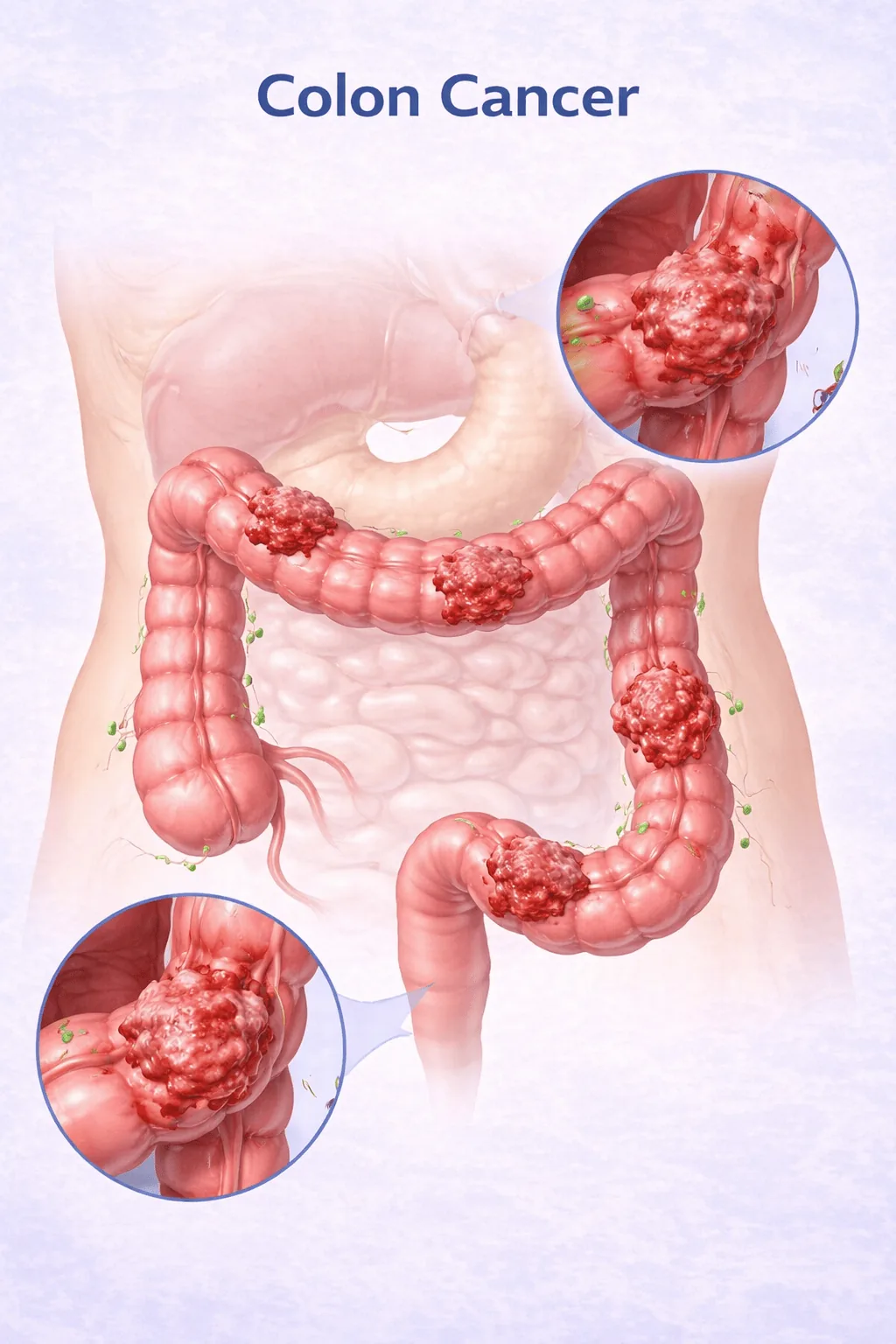
What Is Colon Cancer?
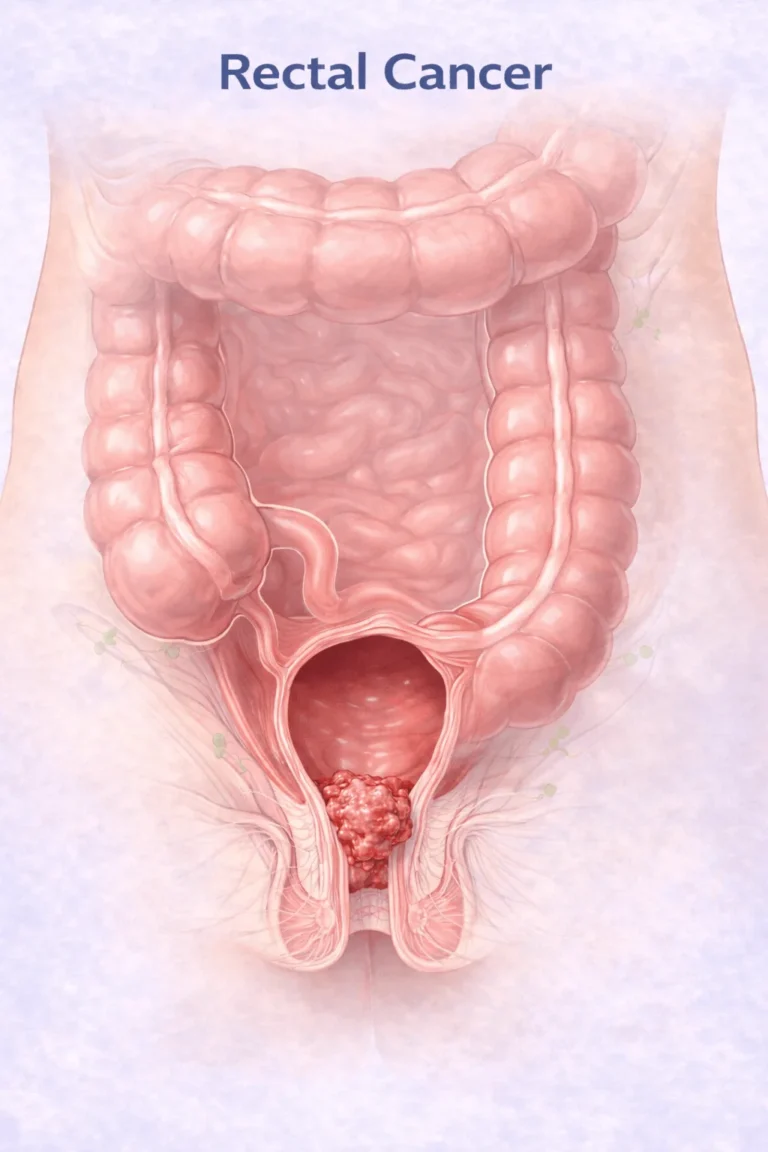
Colon cancer is a malignancy arising from the colon (large intestine), which is the portion of the bowel extending from the cecum to the sigmoid colon. Rectal cancer is biologically and surgically different and requires a separate treatment approach; therefore, it is not included in this discussion.
Colon cancer often develops slowly from precancerous polyps and is highly preventable and curable when detected early.
Why Colon Cancer Awareness Is Important
- Early stages are often asymptomatic
- Symptoms are commonly mistaken for piles, anemia, or irritable bowel
- Screening can detect polyps before they become cancer
- Early-stage colon cancer has excellent cure rates
Awareness and screening save lives.
Colon Cancer – Key Statistics
Global
- Colon cancer is among the top 3 most common cancers worldwide
- Over 1.9 million new colorectal cancer cases annually, with colon cancer forming the majority
- One of the leading causes of cancer-related deaths
India
- Colon cancer incidence in India is lower than Western countries, but steadily increasing.
- Accounts for approximately 3–5% of all cancers in urban Indian populations.
- Incidence is rising due to:
- Westernized diet
- Reduced physical activity
- Increasing obesity
- Colon cancer is increasingly diagnosed in patients below 50 years of age.
- A majority of patients still present in Stage II or III.
How Colon Cancer Develops
- Most colon cancers arise from adenomatous polyps
- The transformation from polyp to cancer usually takes 5–10 years
- This long window allows effective prevention through screening
Who Is at Risk?
You may be at higher risk if you have:
- Age > 45–50 years
- Family history of colon cancer or polyps
- Personal history of colon polyps
- Long-standing inflammatory bowel disease
- Diet high in red or processed meat
- Obesity and sedentary lifestyle
- Smoking or excessive alcohol intake
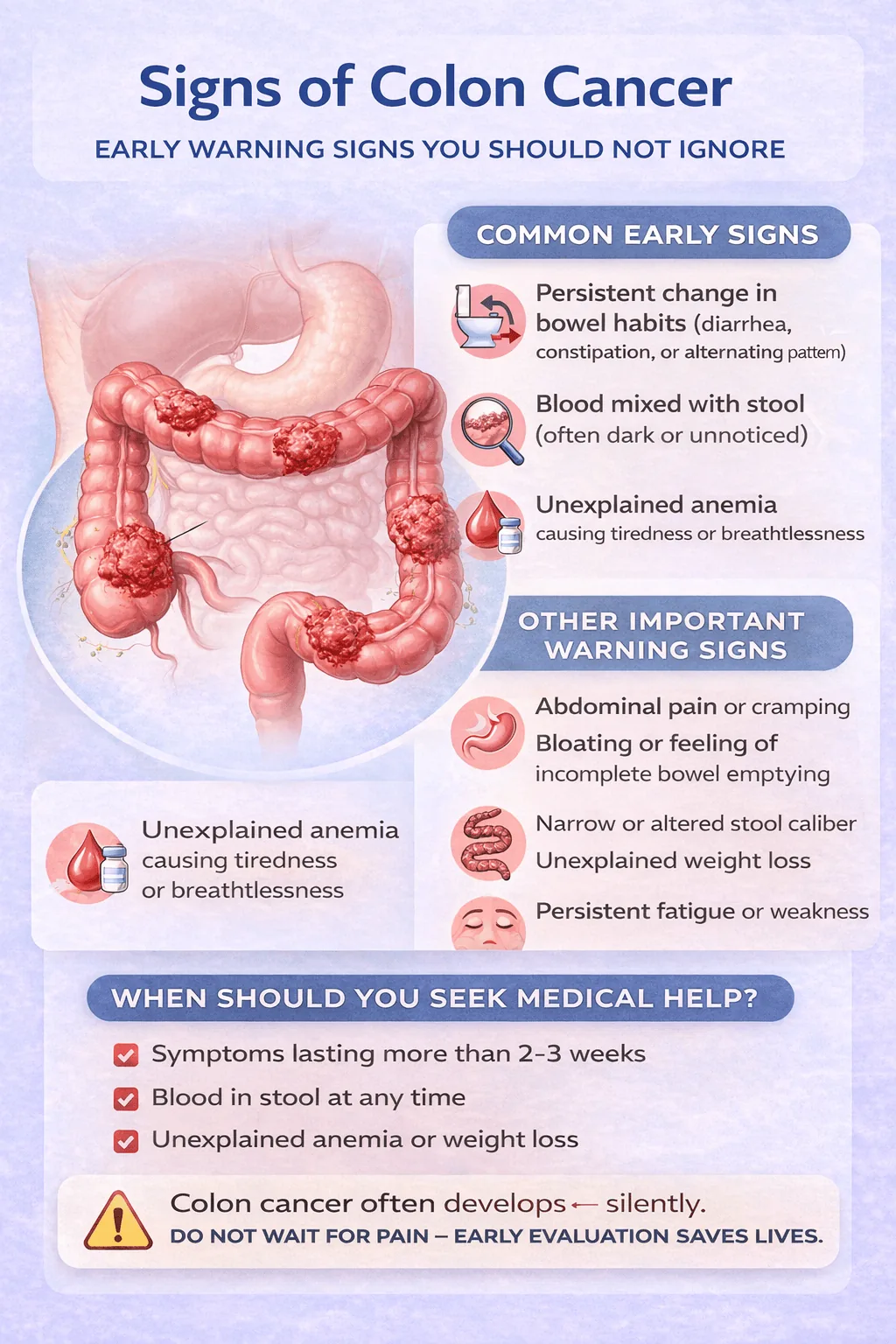
Common Warning Signs (Do Not Ignore)
Seek medical evaluation if you notice:
- Persistent change in bowel habits
- Blood mixed with stool
- Unexplained anemia
- Abdominal pain or bloating
- Unexplained weight loss
- Fatigue or weakness
Symptoms may appear late — screening is crucial even without symptoms.
How Is Colon Cancer Diagnosed?
- Colonoscopy with biopsy (gold standard)
- CT scan of abdomen and chest
- PET-CT in selected cases
- Blood tests including anemia work-up
- Genetic testing in high-risk families
Treatment of Colon Cancer
A Stage-Wise, Multimodality Approach
Management depends on stage, tumor location within the colon, and patient fitness. Rectal cancer protocols do not apply to colon cancer.
1. Early-Stage Colon Cancer (Stage I)
Goal: Cure
- Surgery alone is usually sufficient
- Removal of affected colon segment with lymph nodes
- Excellent long-term survival
2. Locally Advanced Colon Cancer (Stage II–III)
Goal: Cure with Multimodality Treatment
Surgery
- Radical colectomy with adequate lymph node clearance
- Cornerstone of cure
Chemotherapy
- Recommended in:
- All Stage III cancers
- Selected high-risk Stage II cancers
- Reduces recurrence risk and improves survival
Unlike rectal cancer, radiotherapy is usually NOT required in colon cancer.
3. Advanced / Metastatic Colon Cancer (Stage IV)
Goal: Prolong survival and maintain quality of life
- Chemotherapy
- Targeted therapy (based on molecular profiling)
- Immunotherapy in selected patients
- Surgery may be used for:
- Limited liver or lung metastases
- Symptom control
Modern treatments have significantly improved survival, even in advanced disease.
Role of Surgery in Colon Cancer
- Primary curative modality
- Required in almost all stages
- Includes minimally invasive approaches in suitable patients
Survival by Stage (Approximate 5-Year Survival Rates)
- Stage I: 90–95%
- Stage II: 70–85%
- Stage III: 50–70% (with chemotherapy)
- Stage IV: 15–25%, with improving outcomes due to modern therapies
Stage at diagnosis is the strongest predictor of survival.
Impact of Screening on outcomes
- Screening Colonoscopy can reduce colon cancer incidence by up to 60–70% by removing precancerous polyps.
- Regular screening reduces colon cancer mortality by 30–50%.
- Countries with screening programs detect more than 50% of cancers at early stages.
Can Colon Cancer Be Prevented?
Yes, in many cases:
- Regular screening colonoscopy
- Removal of precancerous polyps
- Healthy diet rich in fiber
- Regular physical activity
- Avoiding smoking and excess alcohol
When Should You See a Doctor?
- Blood in stool
- Persistent bowel habit changes
- Unexplained anemia or weight loss
- Strong family history of colon cancer
Early consultation allows simpler treatment and better outcomes.
Key Take-Home Message
Colon cancer is preventable, detectable, and highly curable when found early. Screening and timely treatment can save lives.