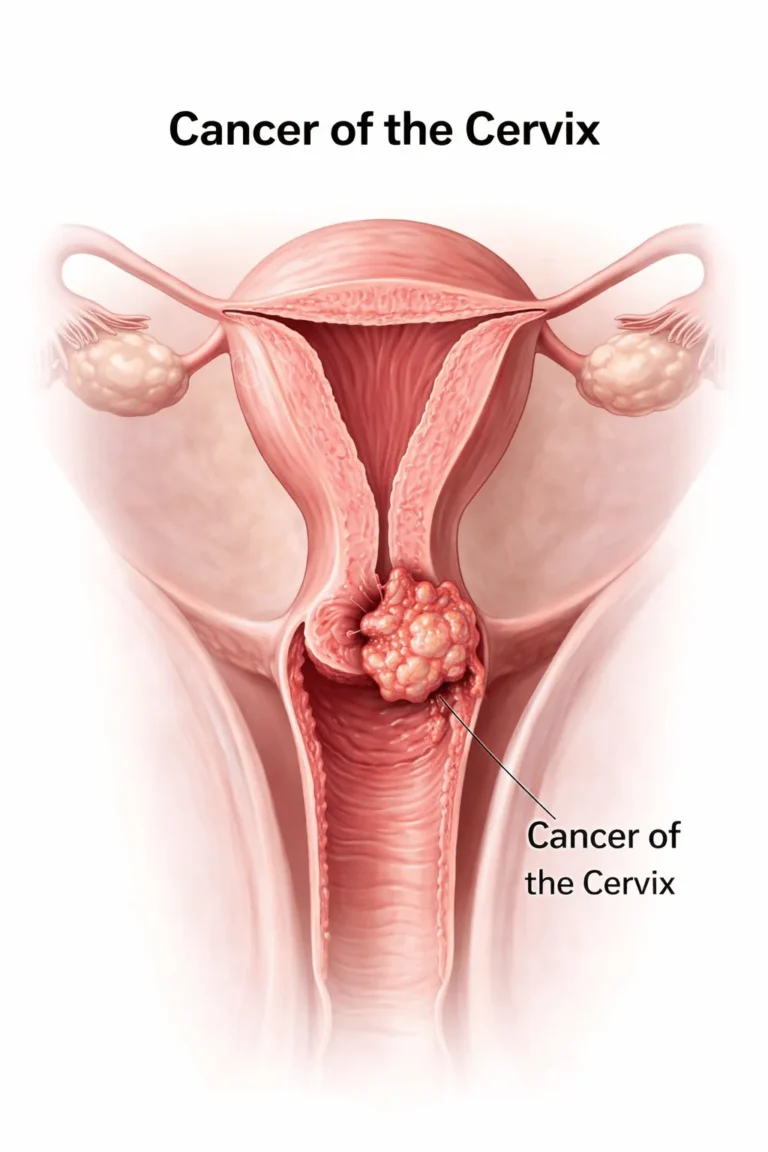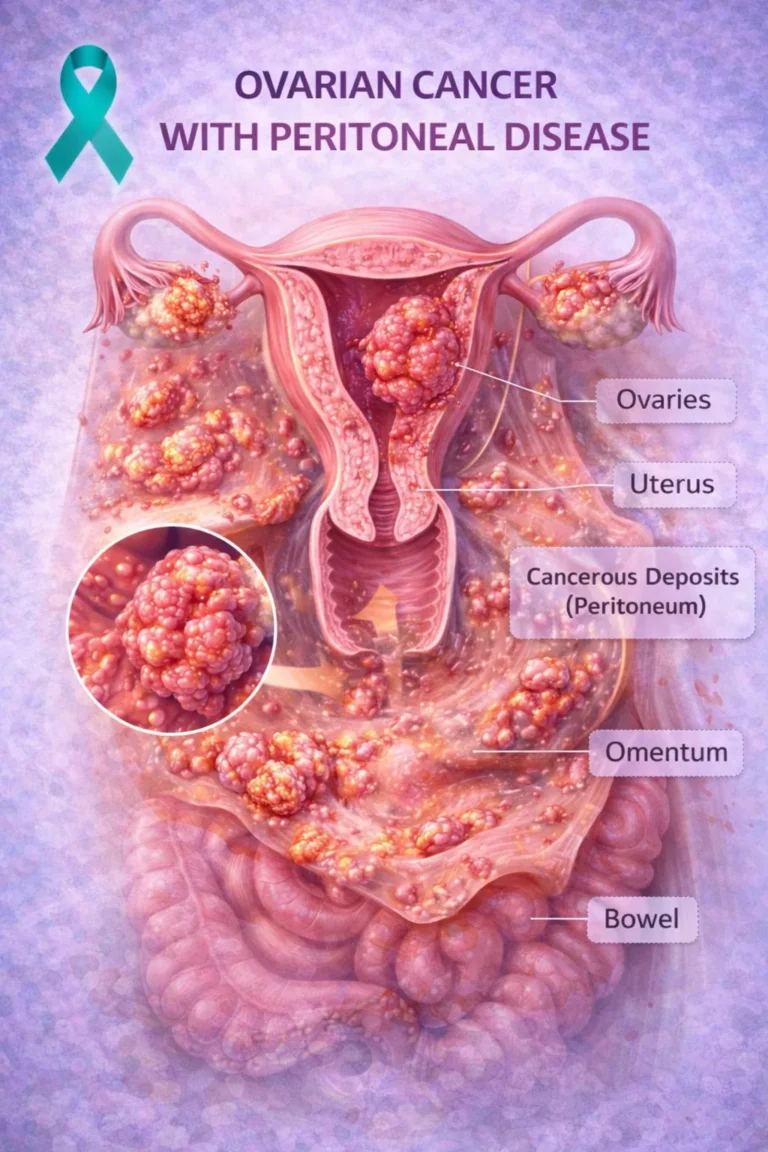

Uterine cancer is cancer that develops in the uterus (womb). It is often confused with cervical cancer, but they are different diseases.
Most uterine cancers begin in the lining of the uterus (endometrium). However, there are different types, and treatment depends heavily on the specific type.
The good news: Many uterine cancers are detected early and are highly treatable.
What Is the Uterus?
The uterus has:
- Inner lining called the endometrium
- Muscle layer called the myometrium
- Supporting tissues and blood vessels
Cancer can arise from different layers — and that determines behavior and treatment.
Main Types of Uterine Cancer
Understanding the type is crucial because prognosis and treatment differ significantly.
1. Endometrial Cancer (Most Common – ~90%)
This begins in the lining of the uterus.
Type 1 (Endometrioid Type)
- Most common
- Usually linked to excess estrogen
- Often detected early due to abnormal bleeding
- Generally slower growing
- Better prognosis
Type 2 (Non-Endometrioid)
Includes:
- Serous carcinoma
- Clear cell carcinoma
- Carcinosarcoma
These:
- Are more aggressive
- Spread earlier
- May require more intensive treatment
2. Uterine Sarcomas (Rare – <10%)
These arise from the muscle or connective tissue of the uterus.
Types include:
- Leiomyosarcoma
- Endometrial stromal sarcoma
- Undifferentiated sarcoma
Sarcomas behave differently from endometrial cancers and are treated differently.
Uterine Cancer – Key Statistics
Global
- Uterine cancer (mostly endometrial cancer) is among the most common gynecologic cancers worldwide.
- More than 400,000 new cases are diagnosed globally each year.
- It accounts for approximately 4–6% of all cancers in women.
- The 5-year survival rate is high (over 75%) when detected early.
Rising awareness and screening have improved early detection in many countries.
India
- Uterine cancer ranks among the top reproductive organ cancers in Indian women.
- Incidence increases after menopause, most commonly in women aged 50–65 years.
- Many cases are diagnosed at early stages due to bleeding symptoms.
- Survival rates in India are strong with early treatment, especially in specialized cancer centers.
Trends & Age Distribution
- More common in postmenopausal women.
- Incidence rises significantly after age 50.
- Risk increases with:
- Obesity
- Diabetes
- Hypertension
- Long-term estrogen exposure
Survival
When uterine cancer is found early and limited to the uterus, about eight to nine out of ten women (80-90%) are alive five years after diagnosis. If it spreads just beyond the uterus, around six to seven out of ten women survive long term. When it involves nearby lymph nodes or tissues, roughly four to six out of ten women do well. In advanced stages with distant spread, fewer than three out of ten women are alive at five years.
Why These Numbers Matter
- Most uterine cancers are curable if caught early.
- Postmenopausal bleeding is a common first symptom — not normal.
- Regular evaluation dramatically improves survival and quality of life.
Who Is at Risk?
Risk factors include:
- Age (most common after menopause)
- Obesity
- Diabetes
- High blood pressure
- Prolonged estrogen exposure
- Late menopause
- Never having children
- Family history (Lynch syndrome)
Not all women with risk factors develop cancer.
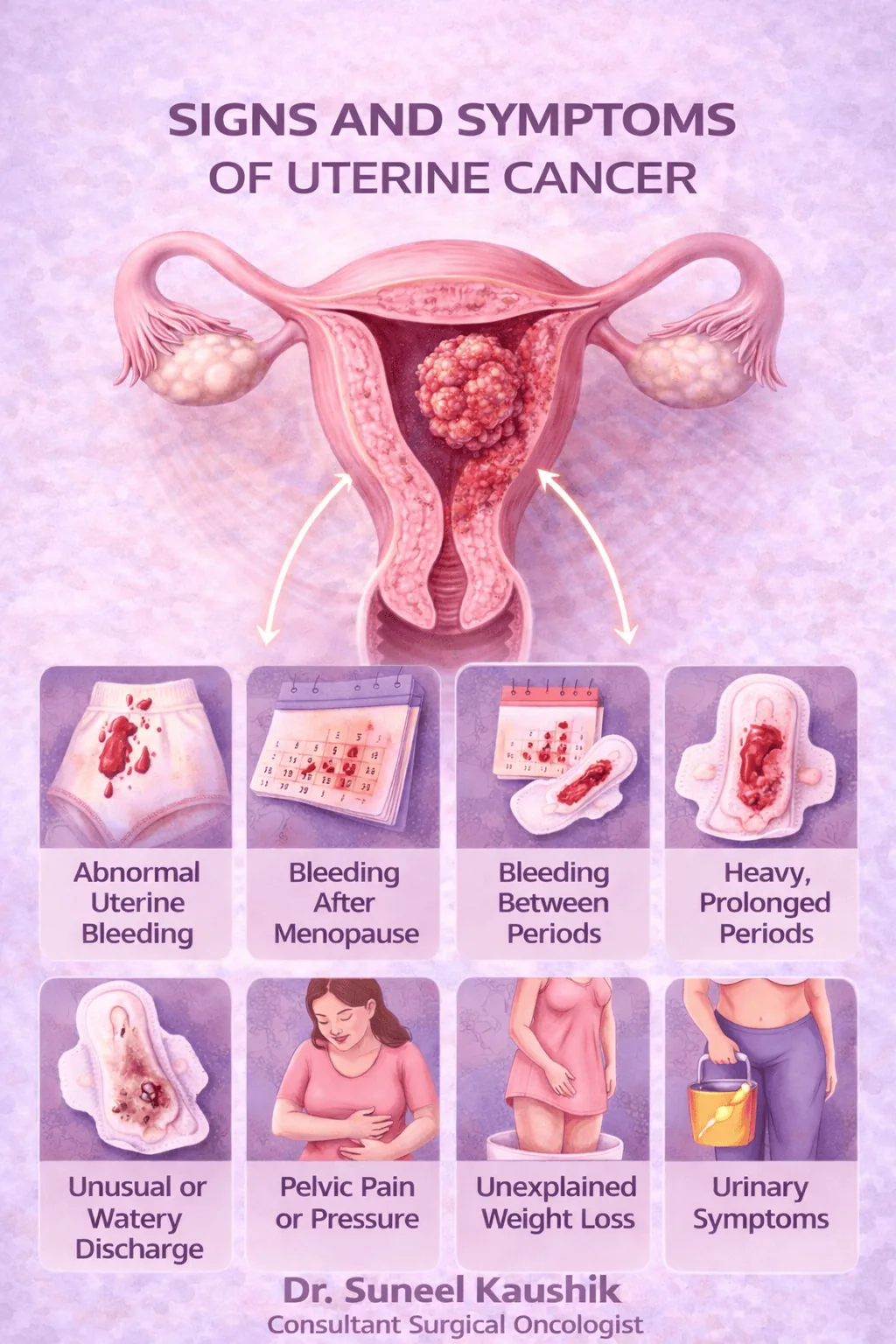
Most Important Warning Sign
Abnormal uterine bleeding
Especially:
- Bleeding after menopause
- Irregular heavy periods
- Bleeding between cycles
Postmenopausal bleeding should always be evaluated.
Other symptoms:
- Pelvic pain
- Unusual discharge
- Enlarged uterus (rare in early disease)
How Is Uterine Cancer Diagnosed?
- Ultrasound (to measure endometrial thickness)
- Endometrial biopsy
- Hysteroscopy
- MRI or CT scan (if needed)
Diagnosis is confirmed through tissue examination.
Treatment of Uterine Cancer
(This is where type and stage matter greatly.)
Treatment of Endometrial Cancer (Type 1 – Most Common)
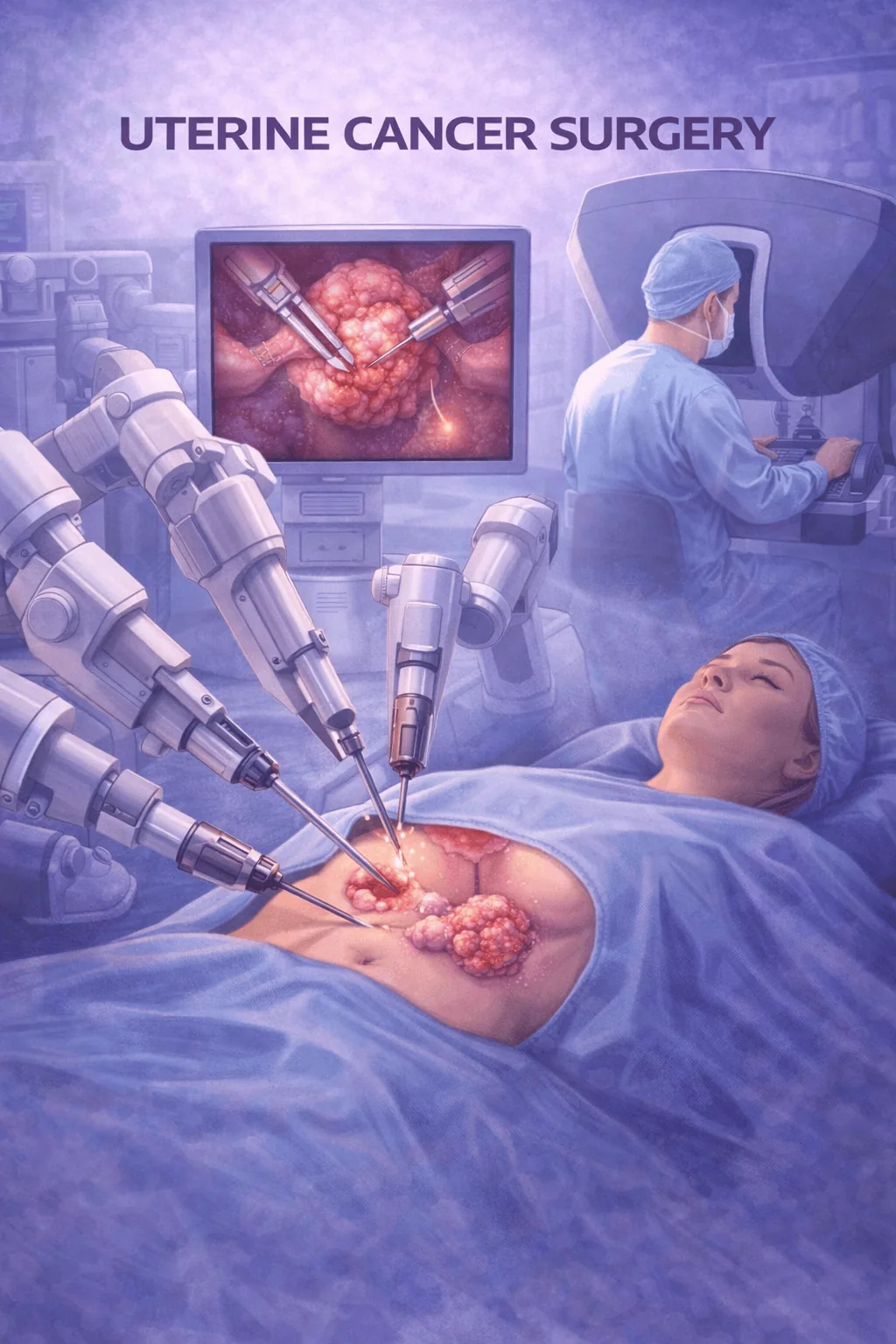
Primary Treatment: Surgery
- Removal of uterus (hysterectomy)
- Removal of both ovaries and fallopian tubes
- Lymph node assessment (in selected cases)
In early-stage disease:
- Surgery alone may be curative.
In higher-risk cases:
- Radiation therapy
- Sometimes chemotherapy
- Sometimes hormonal therapy (for selected low-grade cases)
Treatment of Aggressive Type 2 Endometrial Cancers
Because they behave more aggressively:
- Surgery is still primary treatment
- Chemotherapy is commonly added
- Radiation often recommended
- Combined multimodality treatment may be required for better outcomes
These cancers require closer follow-up.
Treatment of Uterine Sarcomas
Treatment differs significantly:
- Surgery is primary treatment
- Lymph node removal may not always be required
- Chemotherapy often considered
- Radiation used selectively
Sarcomas tend to spread through bloodstream rather than lymph nodes.
Role of Hormonal Therapy
In selected low-grade endometrial cancers:
- Progesterone therapy may be used
- Sometimes used in women wishing to preserve fertility (very carefully selected cases)
Advanced or Recurrent Disease
Treatment options may include:
- Chemotherapy
- Targeted therapy
- Immunotherapy (especially in cancers with specific genetic features like mismatch repair deficiency)
- Hormonal therapy (selected cases)
Is Uterine Cancer Curable?
Yes — especially when detected early.
- Early-stage endometrial cancer has excellent survival rates.
- Aggressive types require more intensive treatment but are still treatable.
- Regular follow-up is important.
Newer Advances in Uterine Cancer – The Role of Molecular Testing
In the past, uterine cancer was classified mainly by how it looked under the microscope (Type 1 vs Type 2).
Today, treatment is increasingly guided by molecular and genetic testing of the tumor.
This is a major advance.
What Is Molecular Testing?
After surgery or biopsy, the tumor tissue can be tested for:
- Specific genetic mutations
- DNA repair defects
- Protein expression patterns
- Molecular subtypes
This helps doctors understand:
- How aggressive the cancer is
- Risk of recurrence
- Whether targeted therapy or immunotherapy may help
The Four Molecular Subtypes
Large international studies (like The Cancer Genome Atlas) have identified four major molecular groups in endometrial cancer:
1. POLE-mutated tumors
- Excellent treatment outcomes
- Very high cure rates
- May need less aggressive treatment
2. Mismatch repair deficient (MMR-d) / MSI-high tumors
- Respond well to immunotherapy
- Often linked to Lynch syndrome
3. p53 abnormal tumors
- More aggressive
- Usually require combined treatment
4. No specific molecular profile (NSMP)
- Intermediate behaviour
This molecular classification is now influencing treatment decisions worldwide.
Immunotherapy – A Major Breakthrough
For patients whose tumors show:
- Mismatch repair deficiency (MMR-d)
- Microsatellite instability (MSI-high)
Immunotherapy drugs can be very effective.
In advanced or recurrent disease:
- Immunotherapy alone
- Or combined with targeted therapy
These approaches have significantly improved outcomes.
Targeted Therapy
Certain advanced uterine cancers may benefit from:
- Anti-angiogenic drugs
- Targeted molecular agents
These treatments are selected based on tumor biology.
Why This Matters for Patients
Molecular testing means:
- More personalized treatment
- Avoiding overtreatment in low-risk cancers
- Better selection of chemotherapy or radiation
- Access to modern targeted drugs
- Improved survival in advanced cases
Key Take-Home Message
- Postmenopausal bleeding is not normal
- Most uterine cancers are endometrial type
- Different types behave differently
- Treatment is tailored to the type and stage
- Early diagnosis leads to better outcomes
Uterine cancer treatment is no longer “one-size-fits-all.” Molecular profiling is helping doctors tailor treatment to each patient’s tumor biology, leading to safer and more effective care.