
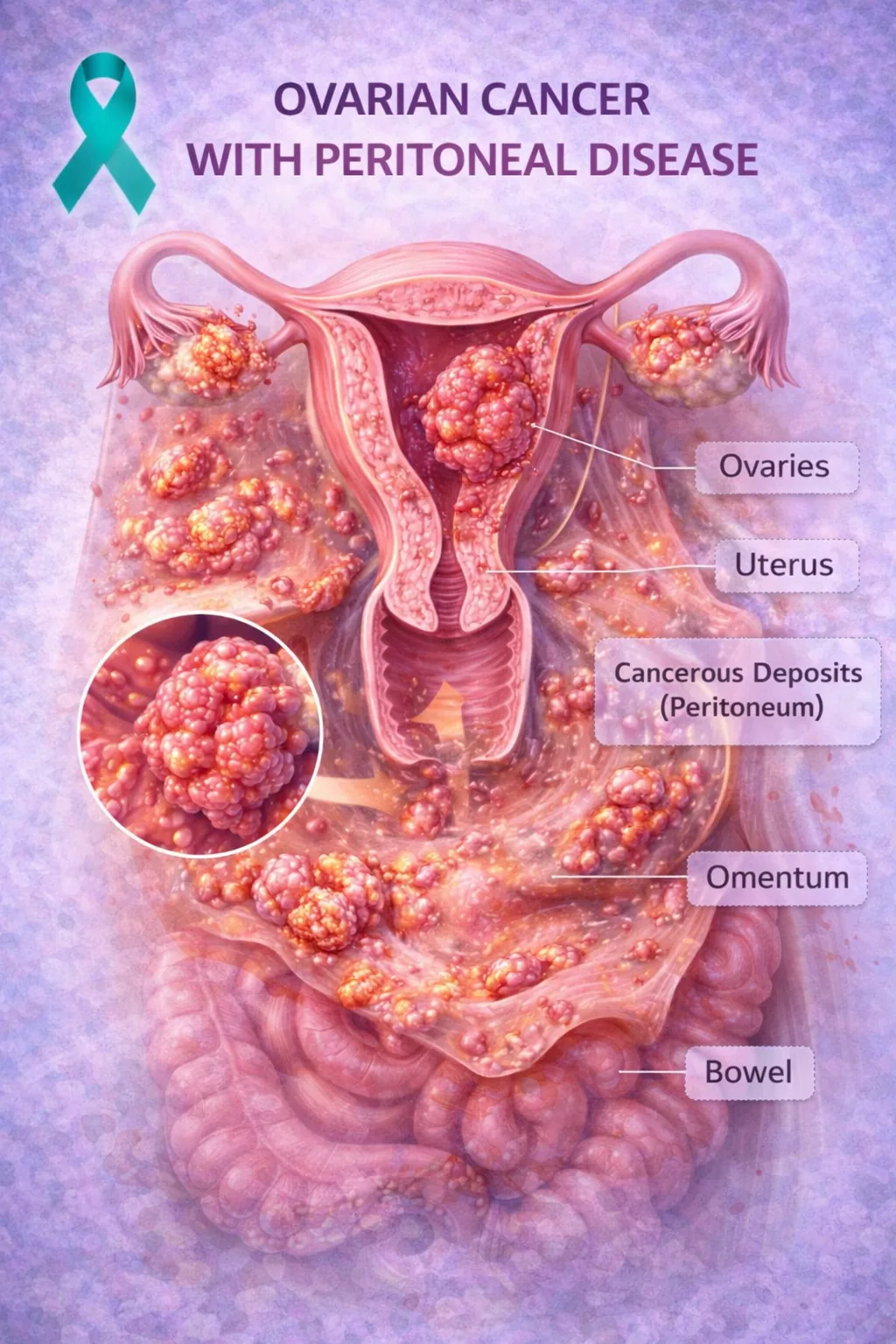
Ovarian cancer is one of the most serious gynecologic cancers because it often develops silently and is diagnosed at a later stage. However, advances in surgery, chemotherapy, and targeted therapies have significantly improved outcomes.
Key Statistics
Global
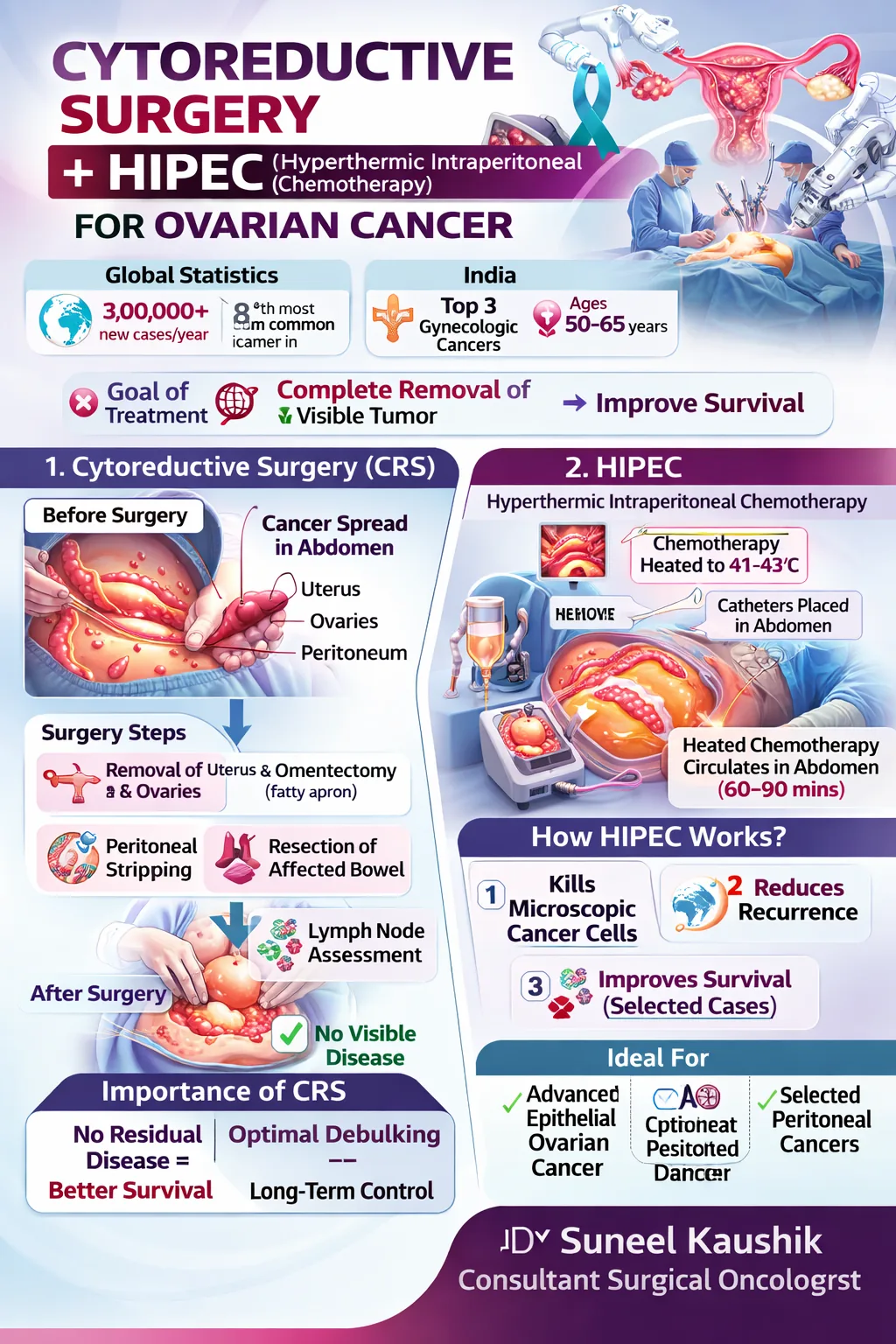
- Over 300,000 new cases are diagnosed worldwide each year.
- It is the eighth most common cancer in women globally.
- Because symptoms are vague, many cases are detected at advanced stages.
India
- Ovarian cancer is among the top 3 gynecologic cancers in Indian women.
- Most commonly diagnosed between 50–65 years of age.
- Survival improves significantly when diagnosed early.
Why Is Ovarian Cancer Called the “Silent Cancer”?
Early-stage ovarian cancer often causes no specific symptoms.
Symptoms are vague and may mimic common digestive or urinary problems.
Risk Factors
Several factors increase the risk:
- Increasing age
- Family history of ovarian or breast cancer
- BRCA1 or BRCA2 gene mutations
- Lynch syndrome
- Never having children
- Early onset of menstruation or late menopause
- Endometriosis (for certain subtypes)
Protective factors include:
- Pregnancy
- Breastfeeding
- Oral contraceptive use
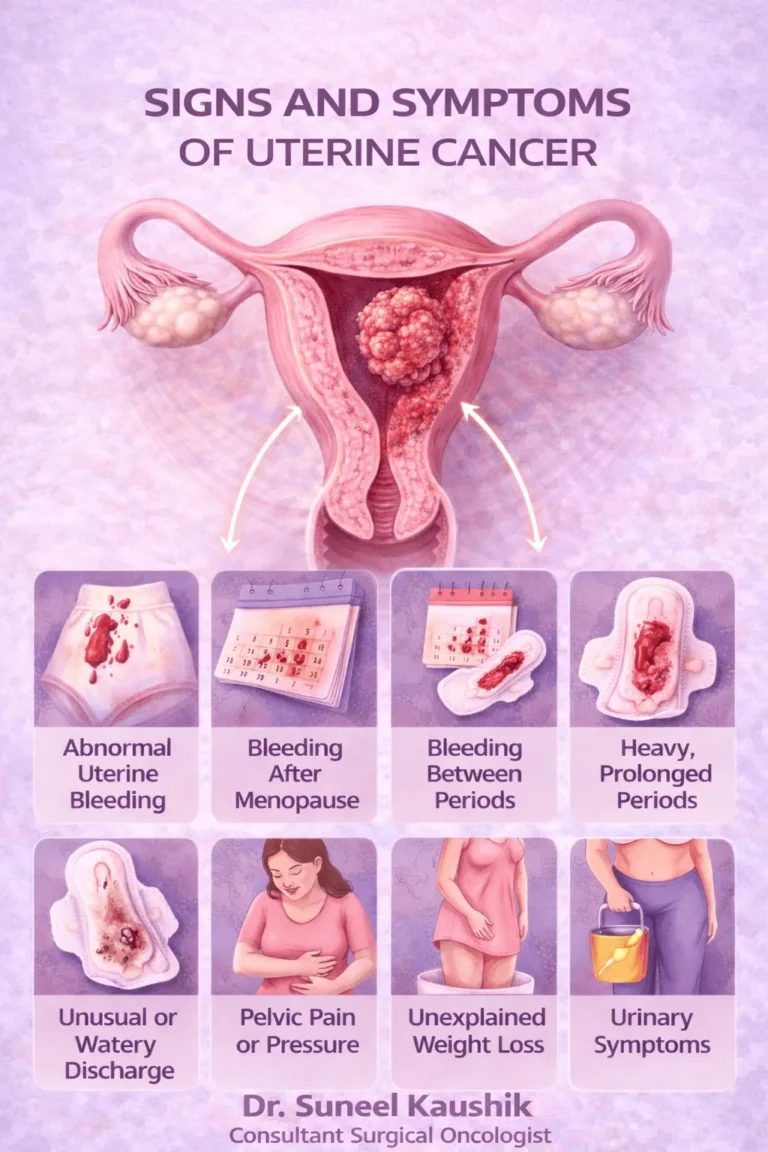
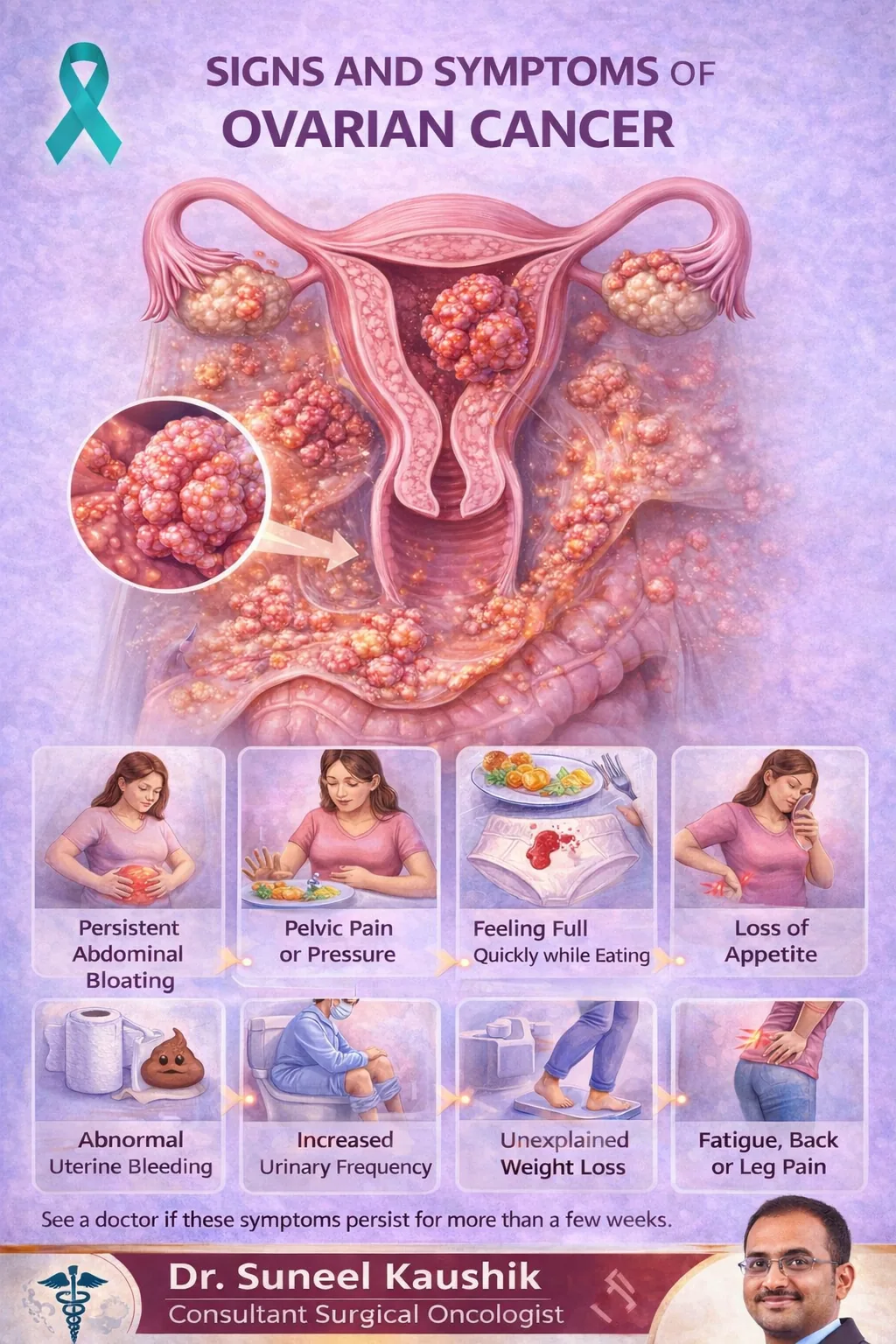
Common Symptoms (Often Subtle)
Symptoms are usually persistent rather than sudden.
- Abdominal bloating
- Feeling full quickly while eating
- Pelvic or abdominal pain
- Increased urinary frequency
- Unexplained weight loss
- Change in bowel habits
- Ascites (fluid accumulation) in advanced cases
Symptoms lasting more than a few weeks need evaluation.
Types of Ovarian Cancer
Understanding the type is crucial because treatment differs.
1. Epithelial Ovarian Cancer (Most Common – ~90%)
Includes:
- High-grade serous carcinoma (most common)
- Endometrioid carcinoma
- Clear cell carcinoma
- Mucinous carcinoma
High-grade serous type is often diagnosed at advanced stage.
2. Germ Cell Tumors (Younger Women)
- Dysgerminoma
- Yolk sac tumor
- Teratoma
Often highly treatable with chemotherapy.
3. Sex Cord–Stromal Tumors
- Granulosa cell tumor
- Sertoli-Leydig tumor
These behave differently and may produce hormones.
How Is Ovarian Cancer Diagnosed?
There is no reliable screening test for the general population.
Diagnosis may involve:
- Ultrasound (transvaginal preferred)
- CT or MRI scan
- Tumor markers (CA-125, HE4 in selected cases)
- Diagnostic laparoscopy
- Surgical staging
Definitive diagnosis requires tissue examination.
Treatment of Ovarian Cancer
Treatment depends on:
- Stage of disease
- Tumor biology
- Molecular profile
- Patient’s overall health
Role of Surgery – Cytoreductive Surgery
Surgery is the cornerstone of treatment.
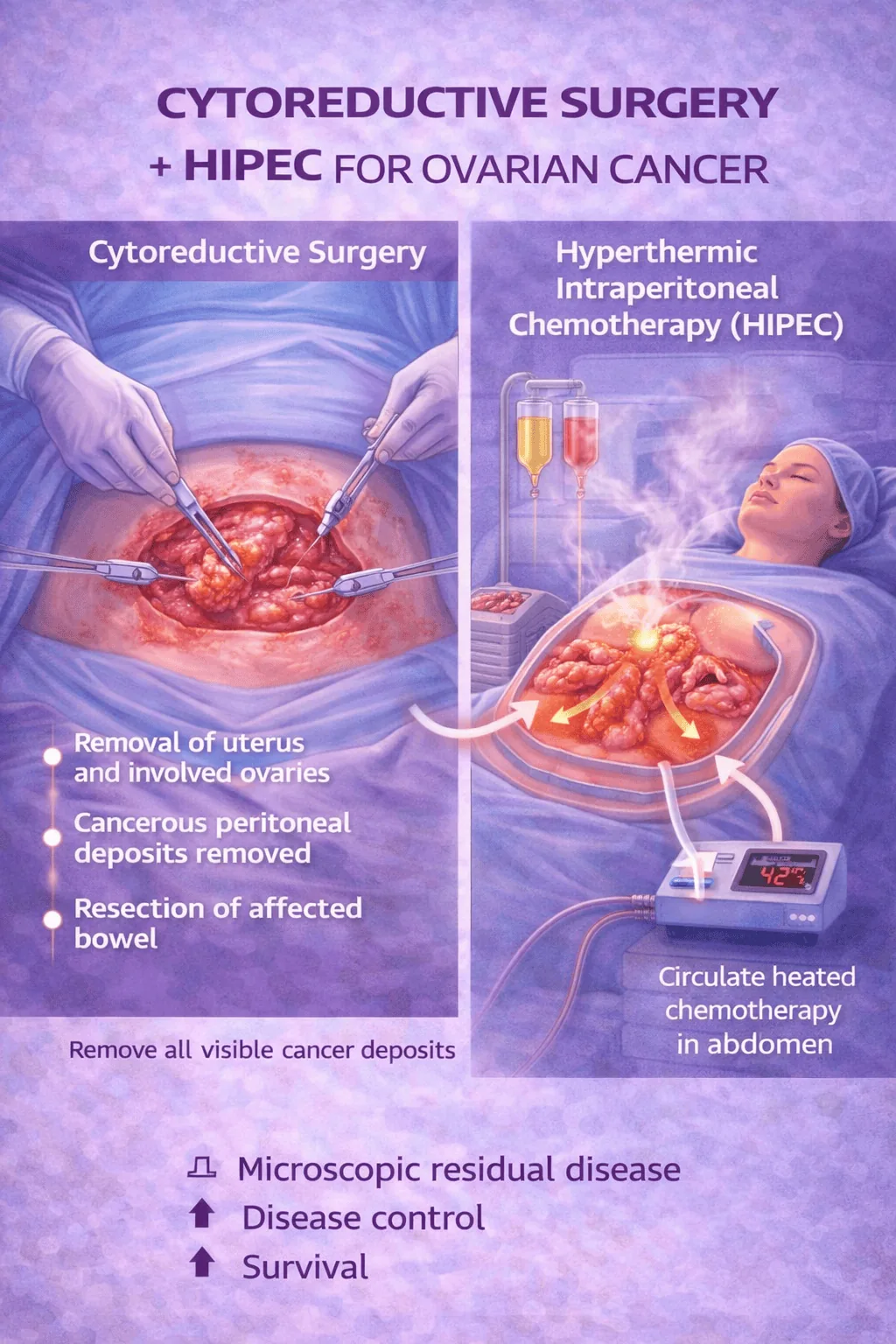
The goal is complete cytoreduction, meaning:
Remove all visible tumor deposits.
This may involve:
- Removal of uterus and ovaries
- Omentectomy
- Peritoneal stripping
- Bowel resection (if involved)
- Lymph node removal (selected cases)
Why Is Cytoreduction Important?
The amount of residual disease after surgery directly affects survival.
Patients with no visible residual disease have significantly better outcomes.
Interval Debulking Surgery
In some cases:
- Chemotherapy is given first (neoadjuvant chemotherapy)
- Followed by surgery
This is chosen when initial tumor burden is very extensive.
Role of HIPEC (Hyperthermic Intraperitoneal Chemotherapy)
In selected advanced ovarian cancer cases:
After cytoreductive surgery, heated chemotherapy is circulated inside the abdominal cavity.
Purpose:
- Kill microscopic residual cancer cells
- Improve disease control
- Reduce recurrence in selected patients
HIPEC is not for every patient and requires careful selection.
Chemotherapy
Standard chemotherapy:
- Platinum-based (carboplatin)
- Combined with paclitaxel
Usually given:
- After surgery (adjuvant)
- Or before surgery (neoadjuvant)
Targeted Therapy
Modern treatment includes:
PARP inhibitors
Especially in:
- BRCA-mutated cancers
- HRD-positive tumors
These significantly improve progression-free survival.
Immunotherapy
Still evolving. Used in selected cases or clinical trials.
Survival and Prognosis
- Early-stage disease has high cure rates.
- Advanced disease is treatable but often recurrent.
- Survival improves with:
- Complete cytoreduction
- Appropriate chemotherapy
- Molecularly guided therapy
Key Take-Home Messages
- Ovarian cancer often presents with subtle symptoms
- Persistent bloating is not always “gas”
- Surgery plays a central role
- Complete cytoreduction improves survival
- HIPEC may benefit selected advanced cases
- Genetic testing is increasingly important