
What Is Cervical Cancer?
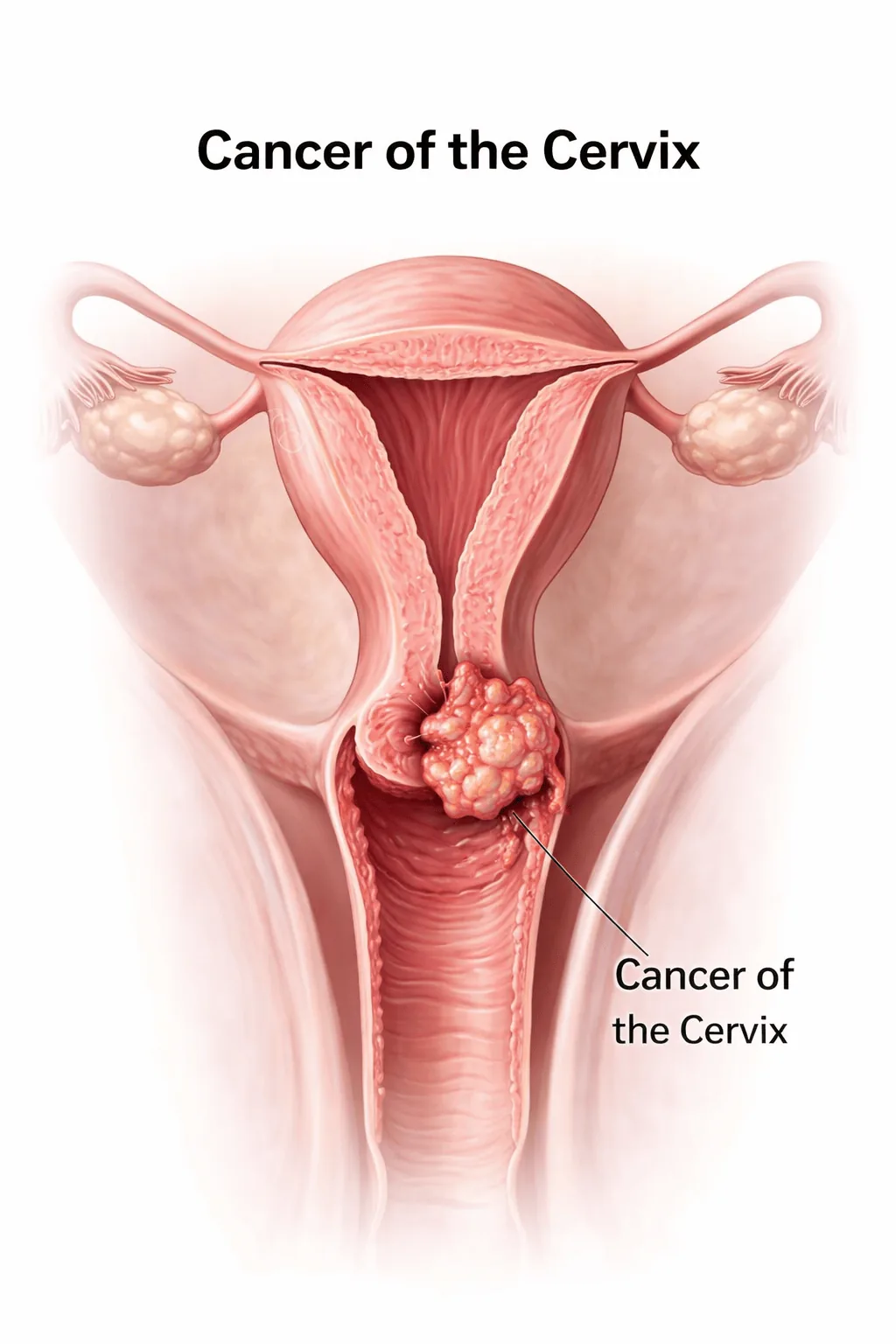
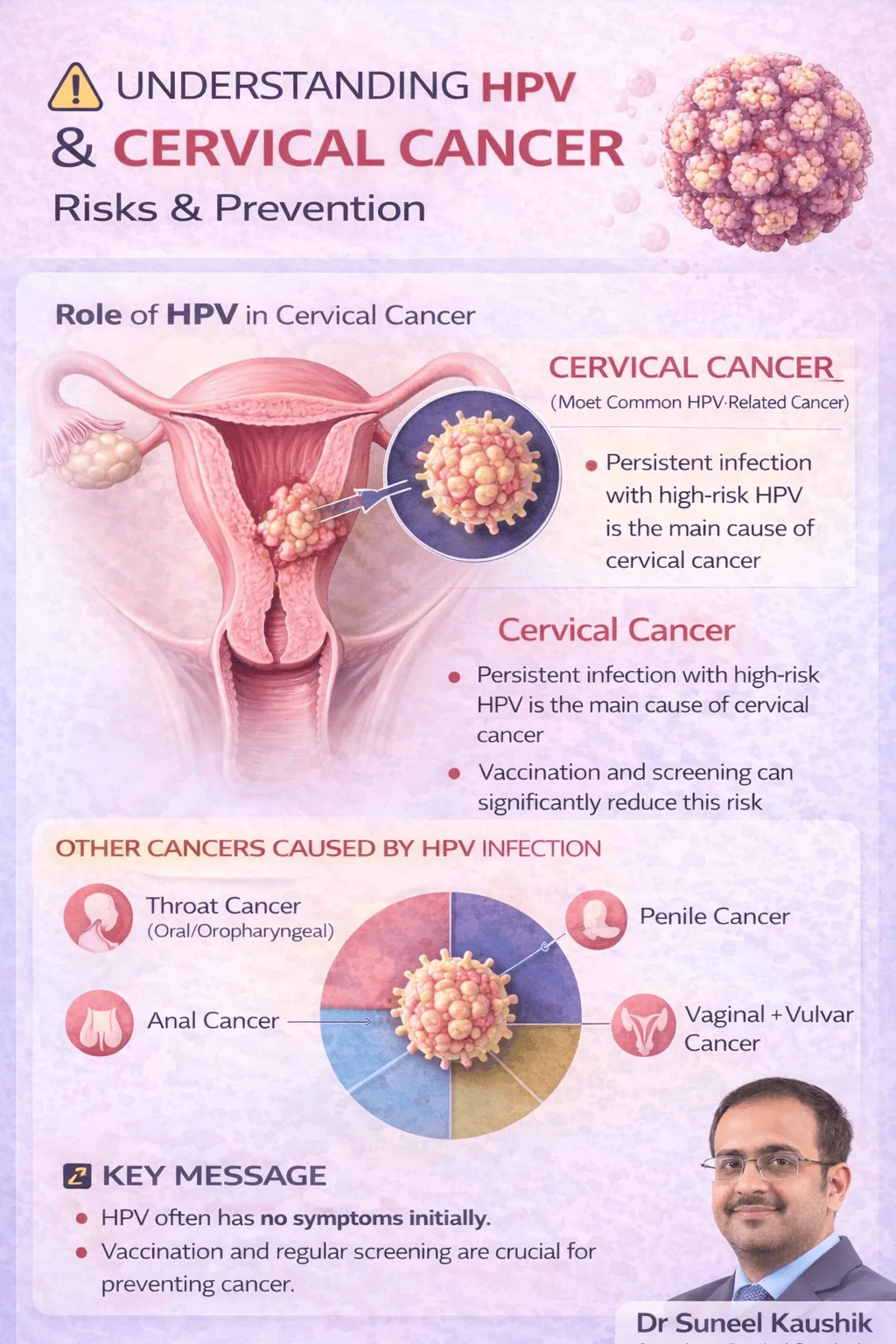
Cervical cancer is a cancer that develops in the cervix, the lower part of the uterus (womb) that connects to the vagina. It usually develops slowly over several years, often starting as precancerous changes before turning into cancer.
The encouraging news is that cervical cancer is one of the most preventable and treatable cancers when detected early.
Why Awareness Is Important
- It often develops silently in early stages
- Early symptoms may be mild or ignored
- Regular screening can detect precancerous changes
- HPV vaccination can significantly reduce risk
With proper screening and vaccination, many cases can be prevented.
What Causes Cervical Cancer?
The main cause of cervical cancer is infection with Human Papillomavirus (HPV) — a very common virus transmitted through sexual contact.
Important facts:
- Most women exposed to HPV do not develop cancer
- Persistent infection with high-risk HPV types increases risk
- It can take 10–20 years for cancer to develop
Other risk factors include:
- Early onset of sexual activity
- Multiple sexual partners
- Smoking
- Weak immune system
- Lack of regular screening
Common Warning Signs
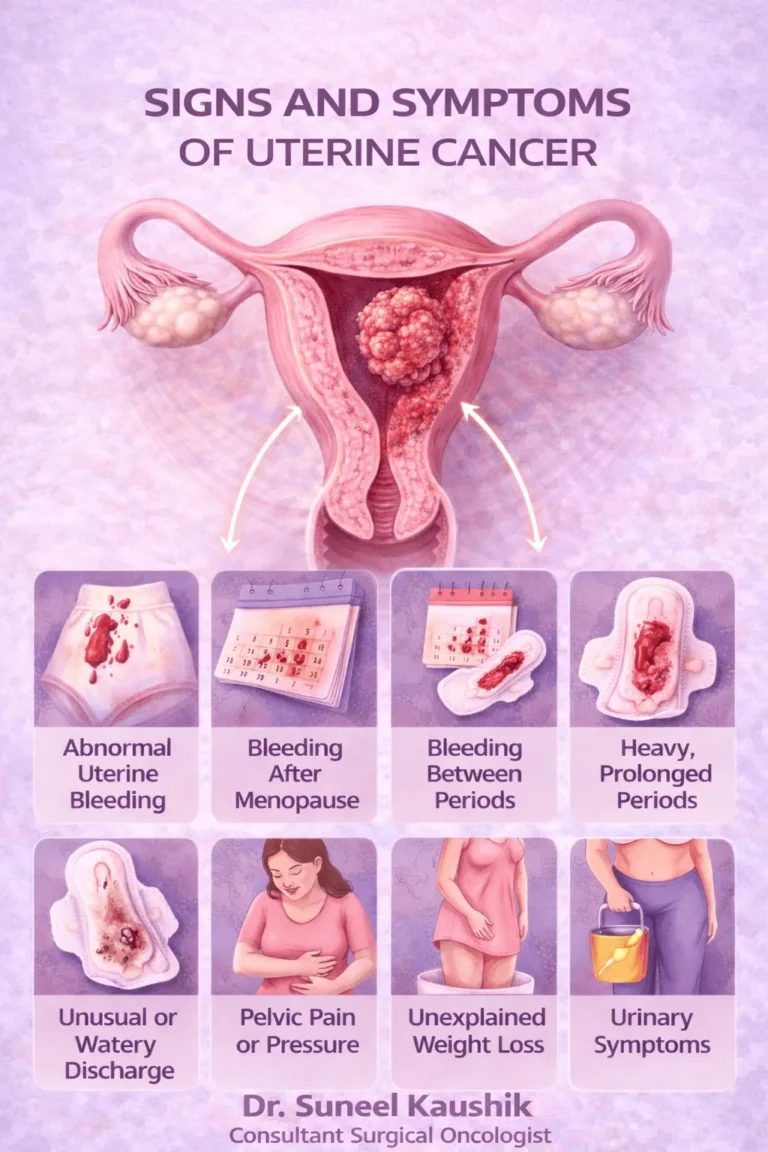
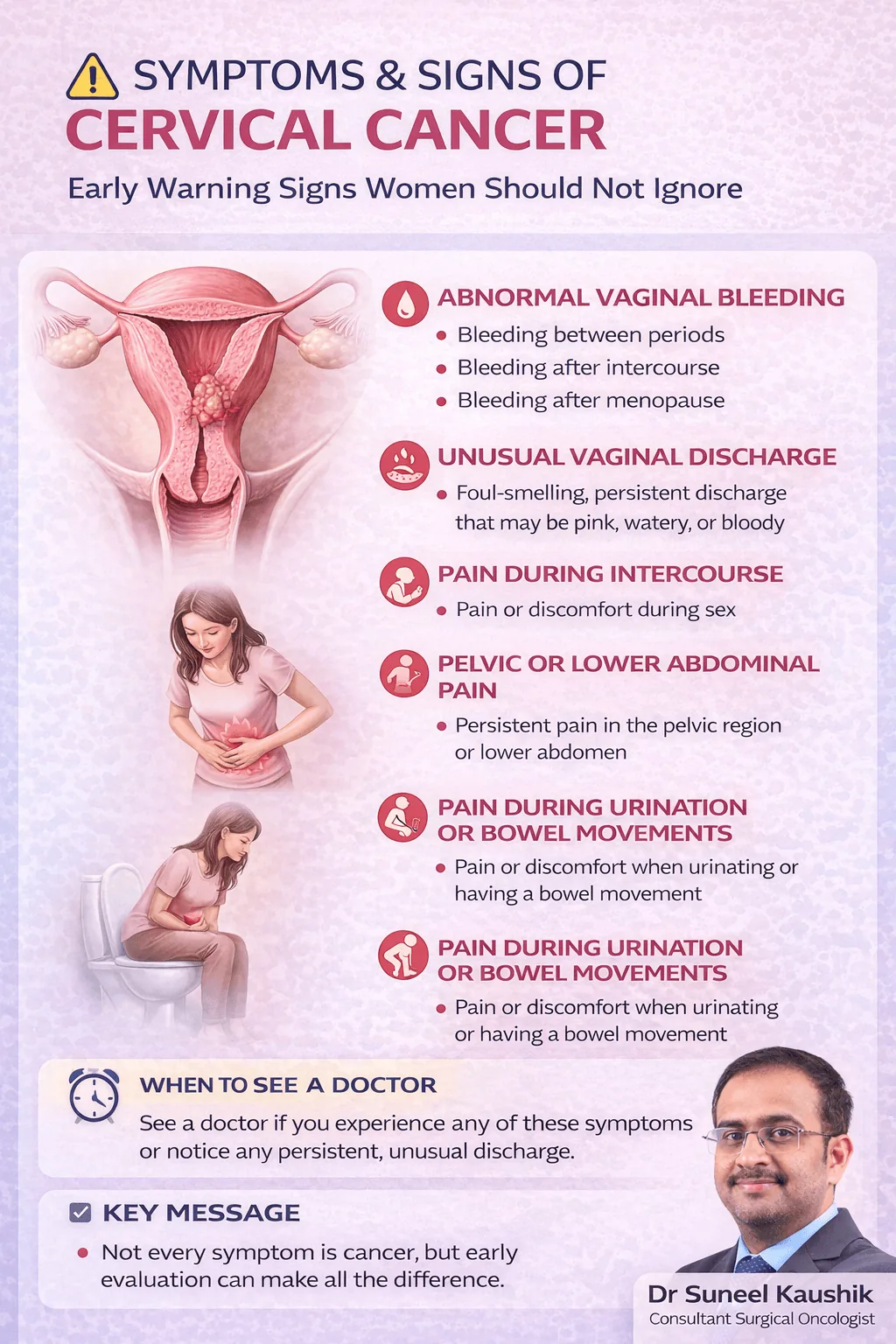
Early cervical cancer may not cause symptoms. As it progresses, symptoms may include:
- Abnormal vaginal bleeding
- Bleeding between periods
- Bleeding after intercourse
- Bleeding after menopause
- Foul-smelling vaginal discharge
- Pelvic pain
- Pain during intercourse
- Persistent lower back pain (advanced cases)
Any abnormal bleeding should be evaluated by a doctor.
How Is Cervical Cancer Detected?
1. Pap Smear Test
Detects abnormal precancerous cells before they turn into cancer.
2. HPV Test
Identifies high-risk HPV infection.
3. Colposcopy & Biopsy
If abnormal cells are found, further examination confirms diagnosis.
Regular screening is the most powerful tool for prevention.
Who Should Get Screened?
- Women aged 21–65 years
- As advised by a healthcare provider
- Even if there are no symptoms
- Even after HPV vaccination (as recommended)
Screening intervals depend on age and test type.
Can Cervical Cancer Be Prevented?
Yes — largely preventable.
Prevention Steps:
- HPV vaccination (recommended for young girls and boys before sexual activity)
- Regular Pap smear / HPV testing
- Avoid smoking
- Safe sexual practices
- Early treatment of precancerous lesions
HPV vaccination is safe and significantly reduces risk of cervical cancer.
Treatment of Cervical Cancer
Treatment depends mainly on:
- Stage of the cancer
- Size of the tumor
- Whether it has spread to nearby tissues or distant organs
- Patient’s age and overall health
Cervical cancer is highly treatable when detected early.
1. Early-Stage Cervical Cancer
(Cancer limited to the cervix)
When detected early, surgery is often the main treatment.
Surgical Options:
- Cone biopsy (for very early disease) – removes a small cone-shaped portion
- Simple hysterectomy – removal of uterus and cervix
- Radical hysterectomy – removal of uterus, cervix, surrounding tissues, and sometimes nearby lymph nodes
In carefully selected young women with very early cancer, fertility-preserving surgery may be possible.
Cure rates are very high in early-stage disease.
2. Locally Advanced Cervical Cancer
(Cancer has spread beyond cervix but not to distant organs like lungs or liver etc)
This stage is usually treated with combined radiotherapy and chemotherapy.
Standard Treatment:
- External beam radiation therapy
- Internal radiation (brachytherapy)
- Weekly low-dose chemotherapy (commonly cisplatin) to enhance radiation effect
This combined approach significantly improves outcomes.
3. Advanced or Metastatic Cervical Cancer
(Cancer has spread to distant organs)
Treatment may include:
- Chemotherapy
- Targeted therapy
- Immunotherapy (in selected patients)
- Palliative radiation for symptom relief
Even in advanced stages, treatment can:
- Control disease progression
- Relieve symptoms
- Improve quality of life
Role of Immunotherapy
In selected advanced cases:
- Drugs that boost the immune system may be used
- Often combined with chemotherapy
These treatments are improving outcomes in metastatic disease.
After Treatment – Follow-Up Is Important
Regular follow-up helps to:
- Detect recurrence early
- Manage treatment-related side effects
- Provide emotional and physical support
Follow-up schedules are personalized.
Possible Side Effects
Depending on treatment type, women may experience:
- Temporary fatigue
- Bowel or bladder irritation (with radiation)
- Menopausal symptoms (if ovaries removed or affected)
- Emotional stress
Supportive care helps manage these effectively.
In Summary
- Cervical cancer is preventable and treatable
- Early detection leads to simpler treatment and better survival
- Combined treatments (surgery, radiation, chemotherapy) are highly effective
Regular screening and HPV vaccination remain the best protection.
When Should You See a Doctor?
- Any abnormal vaginal bleeding
- Bleeding after menopause
- Persistent unusual discharge
- Pelvic pain without clear reason
Do not ignore symptoms due to embarrassment or fear.
Key Take-Home Message
Cervical cancer is preventable, detectable, and treatable. Regular screening and HPV vaccination save lives.