
What Is Lung Cancer?
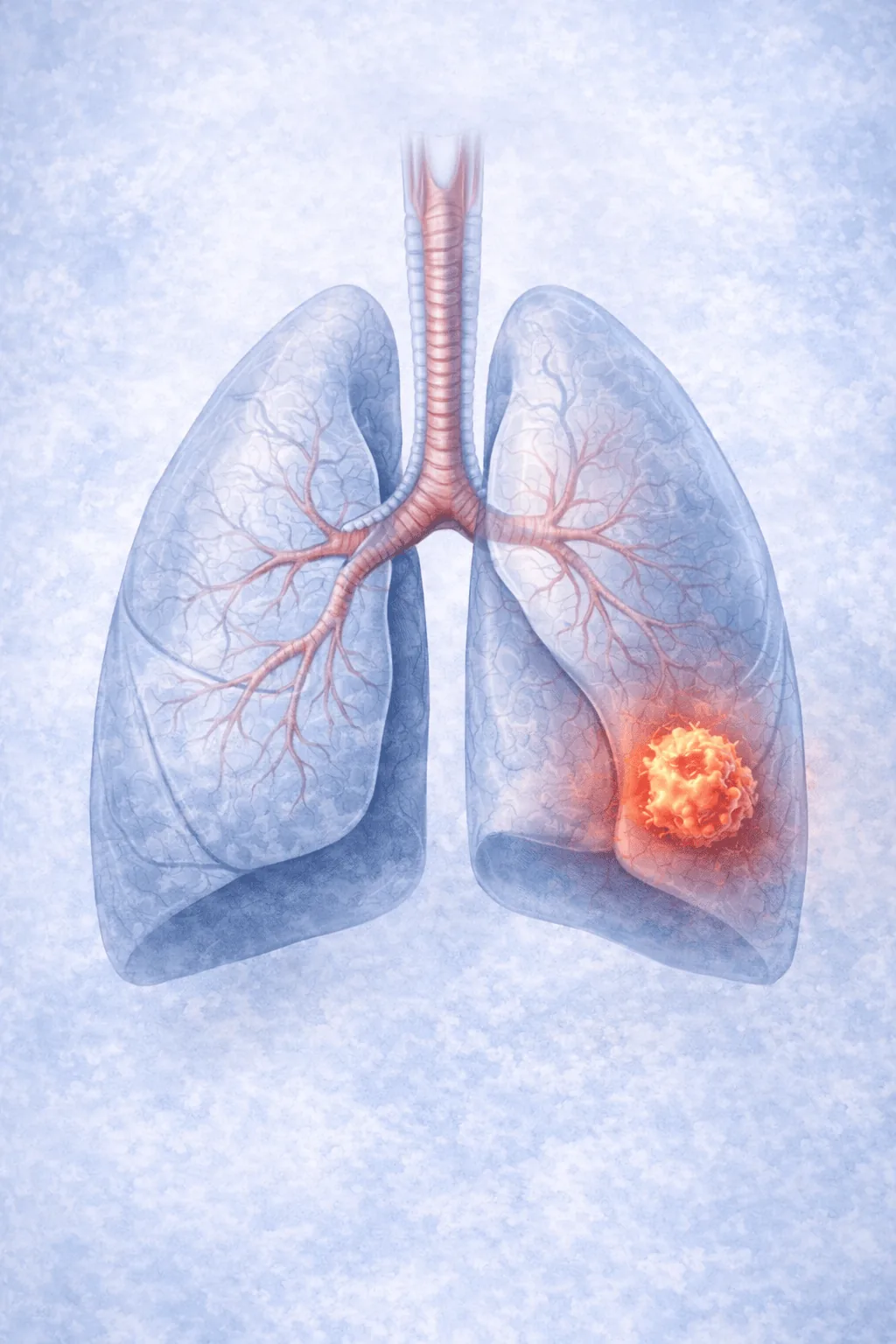
Lung cancer is a malignancy that originates in the lungs, the organs responsible for breathing and oxygen exchange. It is one of the most common and deadliest cancers worldwide, largely because many patients are diagnosed at an advanced stage. Early detection, however, can significantly improve survival and quality of life.
Why Lung Cancer Awareness Is Crucial
- Early symptoms are often mild or mistaken for common respiratory infections. In India it is commonly mistaken for tuberculosis.
- Many patients seek care late, when curative treatment is difficult
- Early-stage lung cancer may be completely curable
- Awareness helps high-risk individuals seek timely evaluation
Lung Cancer – Key Statistics
Global Burden
- Lung cancer remains the most commonly diagnosed cancer worldwide and the leading cause of cancer deaths, with an estimated 2.2–2.5 million new cases annually.
- It accounts for approximately 18–19% of all cancer deaths globally, making it the top cause of cancer mortality.
India
- In India, lung cancer accounts for about 5.8–5.9% of all cancer cases.
- It is responsible for around 8.1% of all cancer-related deaths in the country.
- The burden among men is especially high, with lung cancer being one of the leading causes of cancer diagnosis and death.
- Projected trends show increasing lung cancer incidence in India over time, likely due to tobacco use and environmental factors.
These figures underscore the high global and national impact of lung cancer and the importance of early detection and prevention, particularly in high-risk populations.
Types of Lung Cancer
1. Non–Small Cell Lung Cancer (NSCLC)
- Accounts for about 80–85% of cases
- Includes adenocarcinoma, squamous cell carcinoma, and large cell carcinoma
- Often treated with surgery, chemotherapy, radiotherapy, targeted therapy, or immunotherapy
2. Small Cell Lung Cancer (SCLC)
- More aggressive and fast-growing
- Strongly linked to smoking
- Usually treated with chemotherapy and radiotherapy
Who Is at Risk?
You may be at higher risk if you:
- Smoke cigarettes, bidis, or use tobacco
- Are exposed to second-hand smoke
- Have long-term exposure to air pollution, asbestos, or industrial chemicals
- Have a family history of lung cancer
- Are above 50 years of age, especially with a smoking history
Smoking remains the single biggest risk factor
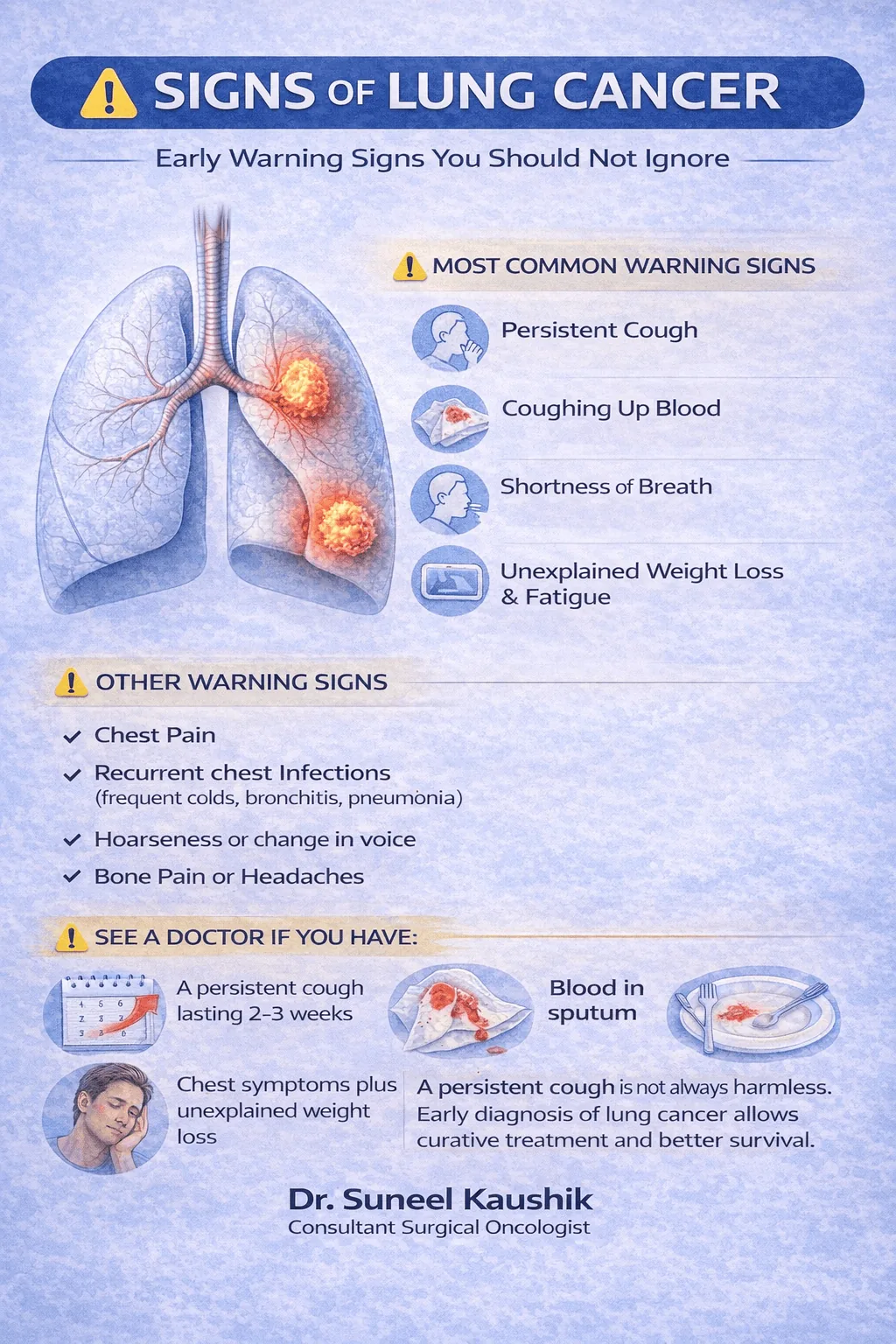
Common Warning Signs (Do Not Ignore)
Seek medical attention if you experience:
- Persistent cough or change in cough pattern
- Coughing up blood
- Shortness of breath
- Chest pain
- Unexplained weight loss or fatigue
- Recurrent chest infections
- Hoarseness of voice
Symptoms persisting beyond 2–3 weeks need evaluation.
How Is Lung Cancer Diagnosed?
- Clinical evaluation and chest examination
- Chest X-ray
- CT scan of the chest
- Bronchoscopy with biopsy
- CT-guided lung biopsy
- PET-CT for staging
Treatment of Lung Cancer
A Stage-Wise, Multidisciplinary Approach
Treatment of lung cancer depends on the type of lung cancer, stage of disease, molecular profile, and patient fitness. Optimal outcomes are achieved through a multidisciplinary tumor board approach, involving surgical oncologists, medical oncologists, radiation oncologists, pulmonologists, radiologists, and pathologists.
1. Early-Stage Lung Cancer (Stage I–II)
Goal: Cure
Early-stage lung cancer is potentially completely curable, and surgery is the cornerstone of treatment.
Role of Surgery
- Surgical resection (lobectomy or segmentectomy) with lymph node dissection
- Preferred option for medically fit patients
- Offers the best long-term survival
Additional Treatment
- Adjuvant chemotherapy may be recommended in selected Stage II patients
- Reduces risk of recurrence
Early detection + surgery offers the highest chance of cure
2. Locally Advanced Lung Cancer (Stage III)
Goal: Cure or Long-Term Disease Control
This is a complex stage where multimodality treatment is essential.
Multimodality Treatment – The Standard of Care
Chemotherapy + Radiotherapy
- Given together (concurrent chemoradiotherapy) in patients when disease is very locally advanced
- Shrinks the tumor and controls microscopic disease
Surgery (Selected Patients)
- In carefully selected Stage III patients
- Often performed after a course of chemotherapy with or without immunotherapy
- Requires expertise and proper patient selection
Immunotherapy (Consolidation)
- Immunotherapy after chemoradiation has significantly improved survival
- Helps the immune system prevent cancer recurrence
Combination of treatments gives better outcomes than any single modality
3. Advanced / Metastatic Lung Cancer (Stage IV)
Goal: Prolong Survival, Control Disease, Improve Quality of Life
Treatment has evolved dramatically in recent years.
Systemic Treatment Options
Chemotherapy
- Still plays an important role
- Controls symptoms and disease progression
Targeted Therapy
- Used when specific genetic mutations are present (e.g., EGFR, ALK)
- Oral medications with good response rates
Immunotherapy – A Game Changer
- Helps the immune system recognize and destroy cancer cells
- Can be used:
- Alone
- With chemotherapy
- Leads to longer survival and better quality of life in many patients
Immunotherapy has changed lung cancer from a rapidly fatal disease to a chronic, controllable condition in selected patients.
Supportive & Palliative Care
At every stage:
- Symptom control (pain, breathlessness)
- Nutritional support
- Psychological support
- Palliative radiotherapy when needed
Supportive care improves comfort and treatment tolerance.
Key Messages
- Surgery is the backbone of cure in early lung cancer
- Multimodality treatment is essential in locally advanced disease
- Immunotherapy has revolutionized lung cancer care
- Early diagnosis allows access to curative and life-prolonging treatments
Can Lung Cancer Be Prevented?
- Quit smoking and avoid tobacco exposure
- Reduce exposure to indoor and outdoor air pollution
- Use protective equipment in high-risk occupations
- Regular screening for high-risk individuals (low-dose CT scan)
When Should You See a Doctor?
- Persistent cough or breathlessness
- Blood in sputum
- Chest pain with weight loss
- Long-term smokers with new respiratory symptoms
Early consultation with a Pulmonologist or Surgical Oncologist can be life-saving.
Key Take-Home Message
A persistent cough is not always harmless. Early detection of lung cancer can allow effective treatment and significantly improve survival.