
What Is Rectal Cancer?
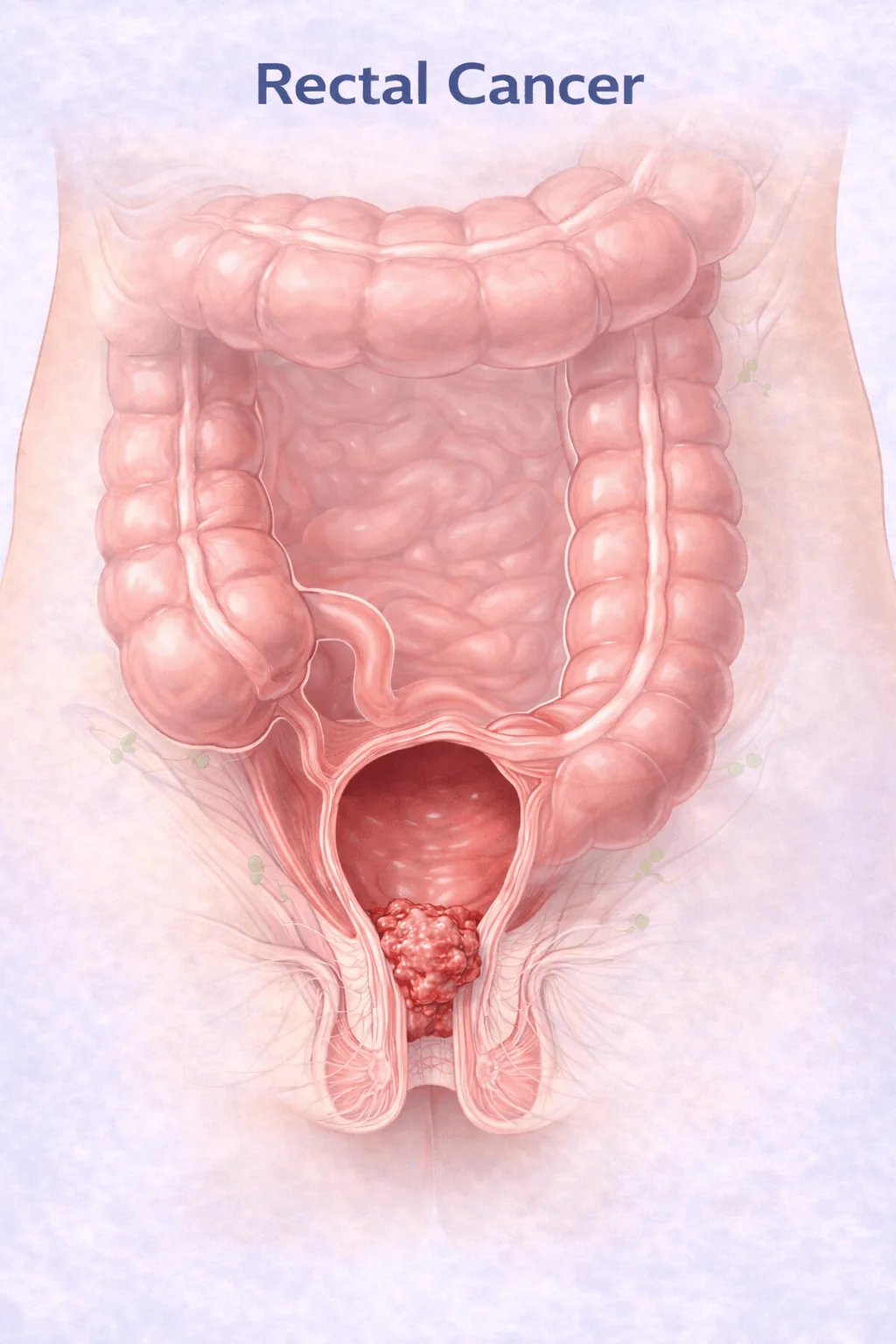
Rectal cancer is a cancer that develops in the rectum, the last 12–15 cm of the large intestine, just before the anus. Although rectal cancer is grouped with colon cancer under “colorectal cancer,” rectal cancer is a distinct disease with different symptoms, treatment approaches, and outcomes.
Why Rectal Cancer Awareness Is Important
- Early symptoms are often mistaken for piles (hemorrhoids)
- Many patients delay medical consultation
- Treatment becomes more complex when diagnosed late
- Early-stage rectal cancer is highly curable
Awareness helps people seek care before the disease advances.
Rectal Cancer – Key Statistics
Global
- Rectal cancer accounts for about 30–35% of all colorectal cancers
- Colorectal cancer is the 3rd most common cancer worldwide
- Early detection significantly improves survival
India
- Rising incidence, especially in urban populations
- Increasing cases in younger adults
- Many patients still present with locally advanced disease
- Outcomes improve markedly with modern multimodality treatment
Who Is at Risk?
You may be at higher risk if you have:
- Age over 45–50 years
- Family history of colorectal or rectal cancer
- Long-standing inflammatory bowel disease
- Diet low in fiber and high in processed or red meat
- Obesity and lack of physical activity
- Smoking or excessive alcohol use
Common Warning Signs (Do Not Ignore)
Seek medical attention if you notice:
- Bleeding per rectum (often mistaken for piles)
- Blood mixed with stool
- Persistent change in bowel habits
- Feeling of incomplete bowel emptying
- Narrow or ribbon-like stools
- Rectal pain or discomfort
- Unexplained weight loss
- Fatigue due to anemia
Rectal bleeding should never be ignored, even if painless.
How Is Rectal Cancer Diagnosed?
- Digital rectal examination
- Colonoscopy with biopsy
- MRI of pelvis (very important for rectal cancer)
- CT scan of chest and abdomen
- Blood tests including anemia evaluation
Treatment of Rectal Cancer
A Multimodality, Stage-Wise Approach
Rectal cancer treatment is different from colon cancer and usually involves combined therapy.
1. Early-Stage Rectal Cancer
Goal: Cure
- Surgery alone in selected early cases
- Excellent outcomes when detected early
2. Locally Advanced Rectal Cancer
Goal: Cure with organ preservation
- Radiotherapy + chemotherapy before surgery
- Surgery after tumor shrinkage
- Improves cure rates and reduces recurrence
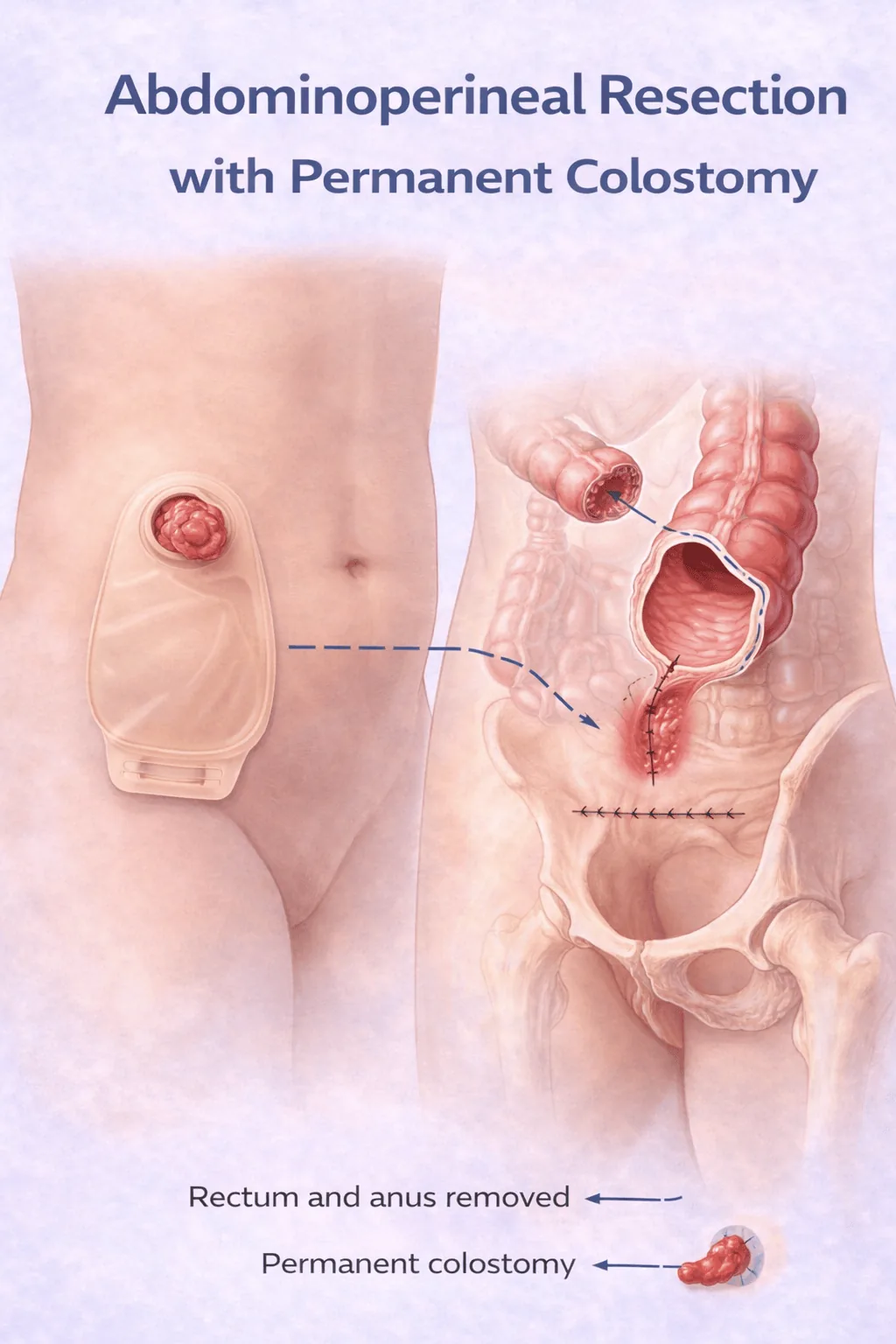
- May sometimes reduce the need for permanent colostomy
3. Advanced / Metastatic Rectal Cancer
Goal: Disease control and quality of life
- Chemotherapy
- Targeted therapy or immunotherapy in selected cases
- Surgery for symptom relief or selected metastases
Modern treatment aims to cure disease while preserving bowel function whenever possible.
Can Rectal Cancer Be Prevented?
Risk can be reduced by:
- Regular screening after age 45–50
- High-fiber diet with fruits and vegetables
- Maintaining healthy body weight
- Regular physical activity
- Avoiding smoking and excessive alcohol
When Should You See a Doctor?
- Any rectal bleeding
- Blood mixed with stool
- Persistent bowel habit changes
- Unexplained anemia or weight loss
Early evaluation can save lives and preserve quality of life.
Key Take-Home Message
Not all rectal bleeding is piles. Early diagnosis of rectal cancer allows curative treatment with better long-term outcomes.