
When someone undergoes chemotherapy, one of the biggest challenges is repeated intravenous injections and difficulty in finding suitable veins over time. Many chemotherapy medicines are strong drugs that can irritate or damage small veins in the hands and arms if given repeatedly.
A chemoport is a simple and effective solution that helps make chemotherapy administration safer, smoother, and more comfortable for patients.
As a surgical oncologist, I frequently advise chemoport insertion for patients who require long-term chemotherapy, targeted therapy, immunotherapy, or frequent blood tests. Understanding what a chemoport is and how it helps can reduce anxiety and improve confidence before treatment begins.
What Is a Chemoport?
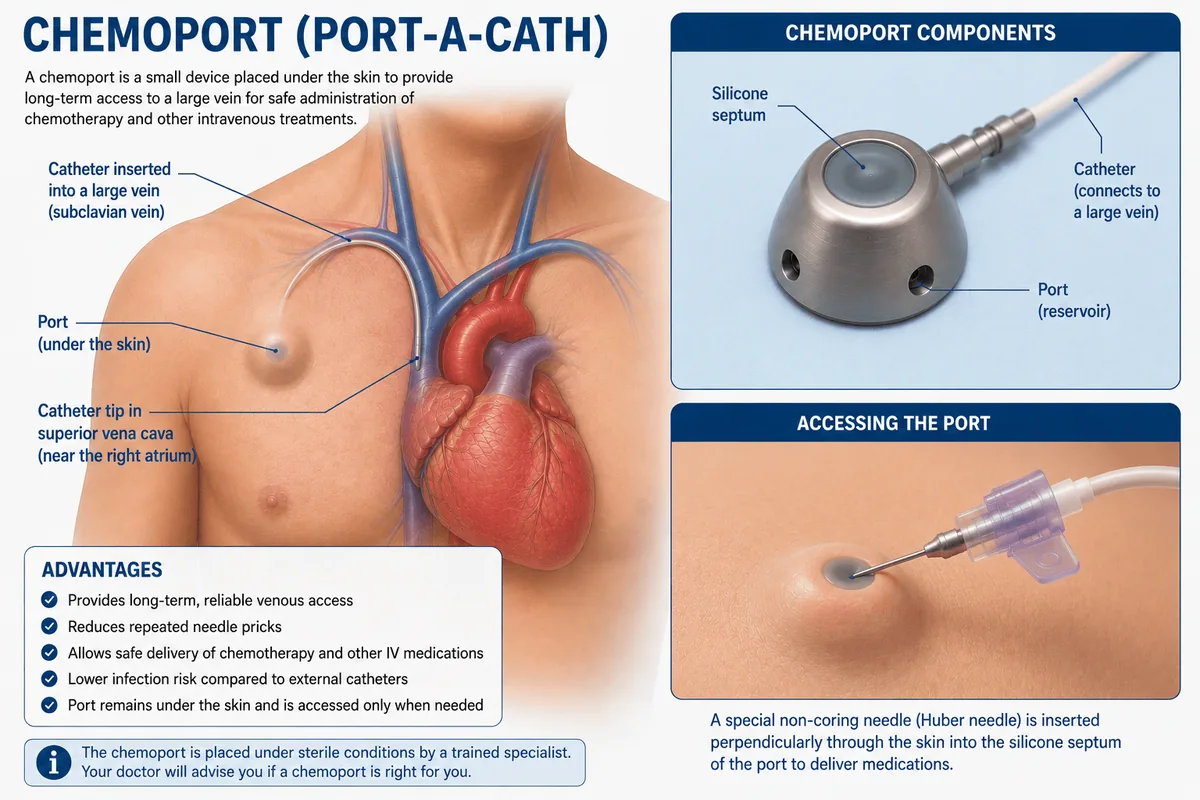
A chemoport is a small medical device placed completely under the skin, usually over the upper chest region.
It consists of:
- A small chamber called a port
- A thin flexible tube called a catheter
The catheter is inserted into a large vein leading directly to the heart. Medicines given through the port quickly mix with blood in the larger veins, making chemotherapy administration safer.
Since the port is completely under the skin, there are no external tubes hanging outside the body.
Why Do Cancer Patients Need a Chemoport?
Chemotherapy often requires:
- Multiple treatment cycles
- Repeated IV access
- Long infusion sessions
- Administration of drugs that can irritate veins
Over time, repeated injections into small veins can become painful and difficult.
A chemoport helps by:
- Avoiding repeated needle pricks in the hands
- Protecting peripheral veins from damage
- Providing reliable long-term venous access
- Making chemotherapy sessions easier and more comfortable
Which Patients Usually Benefit From a Chemoport?
A chemoport may be recommended for patients undergoing:
- Breast cancer chemotherapy
- Colon cancer chemotherapy
- Stomach cancer treatment
- Ovarian cancer treatment
- Lung cancer chemotherapy
- Long-term targeted therapy or immunotherapy
It is especially useful when treatment is expected to continue for several months.
How Is a Chemoport Inserted?
Chemoport insertion is a minor procedure usually performed under local anesthesia with sedation when required.
During the Procedure
- The patient lies comfortably on the procedure table
- The chest and neck area are cleaned under sterile precautions
- A vein in the neck or chest is accessed
- The catheter is guided into a large central vein
- The port is placed beneath the skin of the chest
- The incision is closed with sutures
The procedure generally takes about 30–60 minutes.
Most patients can go home the same day.
Is Chemoport Insertion Painful?
Patients may experience mild discomfort during or after the procedure, but significant pain is uncommon.
Once healing is complete, most patients become barely aware of the port in daily life.
How Is Chemotherapy Given Through the Port?
Before chemotherapy:
- The skin over the port is cleaned carefully
- A special needle is inserted into the port
Chemotherapy medicines are then infused safely through the device.
After treatment:
- The port is flushed
- The needle is removed
This process is usually easier and more comfortable than repeated IV cannulations.
Advantages of a Chemoport
Greater Comfort
Reduces repeated needle pricks and vein pain.
Safer Chemotherapy Delivery
Protects small veins from damage caused by strong chemotherapy drugs.
Reliable Access
Useful even in patients with difficult veins.
Better Quality of Life
Patients can continue most routine activities comfortably.
Lower Infection Risk
Compared to external catheters, fully implanted ports generally have lower infection rates.
Can Patients Live Normally With a Chemoport?
Yes. Once the wound heals, most patients can:
- Bathe normally
- Travel
- Perform daily activities
- Continue office work
- Exercise moderately
Because the port lies completely under the skin, it is cosmetically acceptable and usually not very noticeable.
Are There Any Risks?
Chemoport insertion is generally very safe when performed under proper sterile conditions.
However, like any medical procedure, rare complications can occur, including:
- Bleeding
- Infection
- Swelling
- Catheter blockage
- Blood clots
- Port malfunction
Patients should immediately report:
- Fever
- Redness
- Swelling near the port
- Pain or discharge
- Difficulty during infusion
Early treatment of complications helps prevent major problems.
How Long Can a Chemoport Stay?
A chemoport can remain in place for months or even years if needed.
Once treatment is completed, it can be removed through a simple minor procedure.
Does Every Cancer Patient Need a Chemoport?
Not necessarily.
The decision depends on:
- Type of cancer
- Chemotherapy regimen
- Duration of treatment
- Condition of veins
- Frequency of infusions
Your oncologist will decide whether a chemoport is beneficial in your specific situation.
Final Thoughts
Cancer treatment can already feel overwhelming for patients and families. A chemoport is a small device that can make a significant difference by simplifying chemotherapy administration and improving comfort throughout treatment.
With proper care and maintenance, chemoports are safe, effective, and greatly improve the overall chemotherapy experience for many cancer patients.
If you or your loved one is advised chemoport insertion, discussing the procedure in detail with your treating oncologist can help ease concerns and ensure a smoother treatment journey.